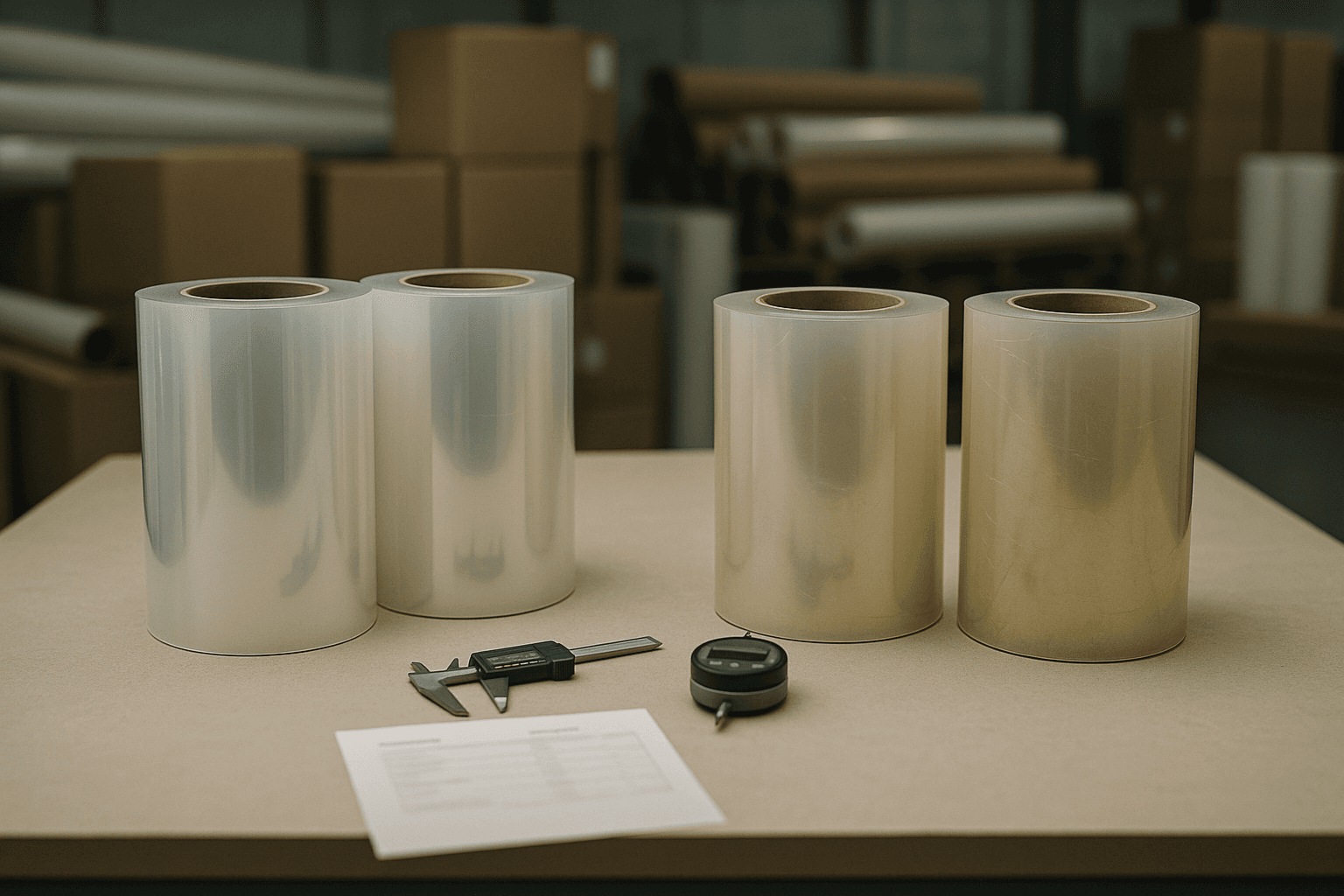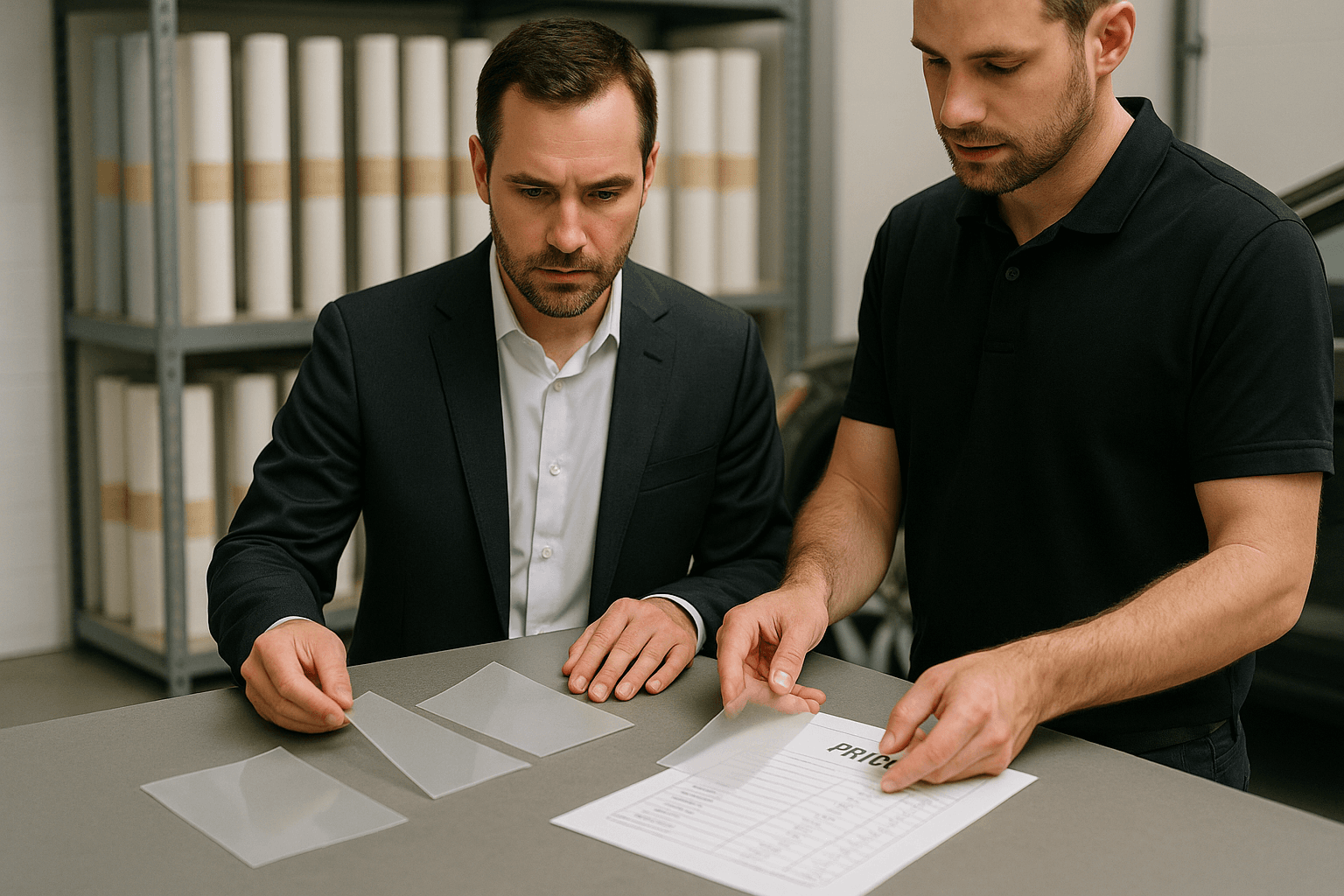
This guide is written for distributors, installation shops, OEM buyers, and private label teams who want a clear, brand-safe comparison and a realistic view of when a factory-direct partner like XPSHELL actually makes sense.
Who this guide is for and what problem it solves
When someone types in “XPEL price” or “LLumar Valor vs 3M PPF,” the underlying problem is rarely about a few dollars on a single roll. It is about margin structure, availability, and long-term supply risk.
This article is for:
- Regional and national distributors evaluating whether to keep adding big-brand SKUs or introduce a house-brand PPF line.
- PPF and tint installation shops trying to balance brand demand (XPEL, LLumar, 3M) with profit per job and batch consistency.
- OEM and fleet buyers who need predictable film performance and warranty evidence at scale.
- Private label and brand owners who want control over branding, specification, and pricing while working with a China-based manufacturer like XPSHELL.
By the end, you should know:
- How XPEL pricing and product updates typically influence your cost base.
- Where LLumar Valor and 3M PPF sit in the market relative to XPEL.
- When a factory-direct China PPF manufacturer is a fit, and what to test before you change suppliers.
Where XPEL price and updates fit into your buying strategy
How installers and distributors usually see XPEL pricing
XPEL is widely recognized as a premium PPF brand with strong marketing, a large installer network, and well-known pattern software. In practice, that usually means:
- Per-roll and per-kit prices at the higher end of the PPF market.
- A brand premium baked into your cost that you recover through higher retail pricing.
- Strong consumer awareness, which makes it easier to sell packages labeled with the XPEL name.
For many shops, searching “XPEL price” really means, “Can I still make my margins with this brand, or do I need an alternative for certain packages?”
What “XPEL update” normally signals to B2B buyers
“XPEL update” queries often relate to:
- Product revisions (new self-healing clear coats, matte or black variants, added thickness options).
- Software or pattern library changes affecting installation efficiency.
- Warranty or policy adjustments that change how you present coverage to customers.
For a distributor or high-volume shop, the real question is whether these updates improve sell-through, reduce complaints, or simply add cost or complexity. Because top-tier films from multiple brands now offer self-healing and long warranties, a brand update has to meaningfully impact your day-to-day operations to justify a price premium.
LLumar Valor: where it sits next to XPEL
Positioning and technology essentials
LLumar is a long-standing film brand backed by a large performance-film manufacturer. In paint protection film, the LLumar Valor line targets the premium PPF tier with:
- A durable, self-healing construction.
- An integrated hydrophobic clear coat designed to simplify washing and maintenance.
- Strong stain and environmental resistance and a long-term warranty period.
In many markets, LLumar and its sister brand SunTek share core resin technology for PPF, with a focus on stain resistance and environmental durability. That gives value to installers working in harsh weather or high-pollution environments.
Warranty nuance that matters to resale-focused markets
One detail that B2B buyers often overlook is the transferability of the warranty. Some premium PPF warranties, including certain LLumar programs, are structured so that coverage applies to the original customer but does not automatically transfer to a new owner when the vehicle is sold.
For retail-focused shops in resale-sensitive markets, this non-transferability can influence which brand they push hardest. For fleet and OEM buyers, transferability might be less critical than batch consistency, clear documentation, and manufacturer backing.
LLumar Valor vs XPEL in practice
When installers compare Valor to XPEL, the conversation tends to focus on:
- Optical clarity and gloss: Both position themselves as premium, high-clarity films.
- Self-healing behavior: XPEL built its reputation early here, while Valor offers competitive self-healing and a coated top surface.
- Warranty length and terms: Valor is backed by a well-established film manufacturer with long-term PPF warranties; XPEL also offers long warranties on its core lines.
- Price tier: Both typically sit in the mid-to-high premium price range, and final installed price depends heavily on installer and region.
For distributors, the choice is often less about raw performance and more about territory rights, marketing support, and dealer demand in their area.
3M PPF: a legacy name with a different value story
How 3M PPF typically competes
3M is one of the earliest paint protection film producers. Its well-known flagship PPF series is widely used, with characteristics generally seen as:
- Strong manufacturing stability and process control.
- Solid self-healing performance, often perceived as slightly slower to heal than some other top-tier films in side-by-side testing.
- Good clarity and gloss retention over time.
Many installers describe 3M’s flagship PPF as reliable, proven, and consistent, which makes it attractive for fleets, dealerships, and programs that value predictability over chasing the very latest feature.
3M vs XPEL in installer conversations
Where installers directly compare 3M PPF to XPEL, the pattern often looks like this:
- XPEL is praised for fast and noticeable self-healing and strong resistance to yellowing in challenging conditions.
- 3M is praised for long experience in film manufacturing and for being a safe choice in large, standardized programs.
- Finish options from 3M have historically been more limited, typically focusing on clear gloss and matte rather than extensive color lines.
For a distributor or OEM buyer, that means 3M can be a solid baseline PPF choice, while XPEL may attract customers who actively ask for the brand and are willing to pay a premium.
Why factory-direct PPF manufacturers are on your radar
What “factory direct” really means for PPF
“Factory direct” is often used loosely in marketing, but for serious B2B buyers it should mean:
- You are working with a true manufacturer that runs coating and curing lines for TPU-based films.
- The manufacturer controls formulation, coating, and top-coat processes, not just slitting and re-boxing.
- You can influence specification, branding, packaging, and documentation rather than being locked into a fixed global brand program.
A China-based PPF manufacturer like XPSHELL can offer factory-direct programs focused on:
- Clear PPF rolls for general automotive, SUV, and fleet use.
- Color and fashion PPF for styling and restyling markets.
- Window tint films (including nano-ceramic and nano-composite options) for buyers who want a unified paint and glass offering.
- OEM or private label PPF where the film is branded for the customer’s network, not the manufacturer.
The buyer risks you must manage
Distributor and installer teams have legitimate concerns when they move from a global brand to a factory-direct manufacturer. The main risks to manage are:
- Batch inconsistency: Changes in gloss, orange peel, adhesive behavior, or self-healing between lots.
- Insufficient sample testing: Rushing into large orders before real-world tests on demo vehicles or internal fleets.
- Unclear warranty execution: Promises on paper that are difficult to support across borders or years.
- Supply disruption: Inconsistent lead times, packaging damage in transit, or weak export processes.
XPSHELL addresses these by linking capabilities to outcomes you care about:
- In-house coating and curing lines paired with process control target stable gloss, adhesion, and self-healing from batch to batch, reducing complaints.
- QC checkpoints and lab testing support spec confidence, so what you test in samples is what you receive in production runs.
- Export-grade packing and logistics planning are directed at safer arrivals and more predictable replenishment.
Even with these measures, any distributor or large shop should test films carefully before committing:
- Run sample rolls on different paint colors and complex panels.
- Compare shrink, edge behavior, and contamination resistance to your current brand.
- Log installation time, defect rates, and customer feedback across several vehicles.
Only after that data is in hand can you decide whether a factory-direct line should fully replace, or simply complement, your XPEL, LLumar, or 3M offerings.
Matching product lines to your use case
When to look at clear PPF vs color PPF vs tint
Each buyer segment tends to prioritize a different combination of products:
- Distributors: Often need a core clear PPF line in common widths and thicknesses, sometimes plus a limited color PPF range to differentiate their catalog.
- Installers and studios: Typically lead with clear PPF, add stealth/matte and a few popular colors, and pair these with ceramic window tint to build bundled packages.
- OEM and fleet buyers: Focus primarily on clear PPF for high-impact areas and signal-safe, high-IR-rejection tint with strong UV protection.
- Private label brands: May need a full matrix: clear, matte, black, color PPF and several tint series (dyed, ceramic, nano-composite) to build a unified brand story.
XPSHELL supports these use cases with clear PPF, color and styling PPF, and window film ranges that can be configured under your own brand, with emphasis on:
- Heat rejection and UV blocking for tint.
- Clear visibility and signal-safe behavior (non-metallic constructions) for modern vehicles.
- Balanced installability and durability for PPF so your installers are not fighting the material.
How to decide when to add a factory-direct line to big-brand inventory
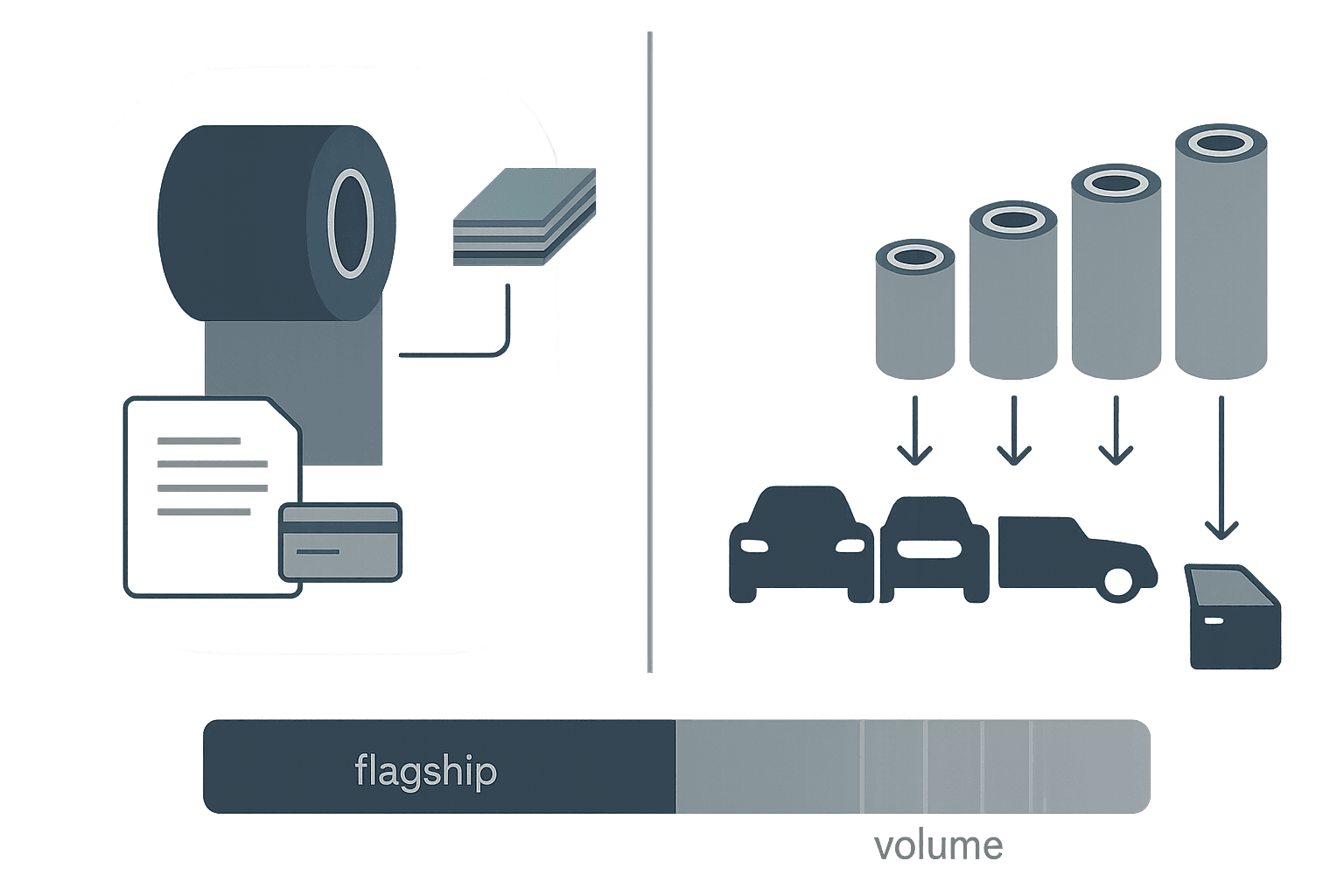
A practical way to decide whether to bring in a factory-direct line like XPSHELL alongside XPEL, LLumar, or 3M is to map your product roles:
1. Flagship, brand-led packages
- When the customer explicitly requests XPEL, LLumar, or 3M.
- When you charge the highest retail price and use the brand name to justify it.
2. House-brand or value-premium packages
- When the customer wants performance and warranty but is less brand-sensitive.
- Ideal slot for XPSHELL private label PPF and tint, where you protect margin and own the branding.
3. Fleet and OEM programs
- Driven by specification, warranty documentation, and total program cost.
- A factory-direct partner can custom-tailor specs and packaging to match the OEM’s technical and branding requirements.
If your current mix is heavily skewed to a single global brand and you feel pressure on margins or territory limitations, a factory-direct XPSHELL line can be introduced first as a secondary option, then scaled up as sample testing and early deployments prove stable.
What to test before committing to a new PPF manufacturer
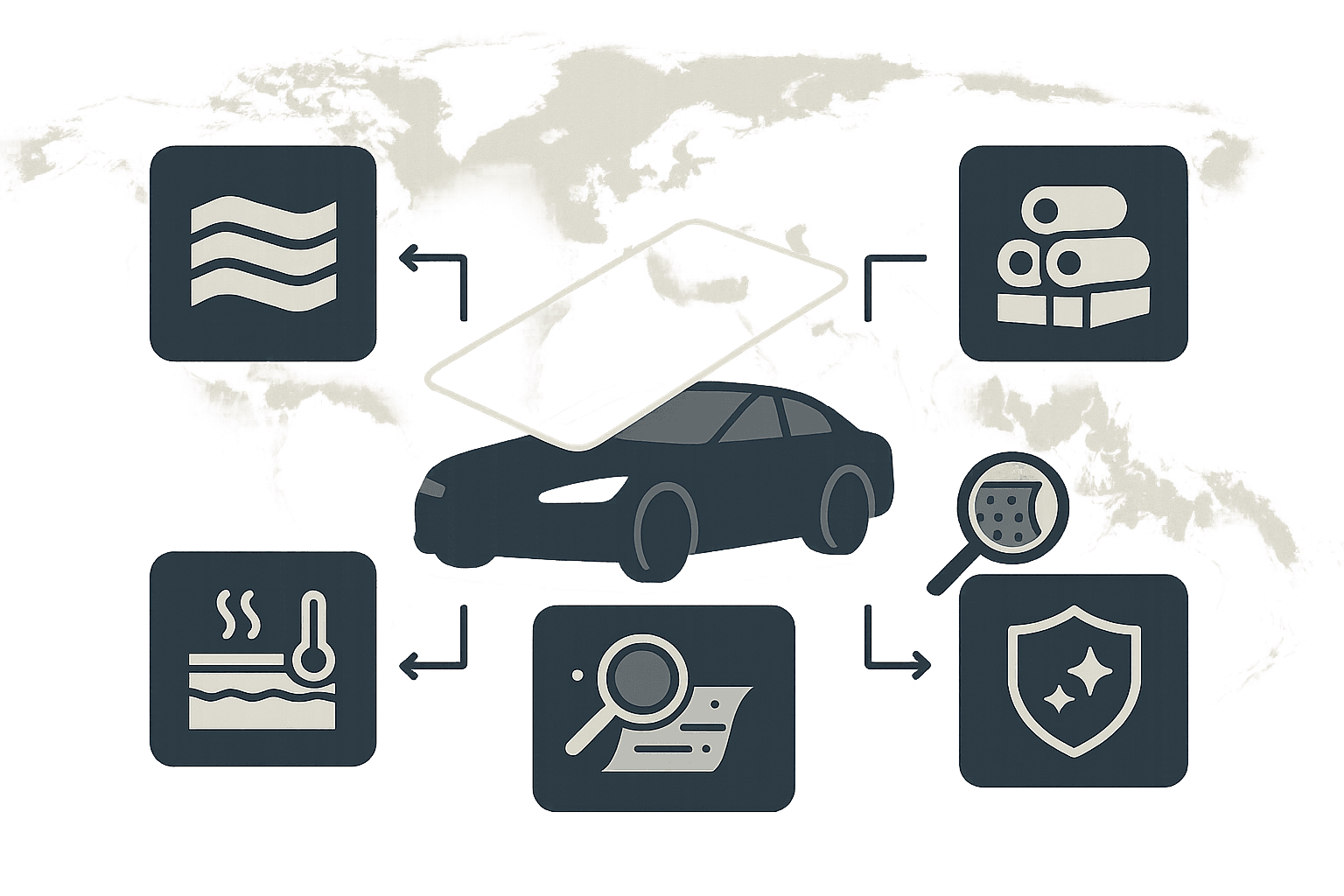
Before shifting serious volume from XPEL, LLumar Valor, or 3M PPF to a new manufacturer, build a test checklist. At minimum, you should validate:
- Adhesive behavior: Tack, slide, reposition, and how easily the adhesive recovers from minor stretch or lift.
- Topcoat performance: Self-healing speed under warm water or sunlight, stain resistance to bugs and road grime, and how easily it washes.
- Optical quality: Orange peel level, clarity on dark colors, and any distortion at strong panel curves.
- Batch consistency: Compare multiple rolls and batches for gloss, thickness feel, liner release, and adhesion.
- Warranty evidence: Written terms, claim process, photo documentation requirements, and response times.
XPSHELL encourages distributors and large shops to run structured pilot programs: a defined number of vehicles, measured installer feedback, and post-install inspections over several months. This protects your local reputation while you expand your product basis.
Practical next steps for different buyer types
For distributors
- Keep XPEL, LLumar, or 3M where the brand pull is strongest.
- Introduce an XPSHELL-based, factory-direct line as your private label or value-premium PPF.
- Use a formal sample and pilot program to verify consistency and reduce risk.
- Plan a margin structure where your private label line stabilizes profit, even when branded films face price increases.
For installers and studios
- Keep offering a big-brand option for customers who request it explicitly.
- Add a house-brand package using XPSHELL film that targets customers focused on performance and price rather than brand name.
- Track installation time and defect rates across different films; many shops find they make more net profit on a slightly lower-priced film that installs faster and more consistently.
For OEM, fleet, and private label teams
- Define your technical spec first: thickness range, gloss and orange peel tolerance, UV exposure environment, and warranty horizon.
- Use factory-direct partners like XPSHELL to tailor film and packaging to your program instead of adapting to a retail brand’s fixed offering.
- Validate repeat supply and logistics early, including export packing and transit tests, to avoid disruptions once vehicles are in production.
For all buyer types, the right next action is not to drop your current brand, but to expand your options and let structured testing and real margins guide your long-term mix.
Frequently Asked Questions
How do XPEL prices generally compare to LLumar Valor and 3M PPF?
In most markets, XPEL, LLumar Valor, and 3M’s flagship PPF lines all sit in a premium price tier. XPEL often commands a noticeable brand premium because of its strong consumer recognition and large installer network. LLumar Valor typically lands in a similar mid-to-high premium range, with local pricing shaped by installer networks and distribution agreements. 3M’s flagship PPF usually prices competitively with these, sometimes slightly lower or higher depending on region and program structure.
For distributors and installers, the important question is not which brand is a few percent cheaper per roll, but which mix of brand, performance, and support lets you maintain reliable margins.
When does it make sense to switch from a big brand to a factory-direct PPF manufacturer?
A full switch makes sense only after you have proven, repeatable results from the factory-direct manufacturer. Most buyers start by adding a factory-direct line, such as an XPSHELL-based private label film, alongside their existing XPEL, LLumar, or 3M inventory. Over time, as sample testing, pilot programs, and real customer feedback confirm stable performance and supply, more volume is shifted to the factory-direct line.
A complete replacement is usually considered when the factory-direct partner demonstrates consistent quality, reliable logistics, and clear warranty handling while delivering better margin and greater control over branding.
What should I ask a PPF manufacturer before requesting samples?
Before you request samples from any PPF manufacturer, clarify:
- Which product lines they recommend for your use case: clear PPF, color PPF, window tint, or OEM/private label.
- How they control batch consistency and what internal QC steps they use.
- What warranty documentation they can provide and how claims are handled.
- Typical lead times, shipment methods, and export packing details for your region.
With XPSHELL, you can additionally ask about private label options, such as branded boxes, labels, and documentation that match your own brand identity. Getting these answers first ensures that any samples you test represent a realistic production solution, not a one-off batch.
Can I run XPEL, LLumar, 3M, and XPSHELL films in the same shop without confusing customers?
Yes. Many successful shops and distributors run a tiered offer structure: a big-brand premium option (XPEL, LLumar, or 3M), a value-premium house brand built on XPSHELL factory-direct film, and sometimes an entry-level package. Clear explanations in your sales process help avoid confusion. Frame each option in terms of benefits, warranty, and price, not just brand names. This way you use big brands where their recognition helps close sales, while your private label XPSHELL-based line protects your margins and gives you more control over your product portfolio.