Choosing a paint protection film supplier is not just a price decision. For distributors, installers, OEM buyers, and private label teams, the supplier you choose will impact batch consistency, installation results, complaint rates, and how reliably you can keep inventory flowing.
What a Paint Protection Film Supplier Should Actually Provide
A strong paint protection film supplier does far more than ship rolls.
For B2B buyers, a credible supplier should provide:
- Product access and range: Clear PPF, color PPF, and often complementary window tint so you can build complete programs rather than piecing together multiple vendors.
- Batch consistency: Films that behave the same from roll to roll, helping installers avoid surprises and rework.
- Technical documentation: Data sheets, installation guidelines, and testing summaries so you can evaluate performance and set accurate customer expectations.
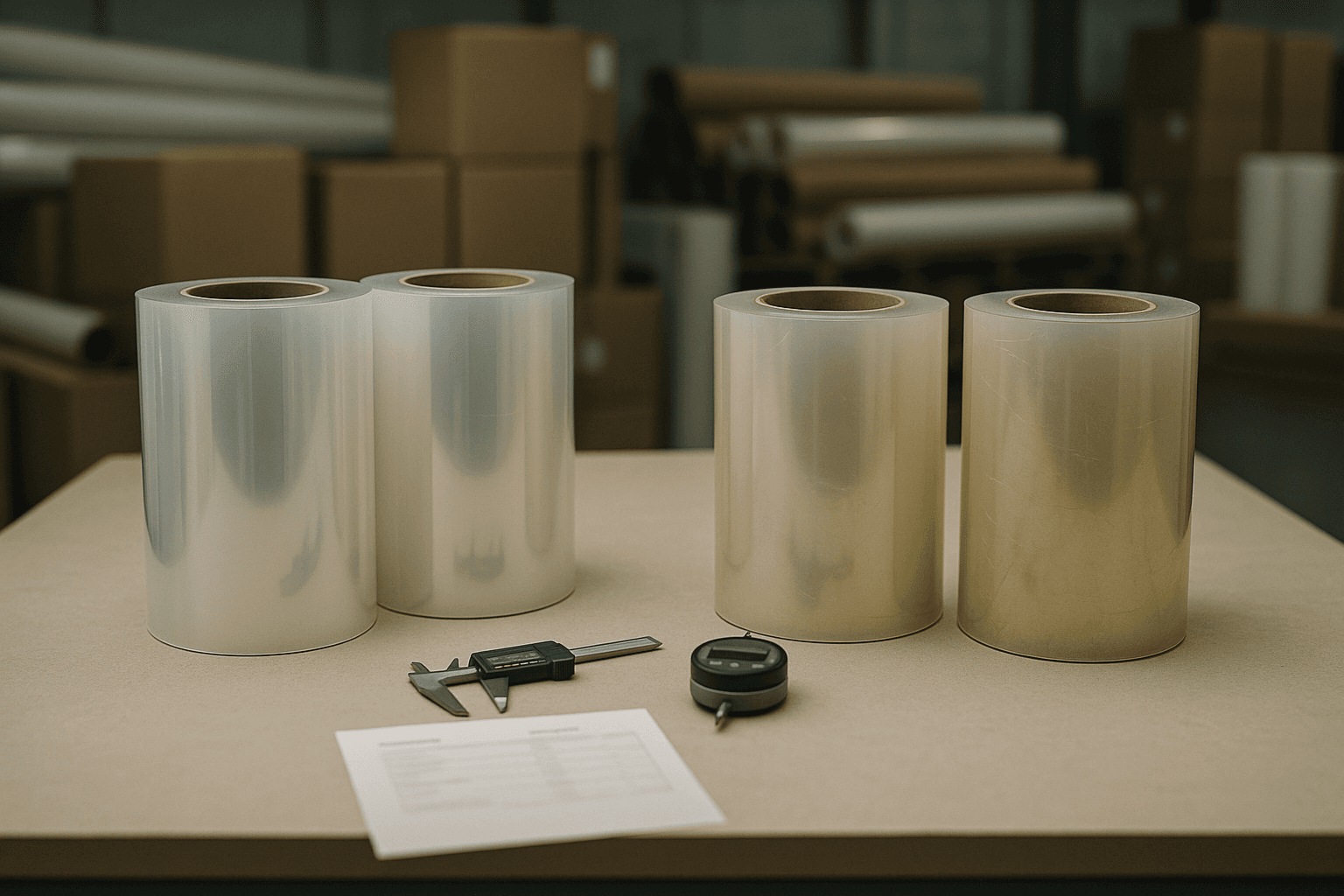
- Sample evaluation: Access to test rolls or panels before you commit, so your team can install, stretch, and post-cure the film under real conditions.
- Repeat replenishment: Stable, predictable supply for your key SKUs, not one-time allocations that force you to respec jobs.
In addition to film rolls, the right supplier should give you reliable communication and support—fast answers on specs, troubleshooting help, and clear handling of any issues.
Because this is a B2B operational decision, you should compare paint protection film suppliers on:
- How consistently their batches perform.
- How complete and transparent their technical proof is.
- How responsive their support is for your team.
- How well their product lines (clear PPF, color PPF, window tint, or OEM/private label) match your business model.
Who This Guide Is For and What Problem This Search Reveals
If you are searching for a paint protection film supplier, you are likely facing one or more of these risks:
- Unstable batches that stretch or tack differently from order to order.
- Delayed supply that leaves your bays idle and your customers waiting.
- Weak support when you face an installation challenge or defect claim.
- Hard-to-verify product claims that could later damage your reputation.
This guide is written specifically for:
- Distributors and regional wholesalers who need stable, repeatable batches and reliable replenishment to protect downstream installer relationships.
- PPF and detailing installers who must keep jobs on schedule and avoid callbacks due to inconsistent film behavior.
- OEM and fleet buyers who require spec confidence, documentation, and long-term program stability.
- Private label and brand owners who want their own branded PPF but need a manufacturer they can trust for repeat quality.
Your goal at this stage is not to commit immediately. It is to shortlist suppliers, run sample tests, review documentation, and then open a quote or program discussion with the candidates that pass your checks.
Manufacturer vs Distributor vs Private Label PPF Supplier
Before you evaluate specific brands, it helps to be clear about the different supplier models you might work with.
Manufacturer (factory-direct)
A paint protection film manufacturer designs, formulates, and produces film on its own coating and laminating lines. Market leaders in this space emphasize how their films are designed, formulated, and manufactured for performance and durability, which has become a baseline expectation for the category.[1]
Working with a manufacturer can give you:
- More control over customization (thickness, coatings, packaging) for OEM or private label programs.
- Direct discussion of technical trade-offs, instead of second-hand information.
- Program-level planning around product life cycle, regional specs, and long-term supply.
This model can be ideal for:
- Distributors wanting factory-direct margins and dedicated lines.
- Private label brands needing custom branding, cartons, and spec adjustments.
- OEM buyers who must align specs and documentation directly with a plant.
Distributor or master distributor
A PPF distributor sources film from one or more manufacturers and supplies regional installers and shops. Some distributors highlight that they supply paint protection films from trusted brands, which underlines their role as a brand access point rather than a producer.[4]
This model can fit buyers who:
- Want multi-brand access and flexibility.
- Need local inventory for urgent replenishment.
- Prefer working with a supplier who also carries related products and tools.
Your evaluation here should focus on:
- How strong their brand mix is.
- How quickly they can ship common SKUs.
- What training and support they offer for each film line.
Private label supplier
A private label PPF supplier manufactures film that is sold under your own brand. Some private label manufacturers highlight performance attributes such as self-healing, hydrophobicity, stain resistance, abrasion resistance, and weathering/non-yellowing performance for their private-label customers, showing what is possible in customized programs.[5]
Private label can be powerful if you:
- Want to build your own long-term brand equity.
- Need control over packaging, naming, and marketing.
- Plan to differentiate features for specific markets.
However, it increases the need for:
- Deep sample testing before launch.
- Ongoing batch review to ensure your brand promise matches reality.
- Clear spec documentation and change management so you can update your marketing accurately.
The Supplier Evaluation Checklist: What B2B Buyers Should Verify
This is the core of your decision. Use this checklist to compare any paint protection film supplier or program you are considering.
1. Batch consistency and process control
Your first priority is how stable the film is from batch to batch.
Ask suppliers to explain:
- How they monitor coating thickness and adhesive laydown across batches.
- Whether they track lot numbers so defects can be traced and contained.
- How they handle formulation or process changes and how you are notified.
From your side, you should:
- Test sample rolls from different batches where possible.
- Have installers evaluate stretch behavior, tack, clarity, and slip on a standard panel.
- Document any variation and feed it back to the supplier.
A supplier that treats each batch as a one-off is a long-term risk to your brand.
2. Sample testing under real-world conditions
Never choose a paint protection film supplier based on brochure language alone.
At a minimum, your sample evaluation should cover:
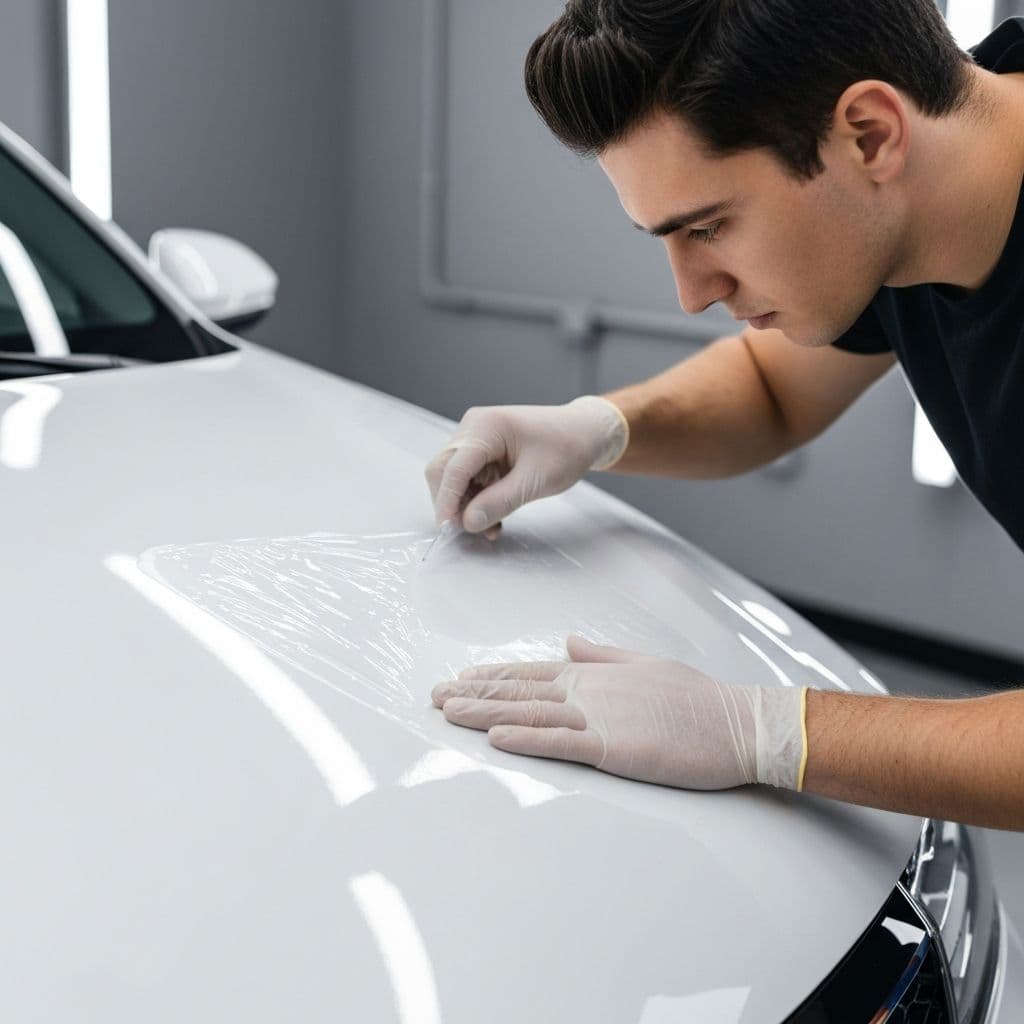
- Installation behavior: slip solution window, repositioning, edge wrapping.
- Post-cure look: orange peel level, gloss depth or matte uniformity, signs of haze.
- Short-term exposure: how the film looks after heat cycling and a few washes.
Many category leaders promote self-healing and distinct finishes such as high gloss or specialty textures, and they state that their films are tested for performance and durability.[2] Those claims set the expectation: you should verify comparable performance claims through your own testing rather than taking any brochure at face value.[2]
For private label programs, extend testing to include adhesion over time, edge lift, and how the film behaves when removed from factory and repainted surfaces.
3. Technical proof and documentation
A serious paint protection film supplier should be ready to provide:
- Technical data sheets with measured properties (thickness, elongation ranges, etc.).
- Information on topcoat technology (for example, whether it is designed to provide self-healing or specific stain resistance attributes).[2][5]
- Summaries of performance and durability testing, in line with how leading brands describe testing to support their products.[1][2]
Category leaders make a point of saying that their films are designed, formulated, and manufactured for optimum performance and durability, and that they are tested for performance and durability.[1][2] Your supplier should be able to show the technical work behind their own claims, even if they do not publish full test reports.
When documentation is thin or vague, assume your internal testing must be deeper and consider the risk to your downstream installers or customers.
4. Warranty evidence and defect handling
Warranties are a key trust signal, but they must be backed by process, not just marketing.
Evaluate:
- What is documented: You should see clear warranty conditions, covered issues, and claim procedures.
- How evidence is handled: Is there a structured process for photos, batch numbers, and samples if an issue occurs?
- How quickly the supplier typically responds to claims and what remedies (replacement film, credit, etc.) they consider.
Avoid suppliers that promise broad coverage verbally but cannot show consistent, written warranty terms or examples of how claims have been resolved.
5. Repeat supply reliability and logistics
Reliable supply protects your schedule and your customer relationships.
Assess:
- Inventory planning: Does the supplier help you forecast and secure key SKUs?
- Shipping expectations: Some paint protection film manufacturers position themselves around fast shipping and dealer support, reflecting how important logistics are to buyers.[3]
- Packaging and export readiness: For international supply, you should understand how film is packed and protected for transit, because better export packing can reduce damage and shortages.
If you plan to build a PPF program around a supplier, ask explicitly what happens if a batch is delayed or a container is partially damaged.
6. Product range and finish options
Your program might need more than a single clear gloss film.
Use these questions:
- Does the supplier offer clear PPF in the thicknesses you need for standard and high-impact panels?
- Are there color PPF or styling films if you want to offer restyling and branding options?
- Are there gloss and matte variations, which many suppliers highlight as a core part of their range?[3]
- Is there a window tint line if you want to purchase from a single automotive film partner?
This is where you align the supplier’s catalog with your business strategy instead of being forced into a one-size-fits-all product.
7. Installation and business support
Technical film performance is only part of the equation. You also depend on your supplier for:
- Installation training and resources: videos, manuals, and access to best practices.
- Sales and marketing support: product positioning, point-of-sale materials, or digital assets to help your dealers sell.
- Account management: a clear contact who understands your volume, seasonality, and program goals.
Suppliers that run dealer programs with support and fast shipping signal that they understand how critical these factors are for installers and distributors.[3]
What Market Leaders Signal About PPF Supplier Expectations
Looking at how established brands position their paint protection films can sharpen your checklist.
- Some leading manufacturers emphasize that they design, formulate, and manufacture PPF for performance and durability, highlighting manufacturing quality and lab testing as central to product value.[1]
- Other major brands promote self-healing films available in a series of distinct finishes, and they explicitly mention that their PPF products are tested for performance and durability.[2]
- Some suppliers market gloss and matte options, fast shipping, and dealer programs with support, showing that finish variety, logistics, and dealer support are common comparison points for buyers.[3]
These market signals reinforce that a modern paint protection film supplier is expected to combine:
- Robust manufacturing and testing.
- Finish and product-line variety.
- Reliable shipping and program-level support.
You can use these expectations as a benchmark when you assess newer or alternative suppliers, especially factory-direct and private label options.
Which Product Line Fits Your Use Case: Clear PPF, Color PPF, Window Tint, or OEM/Private Label
A single keyword like “paint protection film supplier” can hide very different sourcing needs. Clarifying your product-line priorities will help you filter suppliers quickly.
Clear PPF
Use clear PPF as your core line if you:
- Focus on transparent paint protection and preservation.
- Need a consistent, repeatable product for mainstream vehicles.
- Want to standardize training and workflows for your installers.
Here, look closely at clarity, gloss level, self-healing behavior, and stain resistance, and ensure you can get a stable supply of your main thicknesses.
Color PPF
Color and styled PPF are suited for:
- Shops that do styling, color change, or branding work alongside protection.
- Distributors trying to differentiate their offer from basic clear films.
For color PPF, you should evaluate:
- Color consistency across batches.
- How well the color holds under UV exposure and weathering.
- Whether there are matching accessories or aftercare recommendations.
Window tint as part of your film program
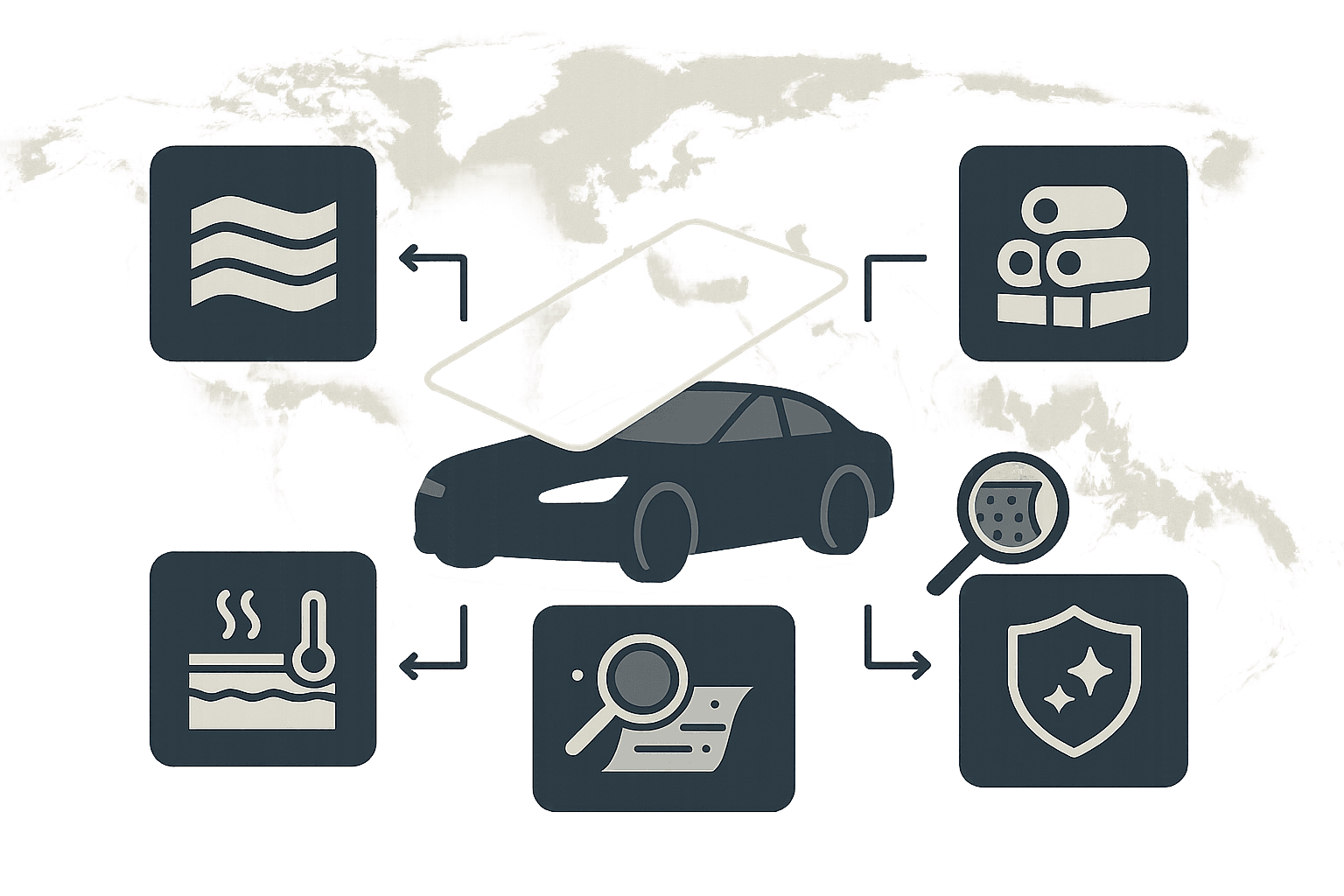
Many buyers want a paint protection film supplier who can also support window tint, so they can consolidate purchasing and support. For those programs, it is important that the tint series provide heat rejection, UV protection, clear visibility, and signal-safe performance while aligning with your local regulations.
If you intend to stock both PPF and tint, ask how the supplier’s automotive film portfolio is structured and whether they support coordinated branding across lines.
OEM and private label programs
OEM and private label programs are right when you:
- Need custom branding and packaging.
- Want spec control for a fleet or manufacturer program.
- Plan to build a long-term, differentiated offer.
In these cases, work with a manufacturer or private label specialist that:
- Is used to supporting private label attributes such as self-healing, hydrophobicity, stain resistance, abrasion resistance, and strong weathering performance.[5]
- Can define and document change control, so if any spec is adjusted, your technical literature and marketing can be updated.
Questions to Ask Before You Commit to a Paint Protection Film Supplier
Use these questions in your internal procurement checklist and supplier calls. They are designed to reduce switching risk and support a structured evaluation.
On samples and testing
- What sample formats are available (short rolls, panels, kits), and can you get more than one batch represented?
- Are there recommended test procedures for self-healing, stain resistance, and weathering that align with how the film was originally tested?[2][5]
- Can you keep a control roll on-hand for future comparisons?
On batch controls and documentation
- How are batch numbers assigned and tracked?
- How will you notify us of formulation or process changes, and what documentation will we receive?
- Can you share technical data sheets and high-level testing summaries that support your performance claims?[1][2][5]
On warranty and defect handling
- What issues are explicitly covered under your warranty, and what is required to make a claim?
- How do you handle field complaints from installers or end customers?
- Can you share examples of typical resolutions (e.g., replacement material, credits) without naming specific customers?
On logistics and repeat supply
- What are your standard lead times for our core SKUs?
- Do you maintain safety stock or recommend a minimum reorder point for distributors?
- How are rolls packed for shipment, especially for export, to minimize transit damage?
On OEM/private label scope
- What can be customized—branding, cartons, labels, film specs, or all of the above?
- How do we manage artwork, SKUs, and change requests during the program?
- What does your quote workflow look like for custom or private label programs, and what information do you need from us upfront?
Suppliers who answer these questions clearly—and back their answers with documents, samples, and consistent communication—are generally safer partners to build a long-term PPF program with.
Why XPSHELL May Fit B2B Buyers Evaluating PPF Supply Options
XPSHELL can be positioned as a China-based automotive film manufacturer serving B2B buyers who need factory-direct programs for paint protection film and complementary films.
For the audiences covered in this guide:
- Distributors and dealers can work with XPSHELL as a factory-direct China supplier for clear PPF, color PPF, and window tint, with a focus on product lines that support margin and range rather than just commodity sourcing.
- OEM buyers can explore spec-defined programs with direct access to technical teams for documentation and change control.
- Private label and brand owners can discuss branded PPF and window tint programs, including customization scope aligned to their market positioning.
In all cases, XPSHELL’s positioning emphasizes capabilities that map directly to buyer outcomes:
- A controlled coating line aimed at improving batch consistency so installers face fewer surprises.
- Structured quality checks designed to reduce field complaints and help distributors protect their downstream relationships.
- Lab testing to provide spec confidence, allowing OEM and private label customers to align technical claims with internal requirements.
- Export-ready packing intended to keep rolls safer during long-distance shipping and help maintain usable yield on arrival.
XPSHELL also supports sample evaluation and quote workflows, encouraging buyers to test films hands-on, review documentation, and only then move toward program or pricing discussions—aligned with the evaluation-first approach in this guide.
For product overviews and category details, you can review the current film ranges on the products page at /products, and see paint protection film options specifically at /products/paint-protection-film.
Next Step: Request Samples, Review Specs, or Discuss Supply Options
Given the risks of unstable batches, delayed supply, and unsupported claims, the best next step after reading a guide like this is not to rush into a long-term contract.
Instead, you can:
1. Shortlist suppliers whose product lines and support model fit your business. 2. Request samples and technical documentation, then run structured install and exposure tests based on your use cases. 3. Open a supply or quote discussion only with the suppliers that clear your checklist, covering pricing, logistics, and any OEM or private label needs.
If you want to see how XPSHELL might fit into that shortlist:
- Explore current film ranges at /products.
- Review paint protection film options at /products/paint-protection-film.
- Use the contact page at /contact to request samples, documentation, or a B2B-focused supply discussion with the team.
This approach keeps your focus where it belongs: on repeatable performance, reliable supply, and long-term protection of your own brand and customer relationships.
Frequently Asked Questions
How is a paint protection film supplier different from a retail PPF seller?
A paint protection film supplier focuses on business-to-business needs: consistent batches, technical documentation, logistics planning, and program support for distributors, installers, OEM buyers, and private label teams. A retail PPF seller typically sells to car owners and may not provide the depth of technical proof, sample access, or replenishment planning that a B2B buyer requires.
Why is batch consistency so important for installers and distributors?
Batch consistency determines whether a film behaves the same way every time it is installed. If stretch, tack, or clarity vary from roll to roll, installers need more time to adapt, jobs become less predictable, and distributors risk higher complaint rates. Stable batches simplify training, reduce rework, and protect your reputation with end customers.
What minimum documentation should I expect from a serious PPF supplier?
At minimum, you should expect technical data sheets, clear installation guidelines, and warranty terms that match the supplier’s marketing claims. Where performance features like self-healing, stain resistance, or weathering performance are promoted, the supplier should also be able to provide testing summaries or descriptions of how those claims were validated.[1][2][5] This documentation gives you a foundation to design your own tests and to communicate accurate expectations to your dealers and end customers.