Tesla drivers are now one of the most consistent sources of PPF volume worldwide. For distributors, installers, OEM buyers and private label teams, understanding how Tesla paint behaves, where Teslas scratch and chip first, and how to position paint protection vs ceramic coating is now a core commercial question, not just a detailing debate.
Who this Tesla PPF guide is for
This article is written for B2B buyers, not DIY owners. It is most useful if you are:
- A PPF distributor or wholesaler deciding how many Tesla-focused rolls or kits to stock.
- A PPF or window tint installer building an EV protection package and sales script.
- An OEM or dealer group evaluating factory or port-installed paint protection for new Teslas in your channel.
- A private label or house-brand manager searching for a China-based paint protection film manufacturer that can support consistent Tesla volume.
The goal is to turn everyday Tesla paint complaints into structured stocking plans, profitable service menus, and a clear positioning against big-brand programs such as XPEL and STEK, using alternative films from factory-direct partners like XPSHELL.
Why Tesla paint drives so much PPF demand
Across social channels and installer shops, Tesla owners repeatedly discuss paint and chip issues. Several consistent themes show up:
1. Thinner-feeling paint and clear coat Many installers report that Tesla paint seems easier to chip and mar than premium European brands. Some independent measurements shared in the trade suggest total film build on certain Tesla models is on the lower side of the segment range. Even without quoting exact microns, what matters to you as a buyer is that installers see more visible rock chips earlier in the car’s life.
2. High-exposure front geometry The Model Y and Model 3, in particular, have a low, sloped hood and a wide Tesla bumper design that catches debris. Installers wrapping these cars weekly highlight the same failure zones:
- Front bumper, especially the lower lip
- First section of the hood
- Forward edge of front fenders
- Rocker panels and areas behind rear wheels
- Mirror caps
These panels quickly show Tesla scratch marks, pits and chips during highway use.
3. Resale and EV owner expectations Tesla buyers tend to be tech-forward and research-driven. They compare Tesla PPF vs ceramic coating online, see before/after examples of damaged bumpers, and arrive at shops already convinced that some form of paint protection is necessary. That makes Teslas the most “pre-sold” PPF customers many studios see.
For you as a distributor or OEM program manager, this means Tesla fitments justify:
- Permanent front-end PPF inventory (clear and matte).
- At least one full-body PPF option (clear or color change) for higher-end customers.
- Matching window tint and windshield film bundles, as most Tesla buyers ask for full protection packages once they are in the shop.
Where Teslas scratch and chip first – and how to plan coverage
From an installation and stocking perspective, think in terms of risk zones rather than model years.
Priority 1: Tesla front bumper and leading edge
The Tesla bumper is the most damaged panel on almost every high-mileage Model Y or Model 3 installers see. The lower section takes constant impacts from:
- Gravel and loose asphalt
- Road salt or sand in winter markets
- Small metal fragments and construction debris
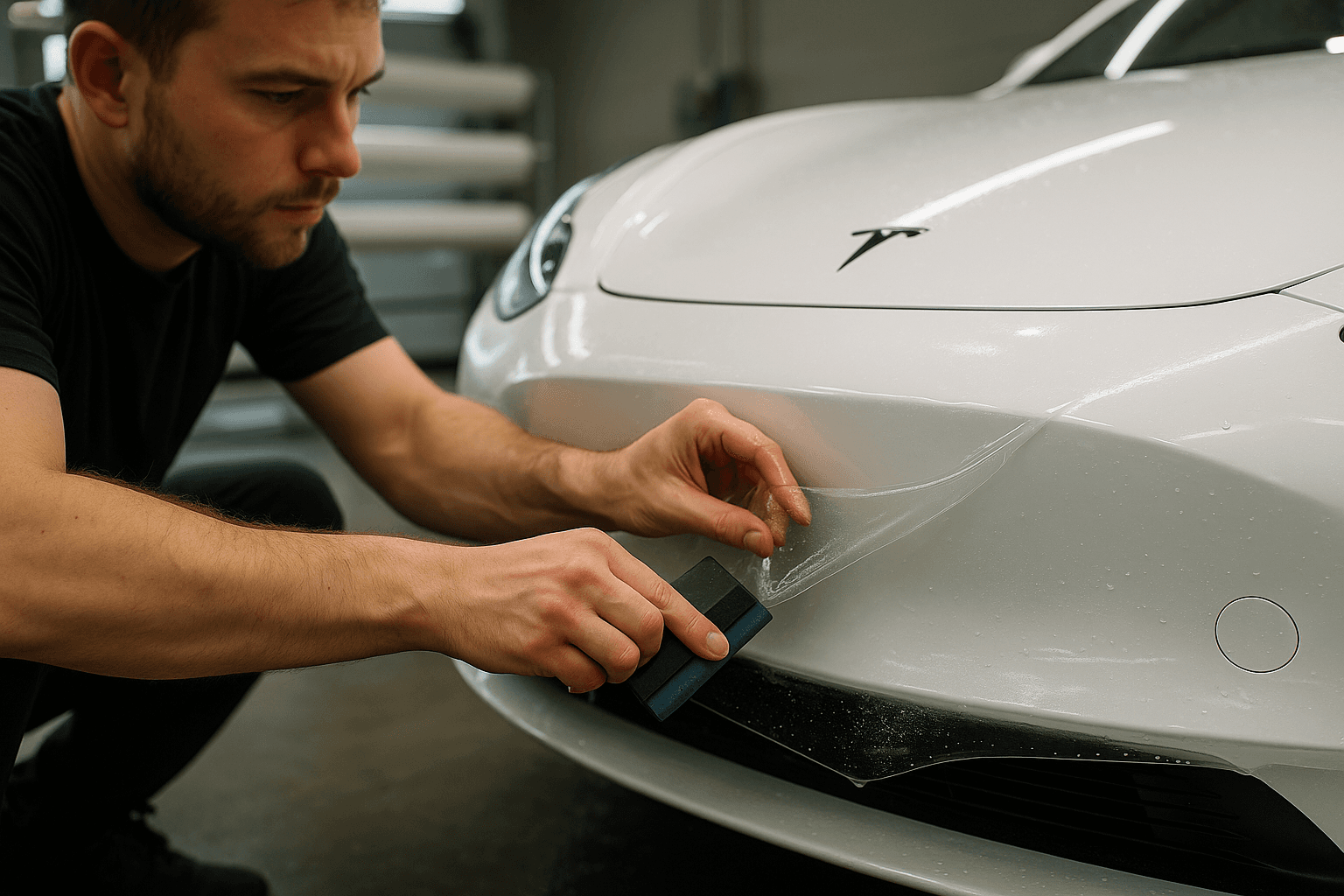
PPF on the front bumper delivers the clearest visual return for the owner and the most convincing “before and after” photos for your marketing. Many studios build their entry Tesla PPF package around:
- Full front bumper
- Partial or full hood
- Front fenders
- Mirror caps
This aligns with how many owners talk about value online: front PPF is perceived as the minimum required if they “care about how the paint looks and holds up,” while full-body wraps are seen as a premium decision.
Priority 2: Rockers, lower doors and rear impact zones
For Tesla drivers who do regular highway commuting, rock chips often appear next along lower door edges and behind rear wheels. From a stocking point of view, this justifies:
- Additional PPF roll widths suited to rockers and lower quarters.
- Optional “track” or “commuter” Tesla packages that add these zones to the standard front-end kit.
These packages are an easy upsell for installers and a consistent volume driver for distributors because they can be cut from bulk rolls rather than pre-cut kits.
Priority 3: Full-body Tesla PPF
Full-body Tesla PPF is now a visible trend in many markets, especially on newer Model Y refreshes and special color launches. Examples of 2026 Model Y units getting full coverage with a premium film plus a ceramic layer showcase the aspirational end of the market.
For B2B planning, this means you should:
- Keep higher-grade clear and matte PPF in sufficient rolls to handle full SUVs.
- Offer color PPF series for Tesla customers who want both protection and a color change.
- Align your pricing ladders so that installers can clearly present:
- Front-end clear PPF
- Extended protection (front + rockers)
- Full-body clear
- Full-body matte or color
Paint protection vs ceramic coating on Teslas
The paint protection vs ceramic coating conversation is where many Tesla owners get confused. As a distributor or installer, your job is to make this distinction unambiguous.
What PPF actually does on a Tesla
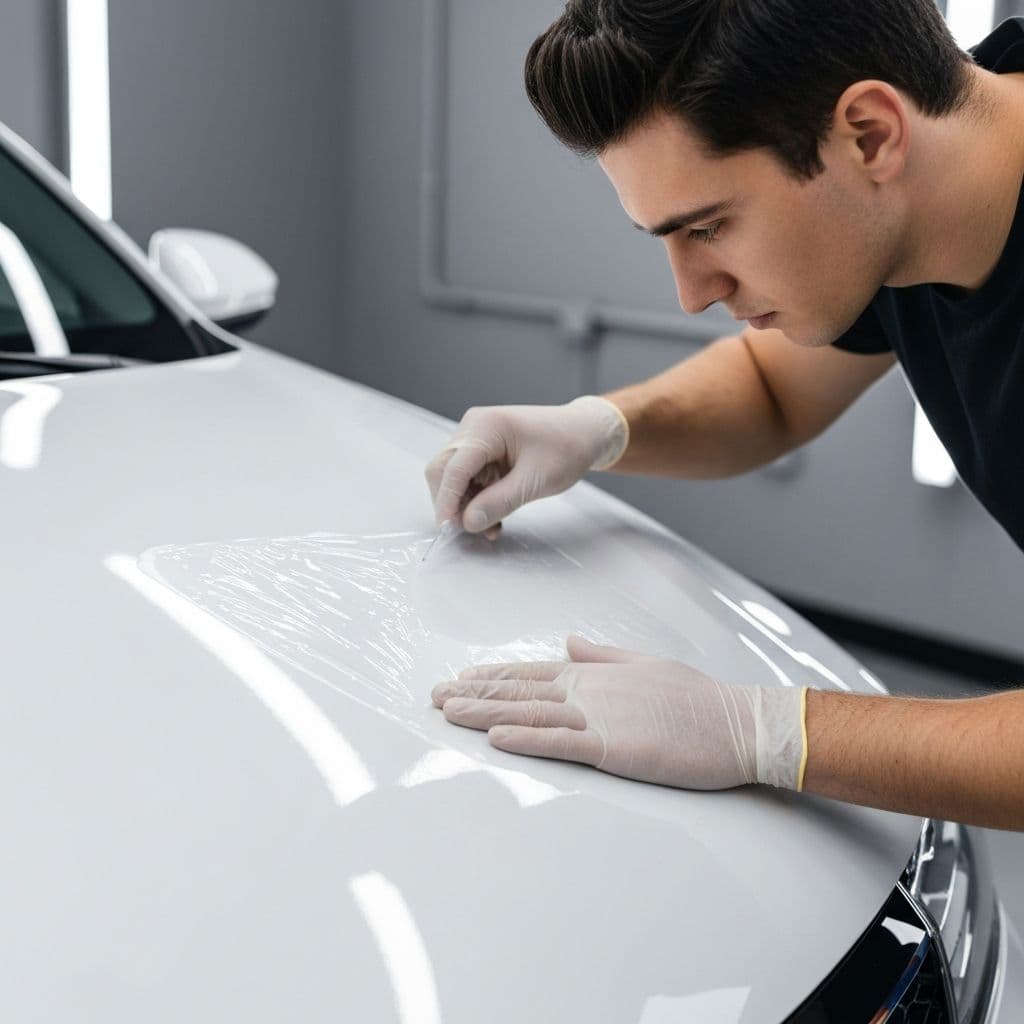
Paint protection film (PPF) is a thick, self-healing polyurethane layer designed to:
- Absorb impact from stones and road debris.
- Reduce or prevent chips that expose primer.
- Mask minor wash marring and surface scuffs.
- Deliver either gloss, matte, or colored finishes.
On high-risk areas like a Tesla bumper or hood, PPF is the only practical way to significantly reduce physical impact damage over years of daily driving.
What ceramic coating actually does on a Tesla
Ceramic coating is a thin, hard, hydrophobic layer. It is excellent at:
- Making Tesla paint easier to wash.
- Reducing staining and water spots when maintained.
- Increasing gloss on both bare paint and PPF.
However, it does not stop rock chips or deep scratches. Many realistic comparison videos and shop examples show two similar Teslas, one with PPF and one with only coating. The PPF car resists stone impacts, while the coated-only car still shows chips on the bumper and hood.
How to frame the comparison for buyers
A clear, honest message for your network is:
- PPF = impact protection and surface sacrificial layer.
- Ceramic = appearance and maintenance upgrade.
- The best Tesla packages combine PPF on high-impact panels with ceramic coating over film and exposed paint.
From a product-line standpoint, that means:
- Lead the conversation with clear PPF and matte PPF on front and full-body packages.
- Position ceramic coatings as an add-on to protect the film surface and simplify cleaning.
Positioning XPEL/STEK-style programs vs factory-direct alternatives
Many Tesla owners actively search for an XPEL dealer or STEK distributor because these brands are widely promoted in the EV community. For B2B buyers, that brand pull is real, but it is not the only way to build a profitable program.
How to talk about XPEL and STEK as benchmarks
It is safe and useful to reference leading brands as performance benchmarks, not as affiliations. For example:
- A studio may highlight that it often uses XPEL or STEK on certain projects.
- Distributors may describe their house-brand clear PPF as suitable for installers who currently use or compete with XPEL, STEK, 3M, SunTek or similar.
Your messaging should avoid any suggestion of counterfeit or official equivalence and instead focus on:
- Film clarity, gloss level and orange peel control.
- Self-healing performance.
- Ease of installation on complex Tesla panels.
- Warranty documentation and long-term appearance.
Where a factory-direct partner like XPSHELL fits
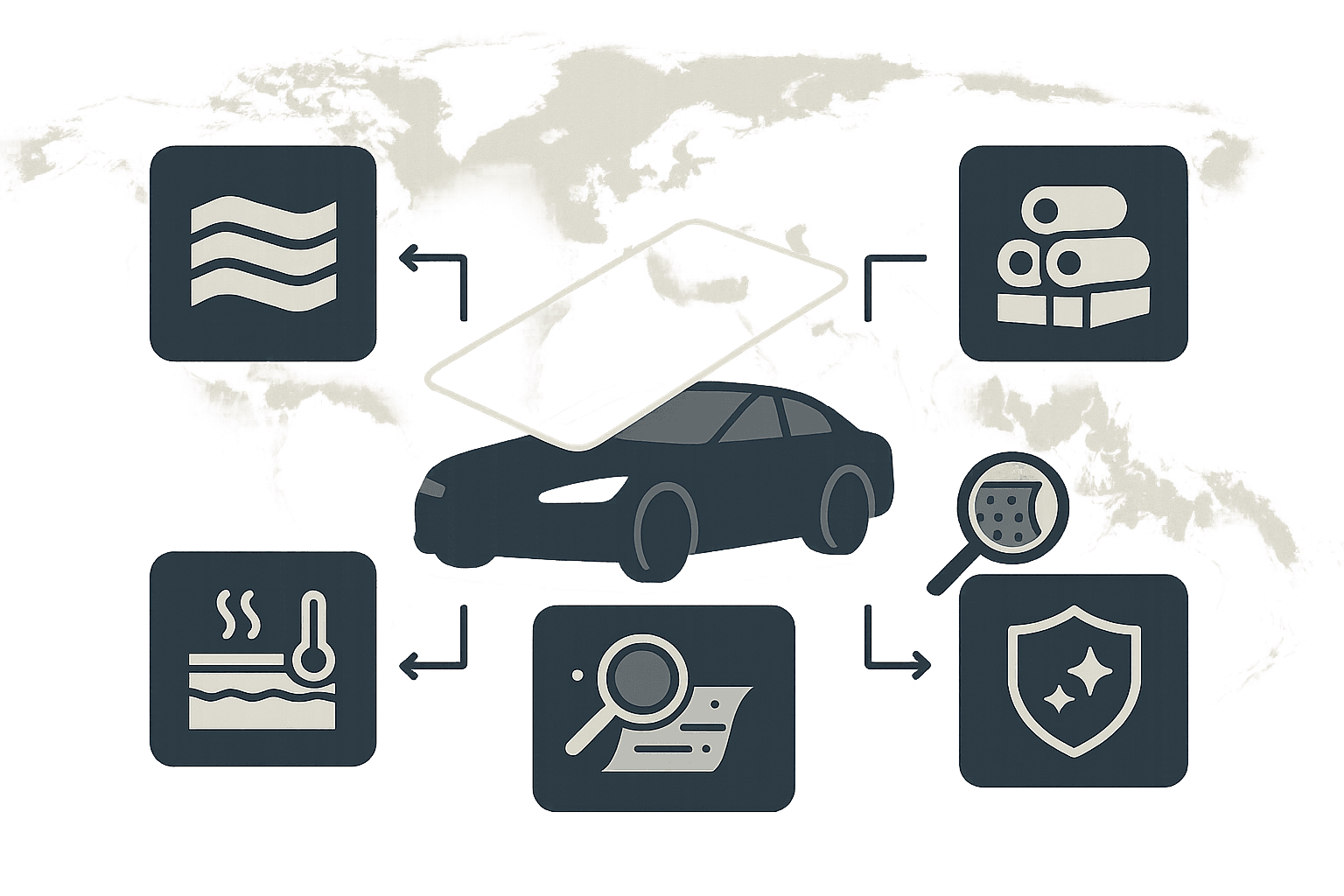
XPSHELL can support distributors and private label programs as a China-based automotive film manufacturer supplying:
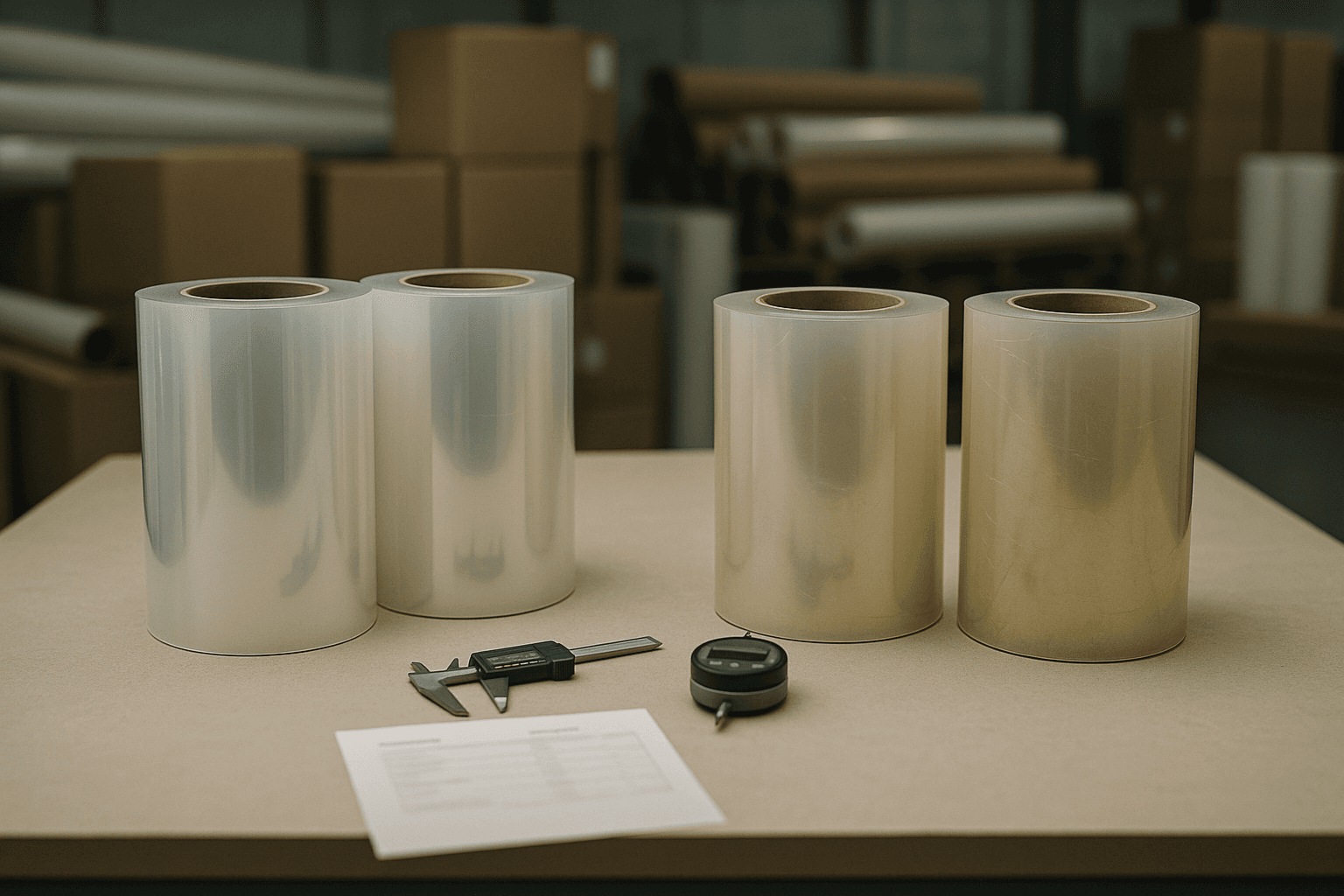
- Clear PPF rolls and master rolls for Tesla-heavy installers.
- Matte and color PPF lines for full-body Tesla makeovers.
- Window tint series tuned for heat rejection, UV protection and signal-safe performance.
- OEM and private label configurations with custom branding and packaging.
Instead of generic “high quality” claims, frame the advantages in terms of distributor outcomes:
- Coating and curing control aimed at improving batch consistency, so your Tesla installers do not see sudden changes in tack, stretch or orange peel between shipments.
- QC and lab testing that provide repeatable performance, reducing warranty complaints in Tesla-heavy markets.
- Sample and pilot batch workflows so your top XPEL/STEK installers can test alternative films on a few Tesla bumpers and hoods before committing.
- Export-ready packing to minimize transport damage, especially on long-roll Tesla PPF orders.
For distributors who currently rely heavily on one big brand, a structured XPSHELL program can serve as:
- A margin-friendly alternative line for price-sensitive Tesla customers.
- A private label Tesla PPF brand that protects your local market position.
Stocking strategy for Tesla PPF, color PPF and window tint
Tesla demand is predictable enough that you can create specific stocking rules around it.
Clear PPF: the core Tesla inventory
For clear film, consider these guidelines:
- Maintain front-end coverage capacity for your local Tesla registration volumes. If your top installers each wrap several Model Ys per week, they will expect you to have consistent rolls in the right widths.
- Keep extra bumper-friendly widths since Tesla bumpers are large, curved and often wrapped in single pieces.
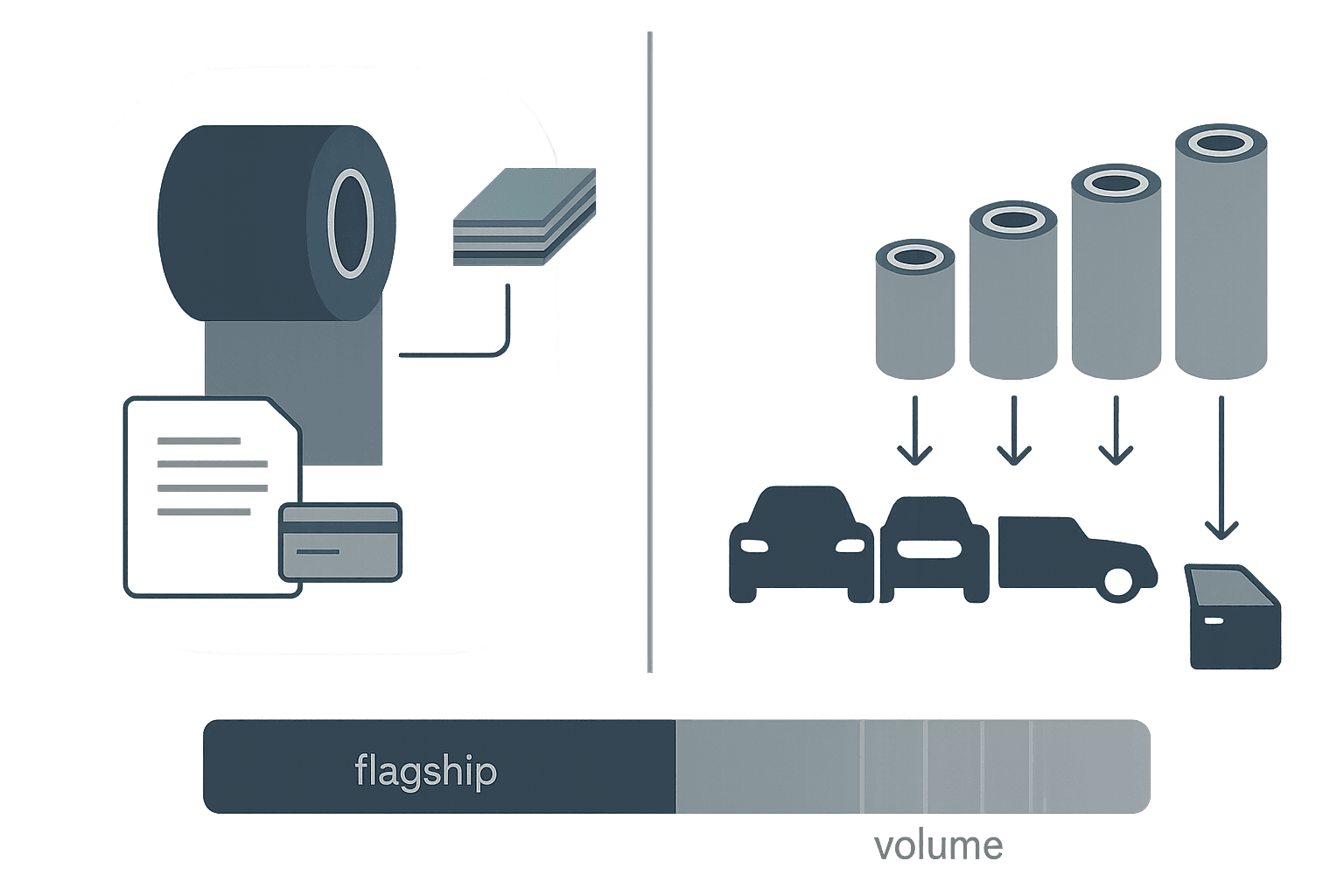
- Offer at least two performance tiers:
- A flagship series that competes comfortably with XPEL or STEK feature sets.
- A mid-tier series for fleet or budget Tesla packages.
Matte and color PPF for Tesla appearance packages
Installers report that matte and satin finishes are heavily requested on Model Y and similar EVs. For B2B planning this means:
- Stock matte PPF in popular Tesla colors where demand is highest (white, black and grey based conversions are common).
- Carry at least a small but curated color PPF palette for full transformations. Even a few high-impact shades can drive entire project calendars.
- Ensure your matte and color series are supported by consistent batch appearance, as Tesla owners tend to notice panel-to-panel gloss or color shift.
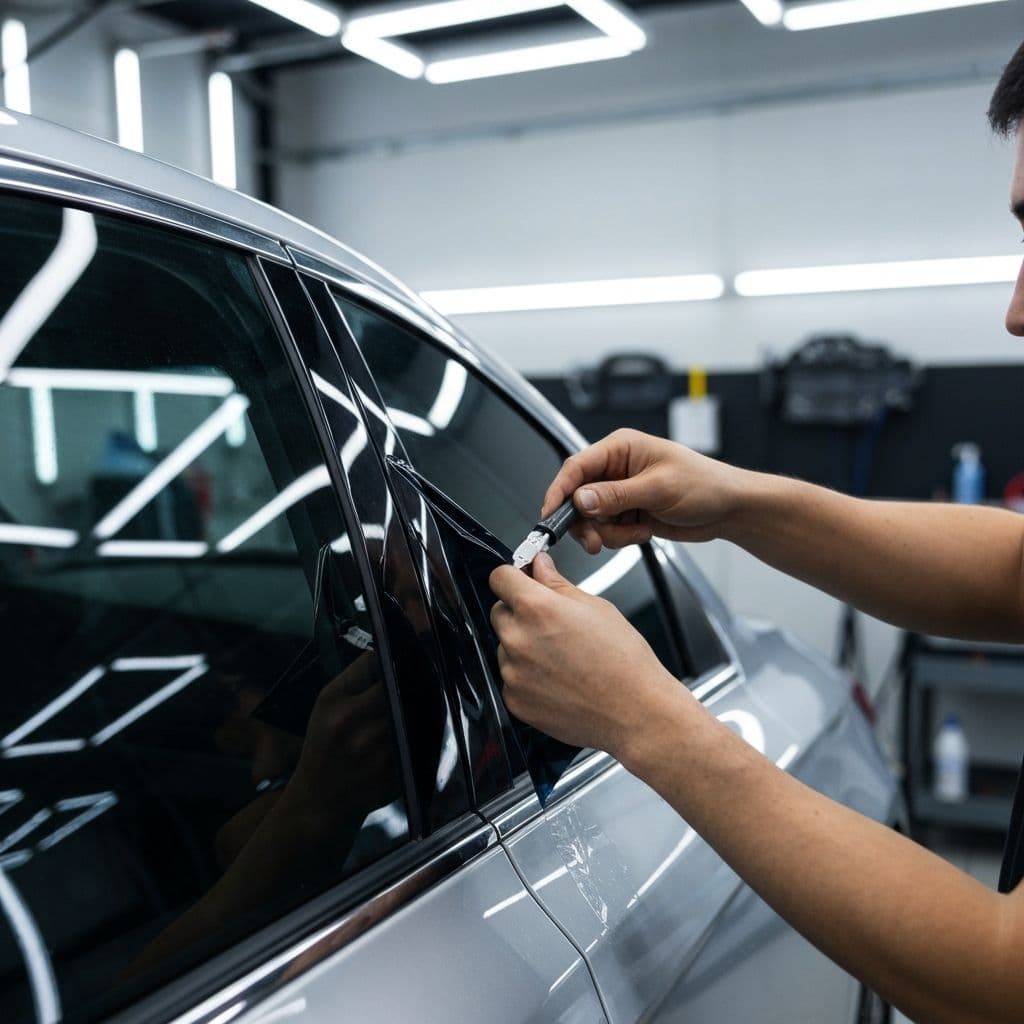
Window tint and glass protection
Tesla cabins run hot due to large glass areas and significant windshield exposure. It is logical to bundle:
- Nano-ceramic or nano-composite window tint with high heat rejection and UV blocking.
- Signal-safe constructions because Tesla drivers depend on connectivity and advanced driver assistance.
- Optional windshield protection films in markets with heavy road debris.
A cohesive Tesla appearance and protection package that ties together PPF, tint and coatings helps installers raise ticket size and justifies more stable distributor ordering patterns.
What proof B2B Tesla buyers need before switching film suppliers
If you are selling into Tesla-focused installer networks, expect a higher standard of proof than in generic retail channels. The core objections you must address are:
- Batch stability: Installers want reassurance that a Tesla bumper wrapped this month will behave the same as one wrapped from a new roll in six months.
- Sample availability: They will not switch away from a known XPEL or STEK product without first testing several cars, ideally Teslas, with your film.
- Warranty clarity: Tesla owners keep detailed records; installers need factory-backed warranty wording that they can explain in simple language.
- Technical data: Even if they do not read every line, pros like to see optical, mechanical and weathering data that looks serious and repeatable.
- Supply continuity: Sudden stock-outs on front-end Tesla PPF cut directly into their revenue; you must show how your production and logistics reduce that risk.
XPSHELL can support this by pairing each PPF or tint series with:
- Clear spec sheets and batch IDs.
- Repeatable sample roll programs.
- A defined replenishment and lead-time plan for Tesla-heavy regions.
Unique guidance before you publish or present Tesla PPF content
Before you roll out any Tesla PPF landing page, brochure or sales script to your dealers or installers, make sure it:
- Speaks explicitly to Tesla paint concerns and the real-world damage installers see.
- Differentiates PPF vs ceramic coating in simple, non-technical terms.
- Shows panel-specific examples: Tesla bumper, hood leading edge, rockers and mirror caps.
- Clarifies that your content is aimed at professional installers and distributors, not DIY owners.
- Avoids any mention of counterfeit or unauthorized use of major brands.
- Mentions that Tesla fitments are supported via bulk rolls and/or pattern access, not consumer kits.
You should also weave in clear calls to action for B2B readers, such as:
- Requesting Tesla-specific PPF samples.
- Scheduling test installs on a single Tesla vehicle before adding your film to their menu.
- Contacting your team for OEM or private label discussions when volumes justify it.
Frequently Asked Questions
Is PPF or ceramic coating better for protecting Tesla paint?
For impact protection, PPF is the superior choice. It is thick enough to absorb stone hits that would otherwise chip the paint on high-risk areas like the Tesla bumper and hood. Ceramic coating is excellent for gloss and easier washing, but it does not stop rock chips. The best-performing Tesla packages apply PPF to impact zones or the full body and then add a ceramic coating on top for easier maintenance.
Which Tesla panels should installers prioritize for PPF coverage?
Tesla front bumpers, hood leading edges and front fenders are the first to show chips in daily use. Rocker panels, lower doors and the areas behind rear wheels are the next most common damage zones. If a customer’s budget is limited, a front-end package plus targeted rocker protection delivers the highest return. For customers who keep the car long term or are particular about appearance, full-body Tesla PPF is a logical upsell.
How should distributors stock PPF for Tesla-heavy markets?
Distributors should maintain steady inventory of clear PPF rolls in widths suited to Tesla bumpers, hoods and rockers, along with at least one matte series for full-body conversions. Having a margin-friendly alternative to premium-branded films helps serve price-sensitive Tesla owners without sacrificing performance. Consistent batch quality, reliable replenishment and ready-to-ship sample rolls are crucial to winning and keeping Tesla-focused installers.
Can a factory-direct manufacturer like XPSHELL support OEM or private label Tesla programs?
Yes. A China-based manufacturer such as XPSHELL can supply clear PPF, matte and color PPF, and window tint in volumes suitable for OEM, dealer or private label programs. The key is to structure testing and validation first: send samples to top Tesla installers, run several test cars, review installation behavior and early aging, and then scale orders once performance and batch consistency are proven.
What should installers explain to Tesla owners who only ask for ceramic coating?
Installers should clarify that ceramic coating improves gloss and cleaning, but it does not meaningfully protect against the rock chips and scratches that Tesla bumpers and hoods commonly suffer. A straightforward way to frame it is to recommend PPF on the most vulnerable panels first, and then offer ceramic coating as an enhancement on top of both the film and any exposed paint areas. This keeps the conversation honest and builds long-term trust with Tesla clients.