B2B buyers searching for PPF STEK DYNOshield, STEK DYNOcarbon gloss carbon PPF, or STEK vs 3M PPF are usually not just curious about brands. You are trying to match film performance, appearance, and roll-level pricing with a reliable supply program that protects your installer network and margins.
This guide is written for distributors, installation networks, OEM buyers, and private label teams who want factual specs, neutral comparisons, and a clear framework for evaluating both branded and manufacturer-direct options.
Who this guide is for and what you are really solving
If you are:
- Building or expanding a PPF distribution program
- Running a multi-bay installation shop and considering a brand change
- Sourcing OEM or dealer-installed PPF
- Exploring a private label film line
then searches like “ppf stek dynoshield”, “stek dyno carbon ppf”, “stek ppf roll price”, and “stek vs 3m ppf” signal a deeper problem:
You need a film and supply partner that can deliver repeatable quality, competitive landed cost, and credible warranty support, not just a familiar logo.
For that decision, the relevant product lines are:
- Clear PPF for invisible protection (DYNOshield-type use cases)
- Color / pattern PPF for appearance-led projects (DYNOcarbon-gloss, gloss carbon styles)
- OEM / private label programs where you control branding, pricing, and assortment
Quick answers: what buyers usually mean by these STEK PPF searches
To satisfy the exact search terms up front, here are concise, factual definitions:
- “PPF STEK DYNOshield” – Refers to STEK’s clear, ultra glossy, hydrophobic, self-healing paint protection film line. STEK specifies DYNOshield as 8 mils thick, with a glossy finish, stain resistance, anti-contamination properties, and self-healing activated by heat or hot water, backed by a 10‑year warranty against delamination, yellowing, bubbling, and cracking.[1]
- “STEK DYNO carbon PPF” / “tek gloss carbon PPF” – Typically points to DYNOcarbon-gloss, a high-gloss black carbon-fiber pattern PPF with hydrophobic and “super self-healing” behavior, designed as a visual transformation film rather than invisible protection.[2]
- “STEK PPF roll price” – At B2B level, roll pricing is not one fixed number. It moves with film type (clear vs color/pattern), finish, top-coat system, roll width/length, order quantity, shipping terms, and distribution channel. Responsible buyers work from current quotes and total landed cost, not generic web prices.[4]
- “STEK vs 3M PPF” – A practical comparison looks at published specs, finish options, self-healing description, warranty scope, installability, and local supply support, not just brand recognition. 3M, for example, offers clear Scotchgard Paint Protection Film Pro Series for automotive surfaces designed to protect against scratches, chips, and weathering.[3]
The rest of this guide walks through what these details mean for your sourcing decisions, then shows how to apply the same framework when you evaluate a factory-direct China-based manufacturer such as XPSHELL.
What is STEK DYNOshield? Verified specs buyers can cite
DYNOshield is STEK’s flagship clear TPU paint protection film aimed at high-gloss, invisible protection.
According to the official product information, DYNOshield:[1]
- Is presented as “ultra glossy, hydrophobic, self healing and puncture resistant” paint protection film
- Uses a nano‑ceramic‑infused top coat that is bonded to the film as a liquid to provide extreme hydrophobic properties and optical clarity with an orange peel‑free finish
- Is specified as 8 mils thick with a glossy finish
- Is described as hydrophobic, anti‑contamination, stain resistant, and self‑healing by heat or hot water
- Is designed to be virtually invisible over factory gloss paints, positioned to help stop rock chips and scratches
- Carries a 10‑year warranty against delamination, yellowing, bubbling, and cracking[1]
- Is available in multiple roll sizes, including widths from 18″ up to 72″ and various lengths, such as 60″ x 50′ and 72″ x 33′[1]
For distributors and OEM buyers, these published specs give you a concrete benchmark when you:
- Compare competing clear films in the 8‑mil gloss category
- Define your own private label spec sheet (thickness, gloss, hydrophobic behavior)
- Audit incoming batches from any supplier against claimed performance
DYNOshield specs summary (for quick reference)
| Spec category | DYNOshield published details |
|---|---|
| Product type | Clear, ultra glossy paint protection film |
| Thickness | 8 mils thick TPU film class[1] |
| Surface | Glossy, orange peel‑free optical finish described[1] |
| Key properties | Hydrophobic, anti‑contamination, stain resistant, self‑healing (heat/hot water)[1] |
| Visible effect | Designed to be virtually invisible over factory gloss paints[1] |
| Warranty | 10‑year warranty against delamination, yellowing, bubbling, cracking[1] |
| Typical roll sizes | Multiple widths 18″–72″, lengths including 50′ and 33′ depending on width[1] |
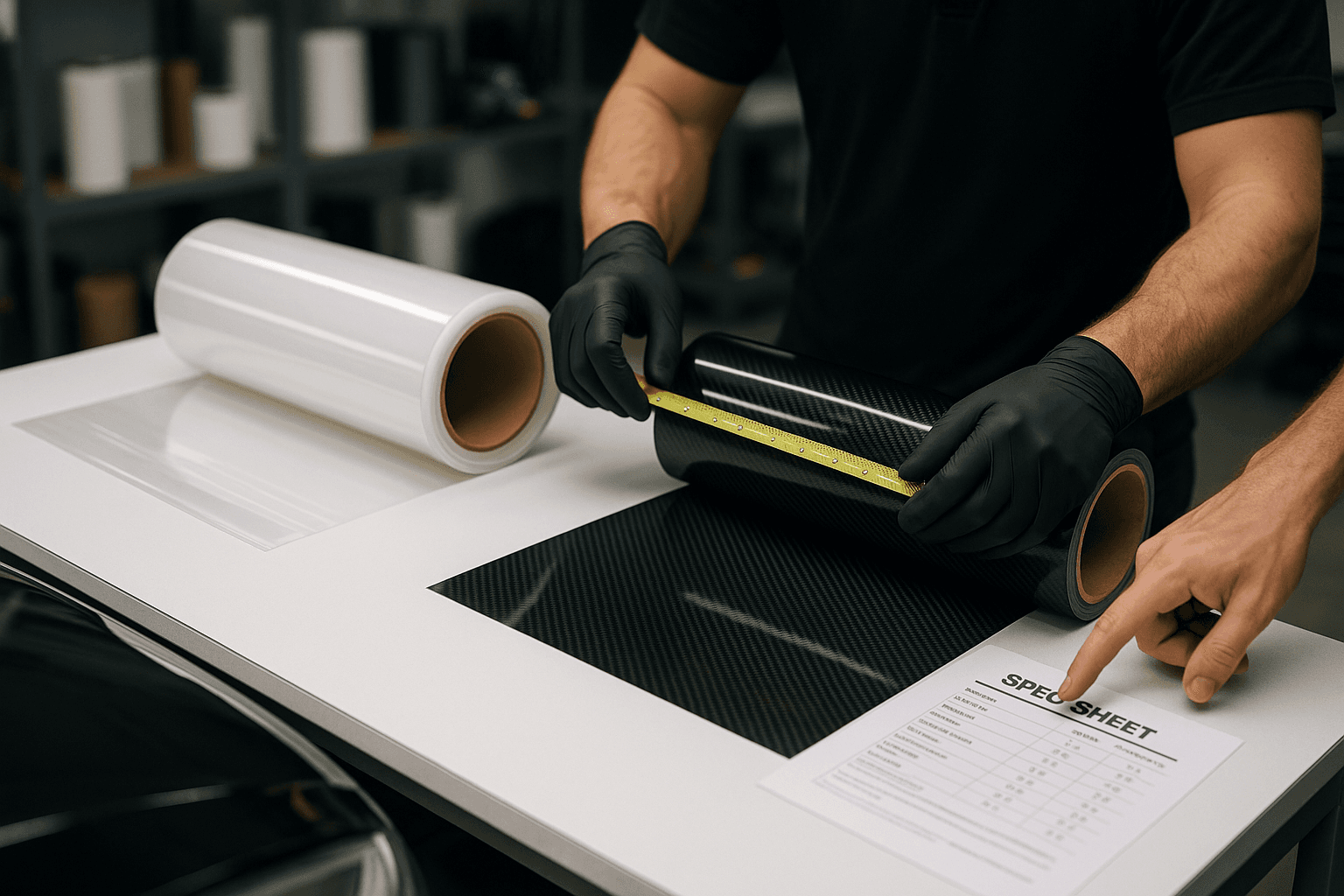
When you evaluate any clear PPF—branded or private label—these are the dimensions you should request in a technical data sheet and then validate with sample testing.
What is STEK DYNOcarbon gloss carbon PPF?
The terms “STEK DYNO carbon PPF” or “tek gloss carbon PPF” usually refer to DYNOcarbon-gloss, a fashion or appearance PPF rather than a standard clear film.
From STEK’s own description, DYNOcarbon-gloss:[2]
- Is positioned as “High-gloss Carbon Fiber Pattern PPF”
- Combines attributes of DYNOcarbon and DYNOblack to transform the vehicle
- Uses a separate color layer to help maintain its true black coloration over time[2]
- Features a black carbon-fiber pattern and extreme gloss finish
- Is listed as hydrophobic, “super self-healing”, water stain-resistant, highly contamination-resistant, highly chemical-resistant, and “super stretch”[2]
- Is offered with a 10‑year warranty against delamination, yellowing, bubbling, and cracking[2]
- Comes in a single size of 60″ x 33′[2]
Clear PPF vs gloss carbon PPF: category distinction
DYNOcarbon-gloss highlights a key distinction buyers often blur:
- Clear PPF (DYNOshield-type) – Sold as protection that preserves the original paint look, focused on gloss, clarity, and near invisibility.
- Pattern / color PPF (DYNOcarbon-gloss-type) – Sold as visual transformation plus protection, where the carbon weave, color, or texture is part of the value proposition.[2][4]
For distributors and installers, that means:
- Stocking DYNOcarbon-style films to address styling-conscious segments (carbon roofs, hoods, mirrors) where customers expect the film to be seen.
- Positioning clear 8‑mil gloss films when the buyer’s first concern is protecting high-value paint without obvious film presence.
STEK vs 3M PPF: how B2B buyers should compare them
Many searches include “STEK vs 3M PPF”, but a brand logo alone does not answer the business questions you face.
3M offers clear paint protection films under the Scotchgard Paint Protection Film Pro Series, described as a clear film that helps protect automotive surfaces from scratches, chips, and weathering.[3] STEK, by contrast, positions DYNOshield as an ultra glossy, hydrophobic, self-healing clear PPF with specific 8‑mil thickness and a defined warranty.[1]
As a B2B buyer, the comparison should be framework-driven instead of brand-driven.
Neutral comparison framework
When you compare STEK, 3M, and any alternative program, work through:
- Core specs – Thickness class (e.g., 8‑mil), material type (TPU), published clarity/texture, hydrophobic and self-healing descriptions.[1][3]
- Finish options – Availability of gloss, matte, satin, and fashion patterns (carbon, colored, etc.).
- Warranty – Years of coverage and what is explicitly included (yellowing, delamination, bubbling, cracking).[1][2][3]
- Installability – Installer feedback on stretch, tack, slip, and liner behavior. This is where roll-to-roll consistency strongly affects your downstream network.[4]
- Local and regional supply – How reliably you can replenish film in your territory, lead times, and support.
- Margin structure – The gap between your landed cost per square meter and your resale pricing, including freight, duties, and scrap.
Why consistency and supply often matter more than logo
Installer communities often report that variation between rolls and batches—including orange peel, clarity, adhesive tack, and liner behavior—is what drives frustration, callbacks, and brand switching, even when headline features like “self-healing” look similar on paper.[4]
Industry guidance points out that distributors win or lose on roll-to-roll consistency and batch traceability, because variations can show up as:[4]
- One roll installing easily, the next one “fighting” installers
- Edges lifting on one batch but not another
- Texture appearing differently under LEDs vs natural light
- Changes in perceived adhesive tack between lots
That same guidance recommends tying every inbound roll to a lot ID and storage window, and checking texture, clarity, adhesive behavior, liner release, and thickness tolerance as part of distributor QC.[4]
For your business, this means the best PPF program is often the one that offers:
- Predictable performance across lots
- A clear process when a batch is off
- Economic room for your installers to profit, even after scrap and labor
What actually affects STEK PPF roll price and wholesale quotes
Searches like “STEK PPF roll price” often look for a single number, but on the B2B side, distributors know pricing is more complex. Just as industry articles emphasize, the focus should be on consistency and total landed cost instead of chasing the lowest sticker price alone.[4]
Key inputs that typically move roll-level pricing for any branded or manufacturer-direct PPF program include:
- Film category – Clear gloss PPF vs matte vs color/pattern (“fashion film”) usually sit in different price tiers.
- Top-coat system – Advanced hydrophobic or self-healing systems often command higher cost.
- Roll dimensions – Wider films and custom lengths influence cost per roll and per square meter.
- Order quantity and frequency – Pallet-level or container-level commitments may yield better pricing than sporadic single-roll orders.
- Shipping terms and route – Air vs sea, incoterms, duties, and destination surcharges significantly affect landed cost.
- Channel and exclusivity – Whether you are buying through a regional distributor or direct from a manufacturer.
Why you should calculate total landed cost, not just roll price
For each candidate program, build a simple model:
- Base roll cost (invoice price)
- + Freight, insurance, duties, and handling
- + Expected scrap rate (due to learning curve, texture issues, or batch variation)
- − Rebates or volume incentives (if any)
This gives a true cost per usable square meter that you can compare fairly across STEK, 3M, and any China-based manufacturer program.
When to choose clear PPF vs gloss carbon or other color/pattern PPF
Because queries mix both DYNOshield and DYNOcarbon-gloss, it helps to separate use cases clearly.
Clear PPF (DYNOshield-type) – when invisibility is the priority
Choose clear PPF when:
- Your market is OEM or dealer-installed protection on new vehicles
- Clients prize factory-color retention and a “bare paint” look
- Luxury or fleet buyers need uniform presentation across many vehicles
- You want a single stocking film that works on nearly all colors and body styles
DYNOshield’s positioning around high gloss, optical clarity, and invisibility over factory gloss paint is a good example of what clear films in this segment aim to deliver.[1]
Gloss carbon / fashion PPF (DYNOcarbon-gloss-type) – when style sells the job
Choose gloss carbon or other pattern/color PPF when:
- You are selling visual upgrades (carbon hoods, roofs, splitters) where the film must be seen and appreciated
- Customers are already paying for body kits or aero parts and want matching texture
- You are creating limited runs or special editions for dealers or OEM programs
DYNOcarbon-gloss, with its black carbon-fiber pattern, extreme gloss, separate color layer for true black, and self-healing, hydrophobic behavior, is a clear example of this fashion-film category.[2]
From a stocking perspective, many distributors:
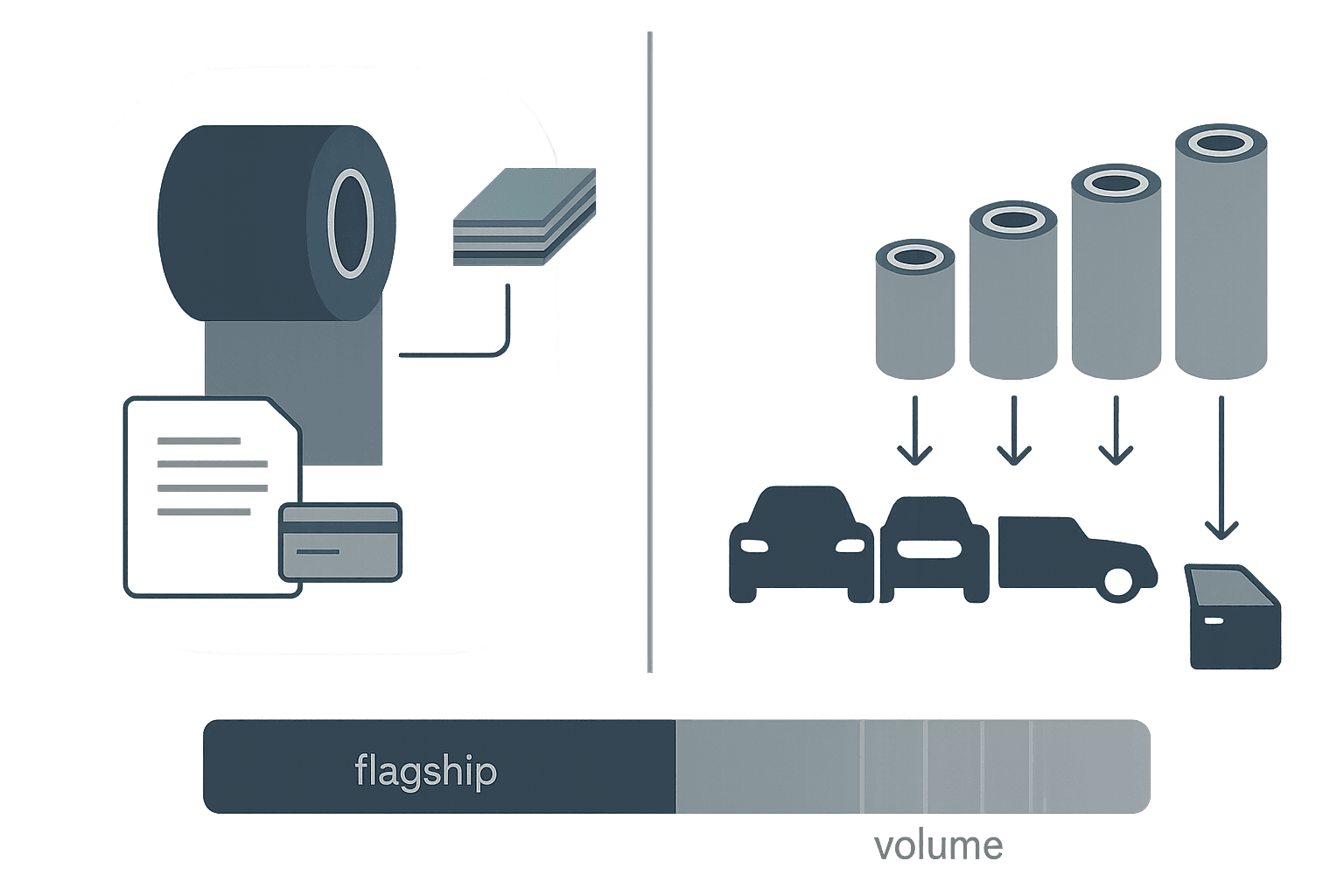
- Lead with a core clear PPF line as the volume product
- Add a small but high-margin range of fashion films (carbon, colors, iridescent) as upsell options for trend-driven customers
If you are evaluating a STEK or 3M alternative: what to test first
If you are considering moving from STEK, 3M, or any other major brand to a new manufacturer program—such as a China-based PPF manufacturer—your risk is not just spec sheets. It is customer trust, installer satisfaction, and complaint volume.
Industry guidance for distributors highlights that even well-known brands can show variation between rolls, so inbound QC and sample testing are essential, regardless of logo.[4]
Practical sample-testing checklist
Before committing to a large order from any alternative supplier, test:
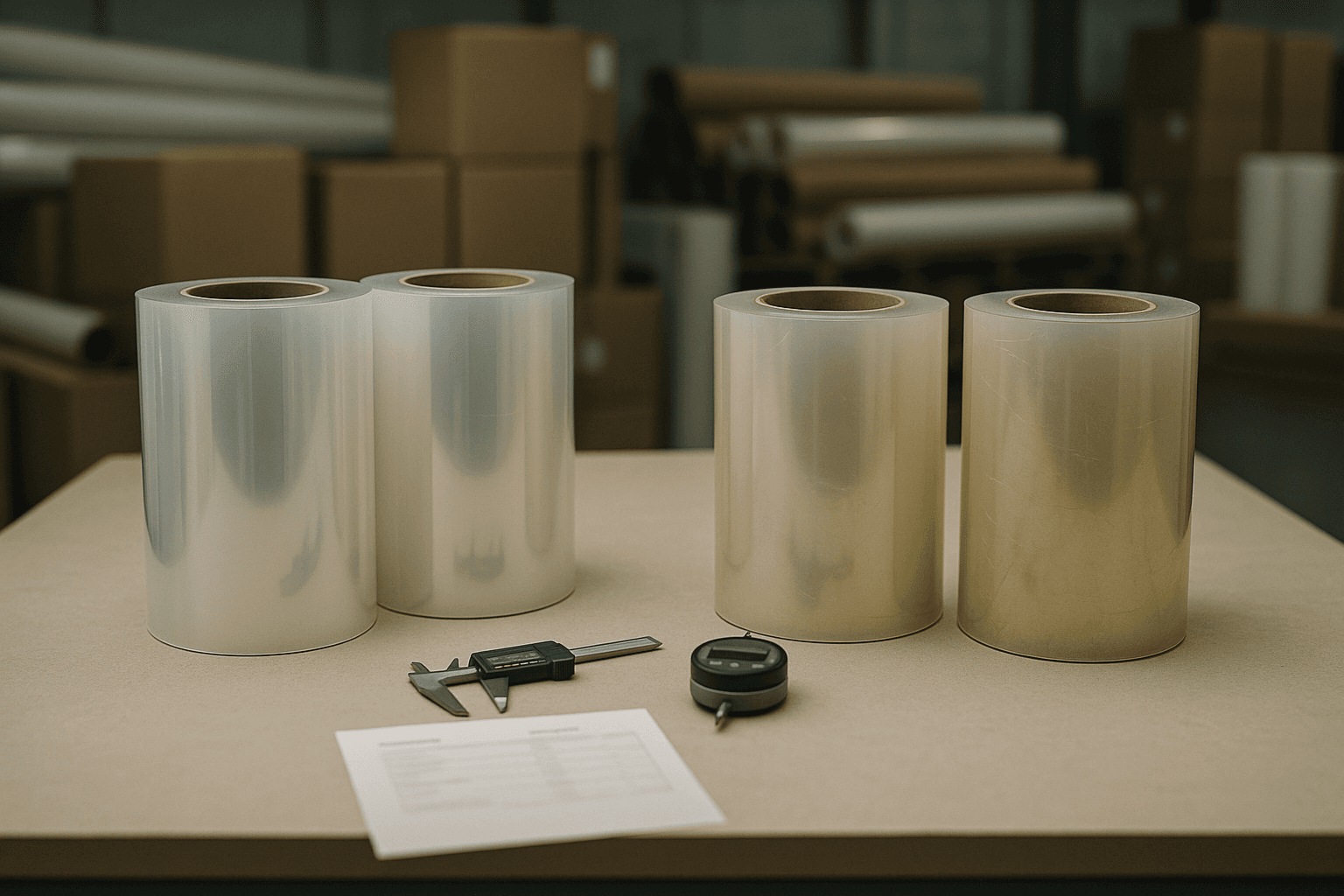
- Optical clarity and texture – Check for haze, orange peel, and consistency under strong LED and sunlight.[4]
- Adhesive behavior – Observe tack, repositionability, and how edges behave during and after install.[4]
- Stretch and memory – Confirm that film elongates predictably without unexpected snap-back.
- Self-healing response – Use mild heat or hot water to see how quickly minor marks recover compared with your current film.[1][2]
- Top-coat slickness and hydrophobicity – Evaluate water beading and ease of cleaning versus your reference brand.[1][2]
- Liner release and handling – Verify that liner removal is smooth and does not cause contamination or waste.[4]
Also request in writing:
- Technical data sheets (TDS) for each film type
- Lot and batch tracking format, so you can identify and isolate problem rolls quickly[4]
- Shelf-life and storage guidance, to reduce risk of performance drift
- Warranty terms and claim process, including what is covered and how evidence is evaluated
These steps help you avoid learning about a supplier’s weaknesses only after your installers have already installed multiple cars from the same problematic batch.
How XPSHELL fits B2B buyers researching branded PPF comparisons
Many buyers who research STEK DYNOshield, DYNOcarbon, and STEK vs 3M eventually explore factory-direct alternatives to improve control over specs, branding, and margins.
XPSHELL positions itself as a China-based automotive film manufacturer focused on B2B supply of:
- Clear paint protection film (PPF)
- Color and fashion PPF (including gloss and textured styles)
- Automotive window tint series
- OEM and private label programs for regional distributors and brands
For distributors, installers, OEM buyers, and private label teams, XPSHELL’s role is not to be “identical to” any brand. Instead, the focus is on:
- Supporting sample evaluation so you can benchmark against existing films
- Offering spec customization discussions (thickness classes, finishes, release liners, etc.)
- Providing quote workflows that account for roll mix, packaging, and logistics
- Planning repeat supply with attention to batch consistency, QC, and export packing to help reduce complaint risk and transit damage
Next steps: how to move from research to controlled testing
If you are in the awareness stage—comparing STEK, 3M, and manufacturer-direct options—the most effective next step is a structured evaluation, not a blind switch.
A practical path is to:
1. Review product options – Explore clear PPF and color/fashion PPF families, along with matching window tint, to see which lines map to your market demand. 2. Request samples and data sheets – Ask for standard-width rolls or cut lengths of clear and pattern PPF, plus full technical data and warranty summaries. 3. Run controlled installer tests – Have your core installers test the films on standard panels or internal vehicles, using a checklist for clarity, texture, stretch, tack, and healing. 4. Compare landed cost and batch controls – Request indicative pricing for your likely volume and routes, and clarify how batches are identified and how issues are handled. 5. Plan a limited pilot – Before a full switchover, route a fraction of your monthly installs onto the new film and monitor callbacks, installer feedback, and customer perception.
From there, you can decide whether to:
- Add a new line as a mid-tier or premium alternative
- Migrate completely from a legacy brand over time
- Use a factory-direct program as the basis of your private label PPF strategy
For XPSHELL specifically, the usual B2B path is:
- Browse current film families via /products and /products/paint-protection-film
- Submit your requirements and sample requests via /contact
- Use the response to shape your internal testing and pricing models
Frequently Asked Questions
Is STEK DYNOshield only for exotic or luxury vehicles?
DYNOshield is widely used on high-end vehicles because of its high gloss, optical clarity, and self-healing, hydrophobic top coat.[1] However, nothing in the published specs limits it to exotic cars. For B2B buyers, the main question is whether your local customers will pay for a premium clear film in your market, or whether a different tier or private label clear PPF is better suited to your pricing structure.
How does DYNOcarbon-gloss compare to a standard carbon vinyl wrap?
DYNOcarbon-gloss is described as a high-gloss carbon-fiber pattern PPF with hydrophobic, self-healing, and contamination-resistant properties, built on a protective PPF platform.[2] Traditional carbon-look vinyl is generally about appearance only, with thinner constructions and no self-healing top coat. While exact constructions vary by brand, you can present DYNOcarbon-style films as appearance plus protection, not just styling.
Can I use the same evaluation checklist for STEK, 3M, and manufacturer-direct PPF?
Yes. A neutral checklist—focusing on clarity, texture, adhesive behavior, stretch, self-healing response, liner release, and batch traceability—works across all suppliers.[1][2][4] Combine this with written warranty terms and a clear escalation path for batch issues to make a decision that protects your installer relationships and long-term margins, regardless of brand.
What roll sizes should a distributor prioritize when stocking PPF?
STEK’s DYNOshield catalog illustrates the typical approach: multiple widths from 18″ up to 72″ and different lengths per width.[1] Many distributors prioritize widths like 60″ for full hoods and front ends, supplemented by narrower rolls (18″–30″) for partial coverage and smaller components. Your optimal mix should reflect your most common install packages and the plotting patterns you support.