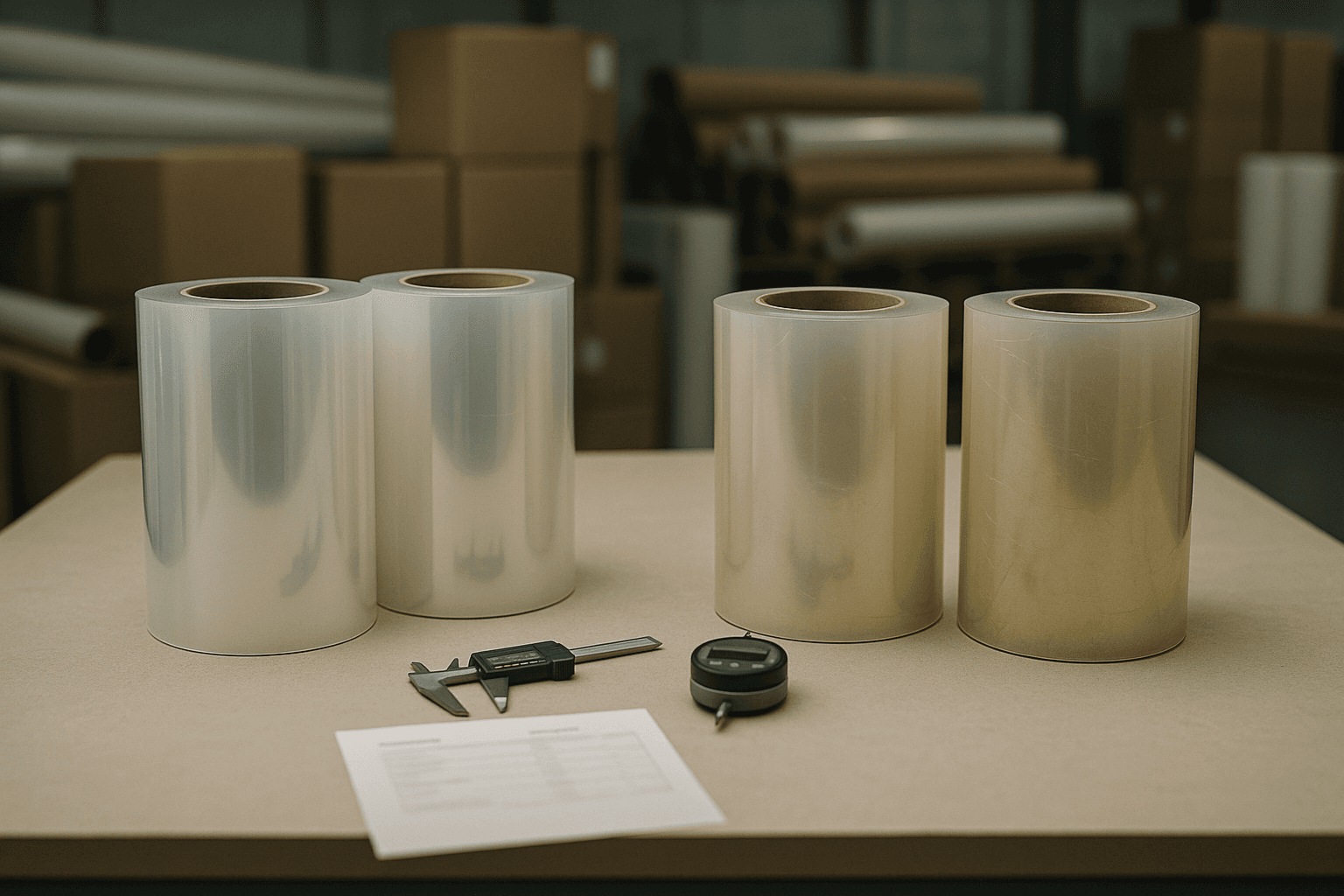
For PPF dealers, installers and distributors, choosing between TPU and TPH is not only a material decision. This paint protection film material comparison directly affects installation experience, customer satisfaction, warranty risk and long-term business reputation.
For anyone engaged in global PPF wholesale, shop supply or private-label brand operation, you will inevitably encounter one confusing issue: two types of paint protection films look nearly identical, yet their prices and long-term customer feedback vary drastically. This discrepancy mostly stems from differences in base materials, rather than exaggerated marketing pitches.
This article is written from a pure B2B procurement perspective. It clarifies the core gaps between TPU and TPH materials and helps global buyers evaluate a reliable PPF manufacturer and supplier before bulk purchasing. After reading, you will be able to judge which material fits your local market, and know key tests to run before placing bulk orders.
1. TPU vs TPH PPF: They Are Different Materials
Many suppliers label all automotive protective films as PPF, but their base materials differ fundamentally.
What Is TPH PPF?
TPH is a modified PVC hybrid material with low production costs, widely adopted for entry-level low-cost films. Its main flaw does not surface right after installation; instead, it suffers poor long-term stability. Under high-temperature, high-UV and rainy climates, TPH film is prone to fogging, yellowing and heavy adhesive residue over time.
What Is TPU PPF?
TPU stands for thermoplastic polyurethane, the mainstream high-end base material for premium paint protection films. It boasts superior stability, consistent optical clarity, reliable stretch recovery and outstanding weather resistance.
TPU PPF vs TPH PPF Comparison: Key Differences for B2B Buyers
| Comparison Factor | TPU PPF | TPH PPF |
| Base Material | Thermoplastic Polyurethane | Modified PVC hybrid material |
| Market Position | Premium paint protection film | Entry-level low-cost film |
| Optical Clarity | Stable long-term clarity | More likely to develop haze over time |
| Self-Healing | Strong thermal self-healing performance | Limited or no reliable self-healing |
| Yellowing Resistance | Better UV and weather resistance | Higher aging risk under UV exposure |
| Stretch & Installation | Better elasticity and recovery | More prone to stress marks and edge issues |
| After-sales Risk | Lower warranty and complaint risk | Higher risk of rework and customer complaints |
| Recommended Buyers | Premium dealers, distributors, OEM brands | Price-sensitive markets |
While TPU PPF generally provides better long-term stability and lower after-sales risks, the right choice still depends on your market positioning, customer expectations and business model.
2. Core Performance Indicators to Compare During Procurement
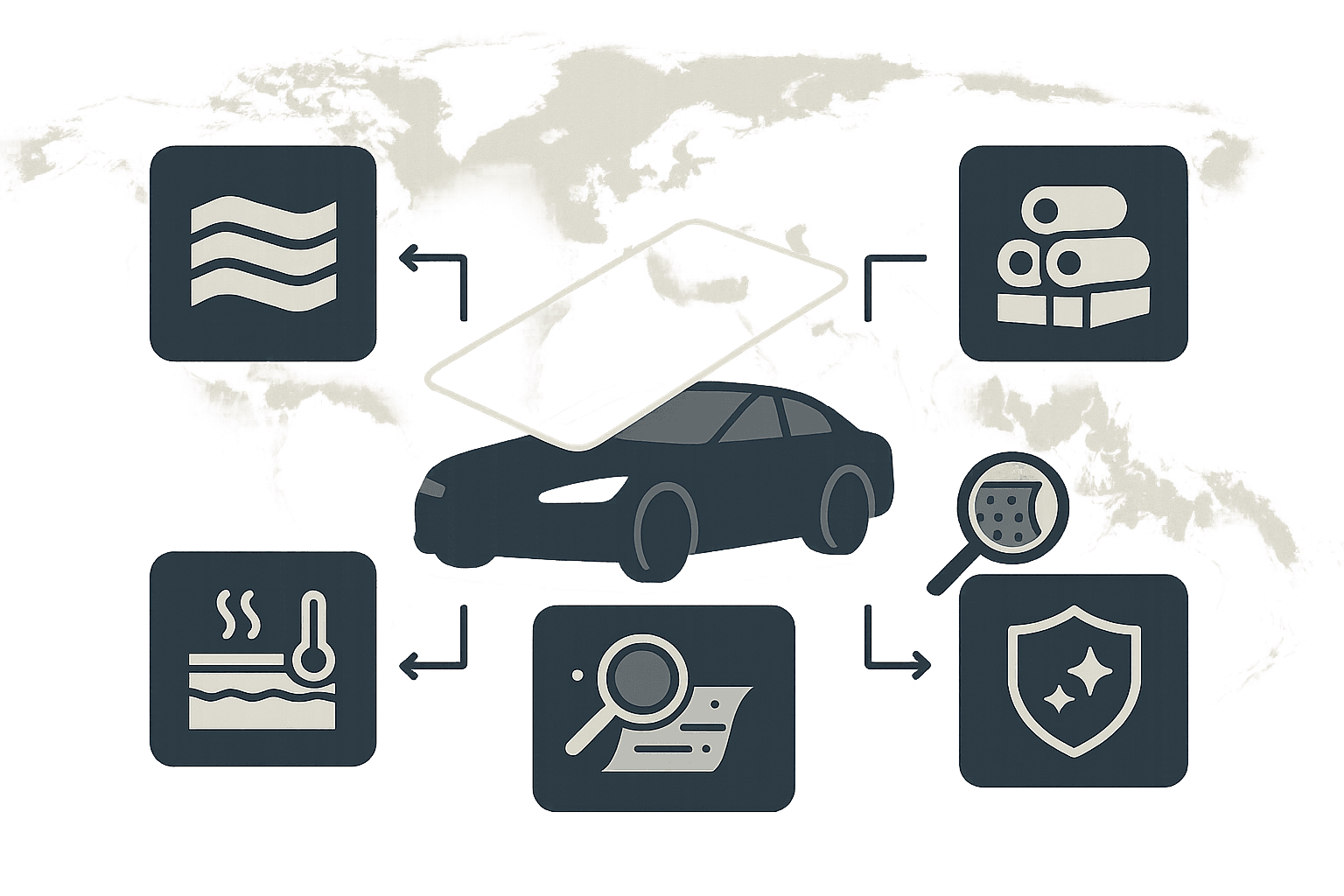
Most buyers only focus on upfront pricing, only to face heavy rework costs and customer complaints once defective films are installed. The five key dimensions below must be evaluated when comparing TPU and TPH.
2.1 Optical Clarity & Long-Term Surface Appearance
Fresh TPH film looks glossy at first, but it will gradually turn hazy and grey after months of outdoor exposure, resulting in inconsistent finish across full vehicle wraps. This defect is highly noticeable on luxury and high-end vehicles.
TPU maintains stable optical performance for years without obvious fogging, delivering uniform, clean full-car finishing. For installers and distributors, visual clarity is the first factor customers judge after vehicle wrapping.
2.2 Thermal Self-Healing Performance
Standard TPH film delivers no reliable thermal scratch recovery. Fine swirl marks and minor abrasions cannot be repaired by heat, leaving installers without a tangible selling point to demonstrate to vehicle owners.
TPU is coated with dedicated thermal self-healing top layers. Minor scratches can fade away with heat exposure, creating an intuitive demonstration tool to boost closing rates for retail shops.
2.3 Anti-Yellowing & Weather Resistance
This is the most critical long-term risk factor for procurement decisions.
Exposed to intensive UV radiation and high temperatures, TPH degrades rapidly and turns yellow, leaving stubborn adhesive residue upon removal. If your market covers the Middle East, Southeast Asia or Australia with strong sunlight, short-term sample appearance cannot represent long-term field performance.
TPU is the reliable long-term supply option for distributors, as its weather resistance directly determines repeat orders and local shop reputation, as well as after-sales expense control.
XPSHELL’s aliphatic TPU paint protection film is developed for distributors and installers who require stable optical performance, weather resistance and long-term supply consistency.
2.4 Installation & Stretch Performance
Though TPH feels soft to touch, it leaves permanent white stress marks after stretching and easily curls at edges, raising labor difficulty and rework rates for installers.
TPU features balanced elasticity and stable rebound performance, streamlining wrapping work and lowering overall shop rework volume.
2.5 Long-Term Business Comprehensive Cost
TPH carries lower upfront purchasing costs, yet accumulated after-sales losses including customer complaints, rework labor and warranty compensation will erase all initial savings.
TPU is not the cheapest upfront option, but it supports stable long-term cooperation. For regional agents and brands prioritizing repeat business, material stability outweighs short-term low pricing.
Which Performance Factors Matter Most for B2B Buyers?
For distributors and installers, the most important factors are not only initial cost, but also:
l long-term clarity
l self-healing performance
l installation efficiency
l warranty risk
l customer retention
3. Material Selection Guidance for Different Markets
There is no universally "perfect" film; only products matching your local market positioning.
3.1 TPU PPF for Premium Detailing Shops
If your client base mainly consists of luxury car owners who prioritize long-term paint finish quality, aliphatic TPU is the primary choice. Short-term savings from TPH will damage your local shop reputation in the long run.
3.2 High-Temperature, High-UV Regions
Markets with strong sunlight require top-tier anti-yellowing performance. TPH carries high after-sales risks in these regions, making TPU the better long-term supply solution.
3.3 Low-Budget Mass Market
You may stock a small volume of TPH as an entry-level product if local customers are extremely price-sensitive and only demand temporary paint coverage. However, TPH must never be marketed as premium film, and TPU should remain your core profit-generating product line.
3.4 TPU PPF for OEM and Private Label Brands
Brand reputation and repeat orders are the foundation of private-label business. Frequent yellowing complaints caused by TPH will severely damage brand credibility, so TPU is strongly recommended for OEM production.
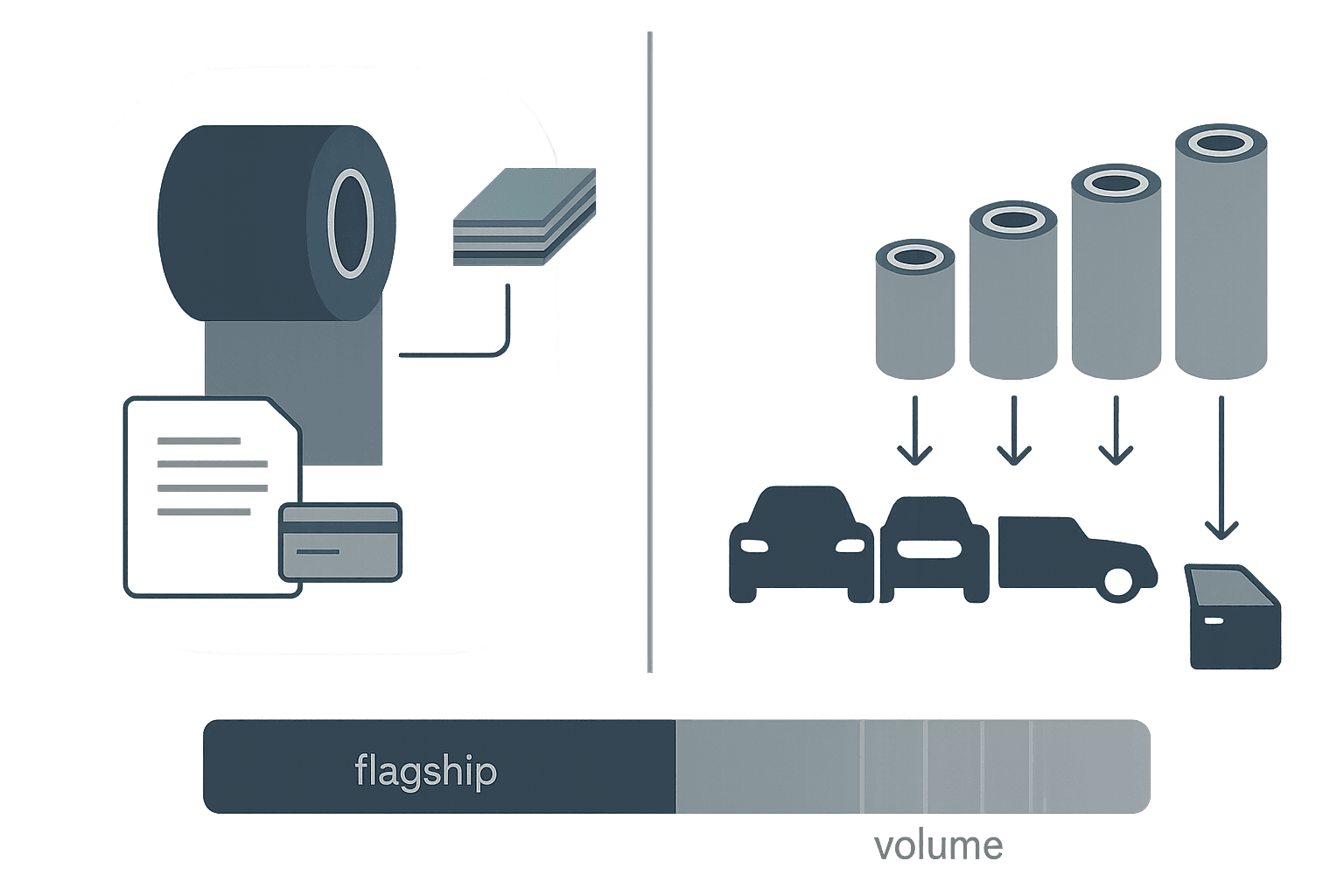
Per XPSHELL official policies, we offer full OEM support including customized film specifications, printed roll labels, customized outer cartons and sample books for global private-label brands. Learn more about our PPF OEM manufacturing service.
4. Four TPU PPF Quality Tests Before Bulk Purchasing
Do not fully trust supplier verbal claims about "genuine TPU". Complete these four sample verification tests independently before placing large orders.
4.1 Thermal Self-Healing Test
Scratch the film sample lightly, then pour hot water over the scratched area. Visible scratch recovery proves functional self-healing capacity; films with no recovery effect cannot be marketed as premium TPU.
4.2 Clarity & Haze Comparison
Place TPU and TPH samples side-by-side on dark paint panels to observe fogging and color inconsistency, as short-term gloss cannot reflect long-term aging performance.
4.3 Stretch Recovery Test
Pull film samples tightly then release tension. TPU rebounds completely without residual marks, while TPH leaves permanent white stretch blemishes.
4.4 Supplier Qualification Verification
Before placing bulk orders, buyers should also evaluate factory capability, production stability and OEM cooperation experience. See our complete guide on how to select a reliable PPF supplier.Sample application channels, wholesale pricing and dedicated sales kits listed on official platforms are core service resources for B2B buyers.
5. Why XPSHELL Focuses on Aliphatic TPU Film Line
XPSHELL does not compete solely on rock-bottom pricing. We position ourselves as a reliable stable film supplier serving global distributors, installers and private-label partners. Our product portfolio covers transparent PPF, colored paint protection film and automotive window tint, with full support for sample testing, regional dealer cooperation and customized OEM private-label programs.
For procurement partners, this positioning translates into five core advantages:
l Our full product line adopts aliphatic TPU base material, without low-cost TPH product lines;
l Ideal for merchants pursuing long-term stable supply and minimal after-sales disputes;
l Free full-series sample support for buyers to conduct independent performance verification;
l Complete customization services for roll labels, outer packaging and sample books for OEM clients;
l Target customers include regional wholesalers, local installation shops and private-label brand operators.
6 . Final Procurement Recommendations
If you operate regional distribution networks or independent private-label brands, aliphatic TPU paint protection film is your top priority. While not the cheapest upfront option, it minimizes long-term after-sales troubles and builds lasting customer trust.
TPH can only be stocked as supplementary entry-level goods. Never mislabel TPH as premium TPU, otherwise accumulated after-sales losses will eliminate all initial material savings. Always conduct full sample testing covering clarity, self-healing, anti-yellowing and stretch performance, plus comprehensive supplier qualification checks before mass procurement.
FAQ
Q1: Are TPU and TPH merely two naming variants of the same film material?
A: No. They belong to entirely different material systems. TPU is used for high-end long-lasting protective film, while TPH dominates low-cost entry-level products with inherent long-term aging defects, leading to drastically different after-sales risks.
Q2: How to distinguish genuine TPU from mislabeled TPH supplied by vendors?
A: Conduct four independent sample tests: thermal self-healing test, stretch recovery test, long-term haze observation and weather resistance exposure test. Meanwhile, verify the supplier’s stable mass production capacity, complete batch inspection records and standardized after-sales policies.
Q3: Is TPU always superior to TPH?
A: From the perspectives of long-term stability, installation experience and after-sales control, TPU is more suitable for sustained B2B wholesale business. Final selection still requires alignment with local market pricing and customer demand.
Q4: Does XPSHELL supply TPH paint protection film?
A: XPSHELL’s official product system centers on aliphatic TPU clear PPF, colored PPF and automotive window tint. We do not develop or market low-cost TPH film lines.
Q5: Should OEM brand owners choose TPU or TPH?
A: TPU is highly recommended. Private-label brands rely on long-term word-of-mouth and repeat purchases; TPH’s frequent aging complaints will permanently damage brand credibility.
Q6: What is the difference between TPU PPF and PVC-based paint protection film?
A:
TPU PPF and PVC-based paint protection film are based on different material systems. TPU (Thermoplastic Polyurethane) provides better flexibility, optical clarity, self-healing performance and long-term weather resistance, making it suitable for premium vehicle protection and long-term B2B supply.
PVC-based films usually focus on lower initial costs but may have limitations in durability, aging resistance and long-term appearance stability. For distributors, installers and private-label brands, material stability is a key factor in reducing after-sales risks and maintaining customer satisfaction.
Q7: Which PPF material is better for distributors and wholesale buyers?
A:
For distributors and wholesale buyers, TPU PPF is generally the preferred choice because it provides more stable long-term performance, lower warranty risks and better customer acceptance.
Although TPH-based films may offer a lower purchase price, potential issues such as yellowing, reduced durability and higher complaint rates can increase long-term operating costs.
For businesses building a stable PPF supply chain or private-label brand, TPU provides better support for repeat orders and long-term market development.
References
[1] Core Technical Comparison Between TPU and TPH Paint Protection Film
https://www.colorfuul.com/tpu-vs-tph-film-technology
[2] Hidden Long-Term Costs of Low-Grade TPH PPF
https://www.flexippf.com/tpu-vs-tph-ppf
[3] Scientific Analysis of Yellowing Causes for Automotive Paint Protection Film
https://www.motecppf.com/news/info_itemid_170