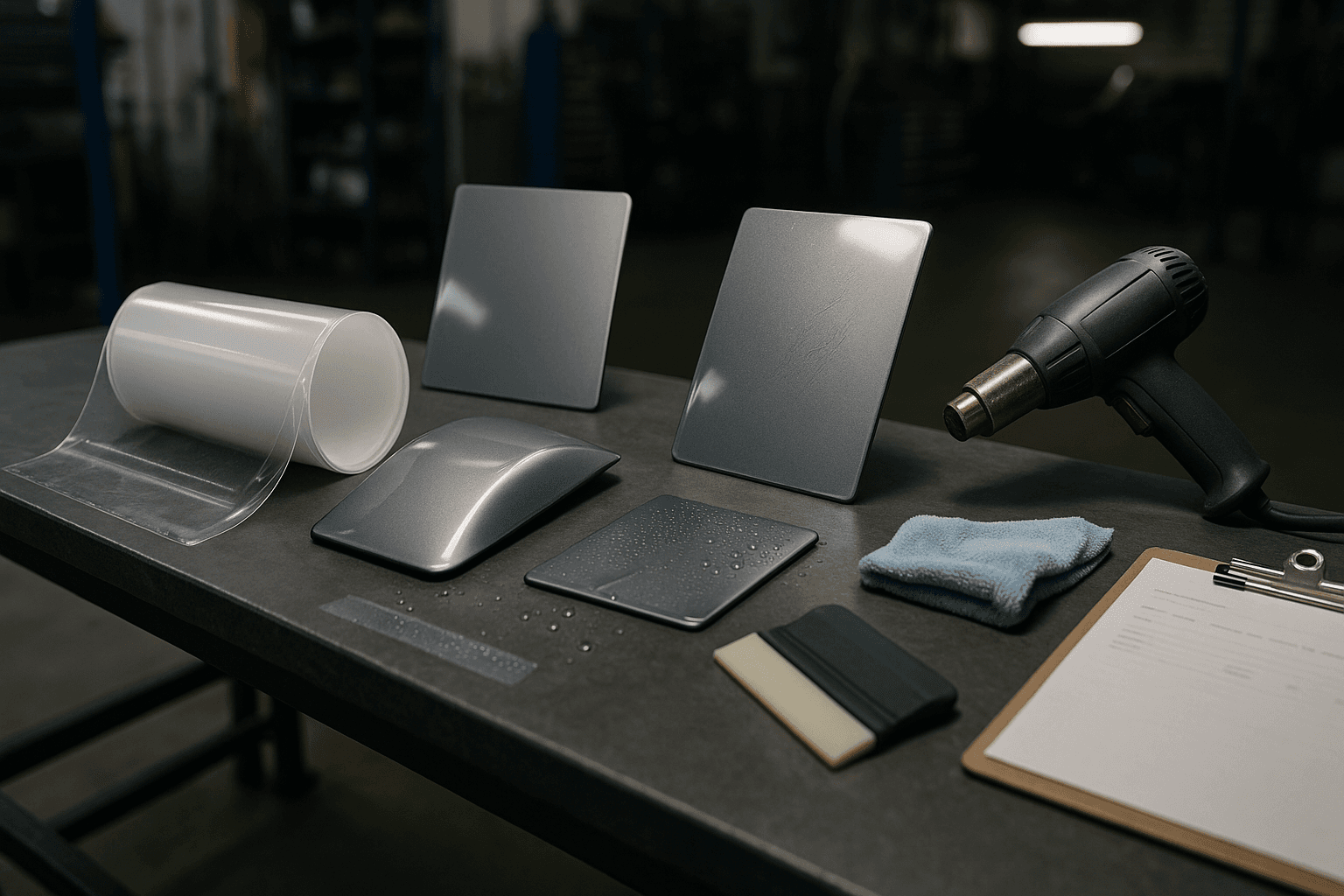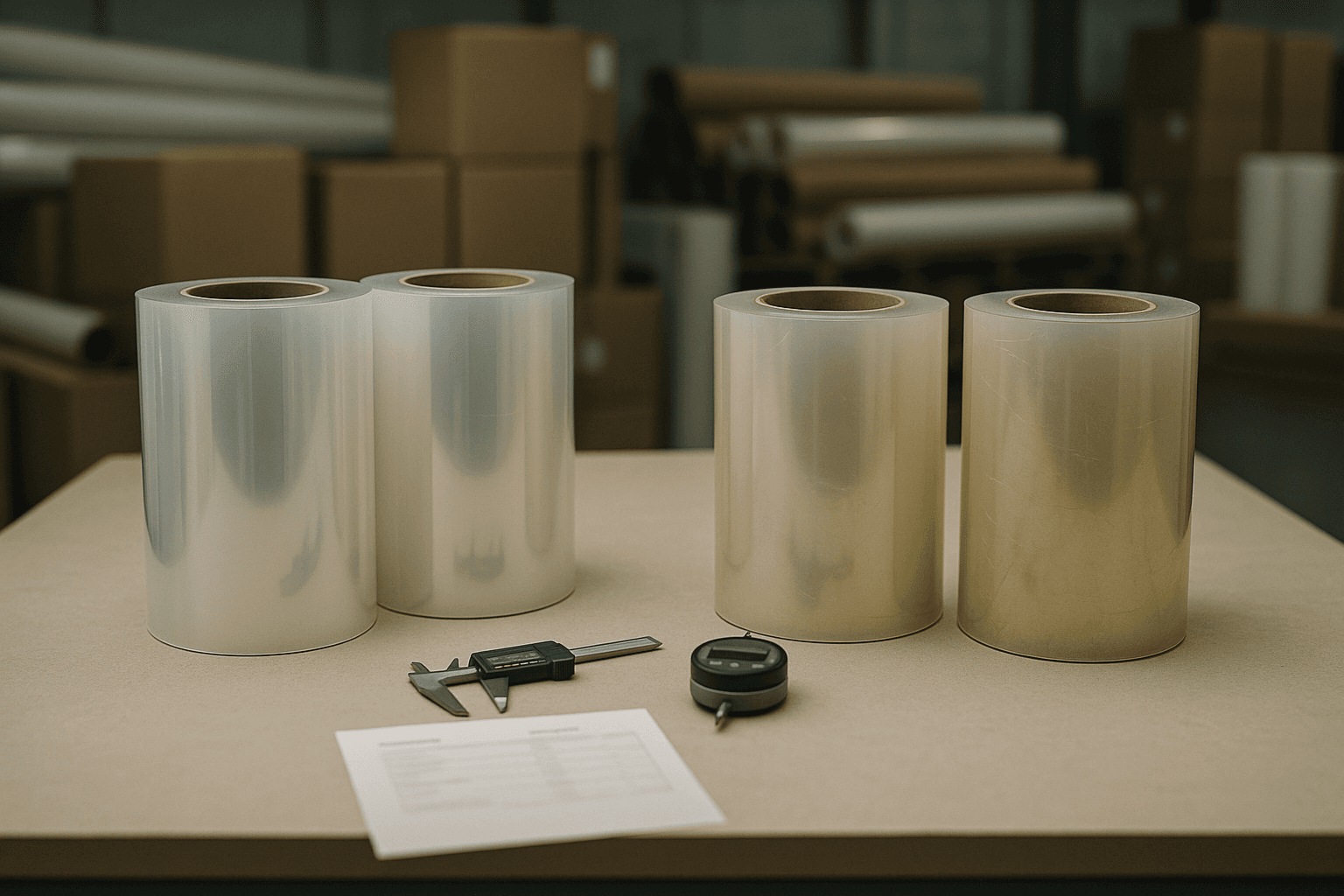
Walk away from a PPF supplier when the quote has no model code, the mil on the liner disagrees with the sheet, the healing demo is not the SKU you will stock, or two rolls of the same code do not match. Country of origin is not a grade. A hero wrap is not a receiving check.
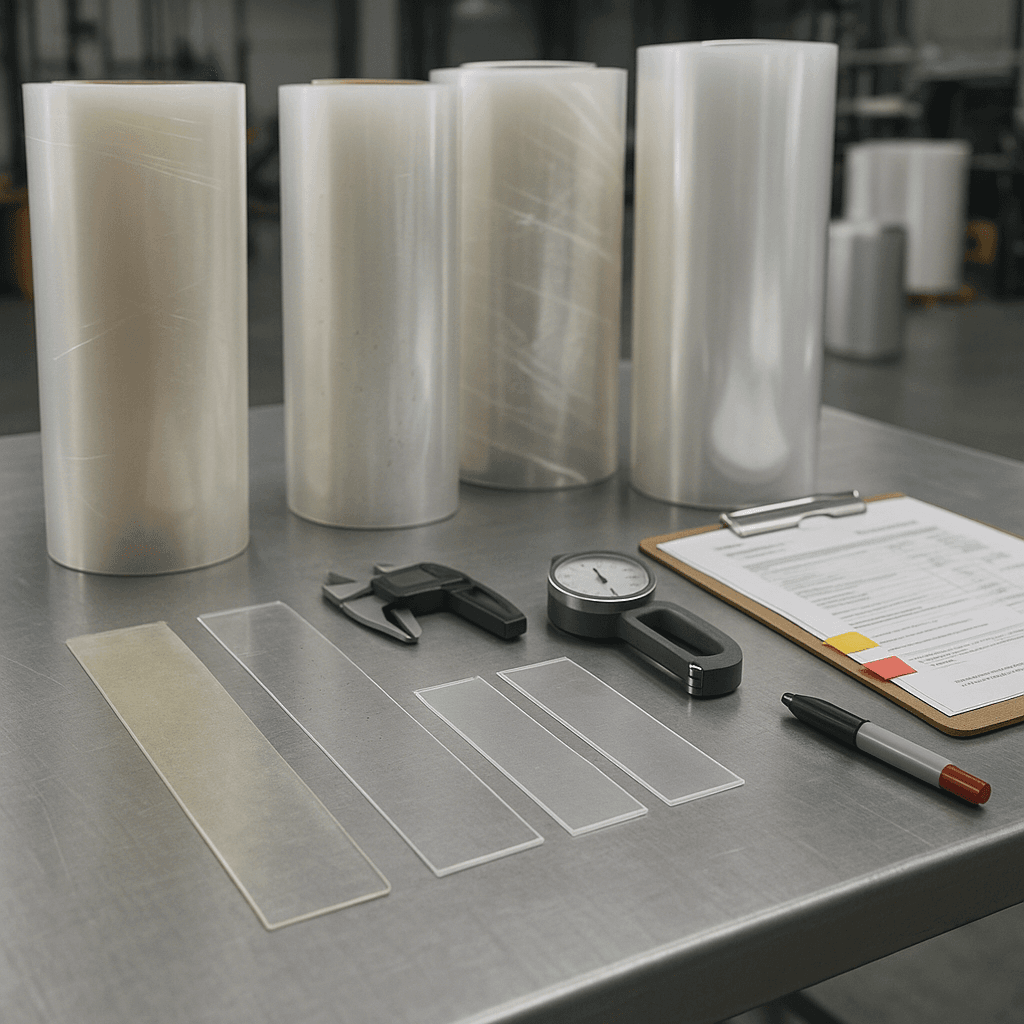
Paint protection film is a thermoplastic urethane layer, often with a self-healing topcoat, applied to painted panels against chips and light abrasion [1]. TPU is a polymer class that becomes pliable when heated and hardens when cooled [2]. That class is not a factory grade. Poor quality PPF suppliers sell the class as if it were a SKU. Judge PPF quality on whether purchasing can reorder the same film.
Comparing factories on paper is a different job. Testing the SKU on the bay is a different job. This page is the stop list: when to avoid poor quality PPF suppliers before you fund a container.
PPF supplier red flags that mean you stop the PO

Write these as a call script. Any one of them is enough to pause. Two of them is enough to leave.
1. No named SKU. “Generic 7.5 mil PPF” is not a spec. A specification is a set of documented requirements a material must satisfy [3]. If purchasing cannot put a model code on the PO, you will not be able to reorder, claim, or reject. 2. Mil mismatch. In US industrial language, 1 mil = 0.001 in [5]. If the sheet says 7.5 mil and the liner does not, stop. Thickness that moves between the chat, the PDF, and the carton is how not to buy junk PPF. 3. Healing bait-and-switch. Heat-activated healing and room-temperature healing are different demos [4]. If the salesperson heated the film and the SKU you will stock is sold as room-temperature healing, you did not test the product you will warehouse. 4. One warranty year for every series. A site-wide year count is a red flag. Series differ. Demand the card that ships with that SKU, written as up to and confirmed per order. 5. No lot you can sample. A factory that cannot tie a roll to a production lot cannot run a receiving checklist. ISO 2859-1 is the language for lot-by-lot attribute sampling [7]. ISO 28590 introduces that family [8]. You do not need to publish an AQL. You need a code you can cite when roll two does not match roll one. 6. Certificate talk instead of film. ISO 9001:2015 specifies requirements for a quality management system [6]. It is process talk. It is not a substitute for inspecting the SKU. Do not accept a certificate number in a chat as proof of the roll. 7. Replica language. “Same as,” identical to, or official-alternative wording is a stop. An XPEL alternative is positioning for a local line. It is not a quality result and it is not a license to copy a trademark. 8. A leftover wrap as the trial. The sample must be the SKU you will stock. A mixed-pack hero wrap proves a salesperson can wrap a bumper. It does not prove the next carton.
Those are PPF supplier red flags quality buyers can use on a call. Unreliable PPF factory signs on paper look ordinary: a glossy PDF, a round number, and no model code.
Low-quality Chinese PPF is a process failure
TPU quality is not a country grade [2]. Low quality Chinese PPF is the same failure as low quality film from anywhere else: the quote, the liner, and the carton do not share one code, one mil, and one healing trigger.
A China PPF manufacturer is not automatically a pass or a fail. Treat a Chinese TPU line like any other: named SKU, mil that matches [5], a stated trigger [4], and a lot you can sample [7] [10]. Country of origin does not replace that list.
Brand programs that publish a named SKU sheet are useful as a paper-trail example, not as a replica target. Scotchgard Paint Protection Film Pro Series 200 states self-healing with heat applied to the film surface [9]. Ask every factory — including a China PPF manufacturer — for a named sheet of that kind for the SKU you will stock. If they cannot produce one, you do not have a spec [3].
Do not use replica, “same as,” or official-alternative language to close a China quote. If the pitch is that the film is identical to a brand SKU, leave.
What a bad-batch supplier looks like after you paid
A bad batch PPF supplier is not the factory that sent one ugly wrap. It is the factory whose second roll of the same code is a different film.
Acceptance sampling uses a sample from a production lot to decide whether to accept or reject that lot [10]. ISO 2859-1 exists so a buyer has an upper bound on the risk of accepting a poor lot [7]. You still do not invent an AQL in a chat. You install the same SKU from a second roll when you can, photograph the fails, and refuse the lot if liner codes or mil ratings moved.
ISO 9001 does not replace that step [6]. A receiving checklist on the first wholesale shipment is how you catch the swap after the sample passed. The bay test of the SKU you will stock is how you avoid funding the first swap. Run both. Do not skip the stop list because someone offered a certificate.
If the quote changes the SKU, the mil, or the trigger after you said yes, the trial is void. Do not scale.
How XPSHELL SKUs map to that stop list
XPSHELL is a China-based automotive film manufacturer. Request samples for the models you will actually stock, then a wholesale quote. A distributor program conversation comes after the stop list, not instead of it. Film conversion stays on paint protection film.
| Series | Models | Thickness | Healing to confirm | Warranty to confirm per order |
|---|---|---|---|---|
| Master | M-65, M-75, M-85, M-100 | 6.5 / 7.5 / 8.5 / 10 mil | Heat-activated | Up to 8 years |
| Apex | A-75 | 7.5 mil | Heat-activated | Up to 10 years |
| Rapid | R-75 | 7.5 mil | Room-temperature | Up to 5 years |
| Finish | Matte, Satin, Gloss Black, Matte Black | 7.5 mil | Do not assume the clear-line healing story | Up to 8 years |
Master is the mainstream wholesale ladder. Apex is the premium gloss SKU on the same heat-activated class — still run the same stop list. Rapid is a different trigger; a heat-gun demo does not prove it. Finish is a restyle tier. Do not claim self-healing on Finish in public copy until that SKU is tested.
ISO 9001 is a current site claim without a published certificate number or scope [6]. Typical clear roll format is 1.52 m × 15 m. Confirm it. Do not assume.
When the codes you intend to stock survive the stop list, request samples of those same models, then lock a wholesale quote. Packaging talk goes through OEM after the film passes.
FAQ
How do I avoid poor quality PPF suppliers as a distributor?
Stop when there is no model code, the mil disagrees [5], the healing demo is a different SKU [4], or two rolls of the same code do not match [10]. Then request samples of the codes you will stock, or a wholesale quote only after those codes survive the list.
What are PPF supplier red flags quality buyers should treat as a stop?
Missing SKU [3], mil mismatch [5], healing bait-and-switch [4], one warranty year for every series, no lot code [7], certificate talk instead of film [6], replica language, and a leftover wrap as the trial. Any one is a pause.
How do I avoid bad PPF suppliers who only send a hero wrap?
Refuse the wrap as the trial. The sample must share a model code and a mil rating with the quote [3] [5]. A leftover wrap from a mixed pack is a demo. Request samples of the named SKU.
Is low quality Chinese PPF a country problem?
No. TPU is a polymer class [2], not a country grade. A China PPF manufacturer still has to keep code, mil, trigger, and roll-to-roll behavior stable. Country is not a pass. Request samples of the codes you will stock.
What does an unreliable PPF factory look like on paper?
Unreliable PPF factory signs are ordinary: a round warranty number, a generic mil, and no model code. ISO 9001 is a QMS standard [6]. It does not name the SKU. Ask for a named sheet the way a published brand SKU does [9]. Then request samples.
How not to buy junk PPF after the first container arrives?
Do not skip the receiving checklist because the sample passed. Sample the lot [7] [8] [10]. If liner codes or mil ratings moved, refuse the lot. Then request samples of the replacement codes before you reorder.
What warranty mismatch is a walk-away?
One site-wide year count. Confirm the card that ships with that series, written as up to. XPSHELL’s current split is Master 8, Apex 10, Rapid 5, Finish 8. Then request samples or a wholesale quote on that series only.
Can an XPEL alternative still fail this stop list?
Yes. An XPEL alternative is positioning, not a quality result. Run the same eight red flags. Replica or “same as” language is already a stop. After the film passes, a distributor program or OEM packaging conversation is allowed. Do not skip the list because the talk moved to labels. Request samples of the codes you will actually sell.
References
- [1] Paint protection film
- [2] Thermoplastic polyurethane
- [3] Specification (technical standard)
- [4] Self-healing material
- [5] Thickness (NIST OSAC lexicon / ASTM E1732)
- [6] ISO 9001:2015 Quality management systems — Requirements
- [7] ISO 2859-1:2026 Sampling procedures for inspection by attributes — Part 1
- [8] ISO 28590:2017 Sampling procedures for inspection by attributes — Introduction to the ISO 2859 series
- [9] Scotchgard Paint Protection Film Pro Series 200
- [10] Acceptance sampling