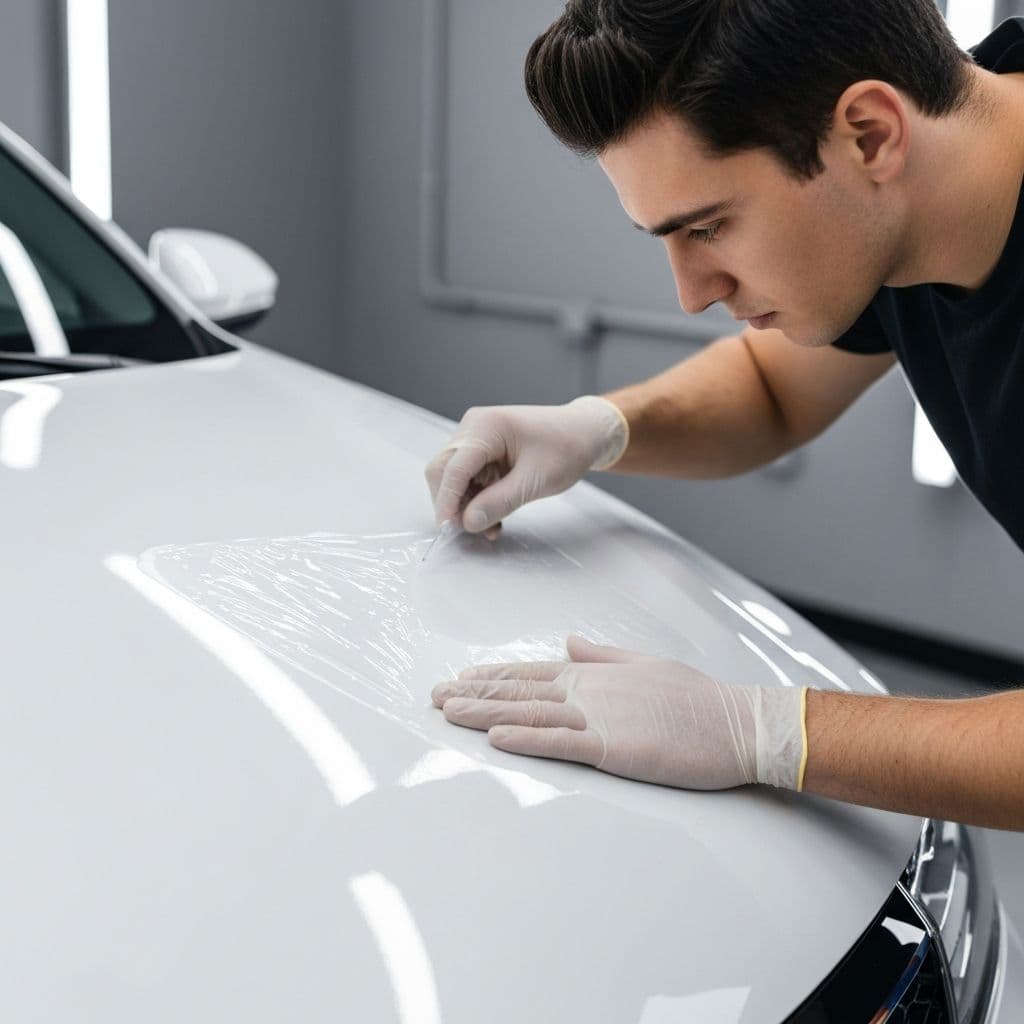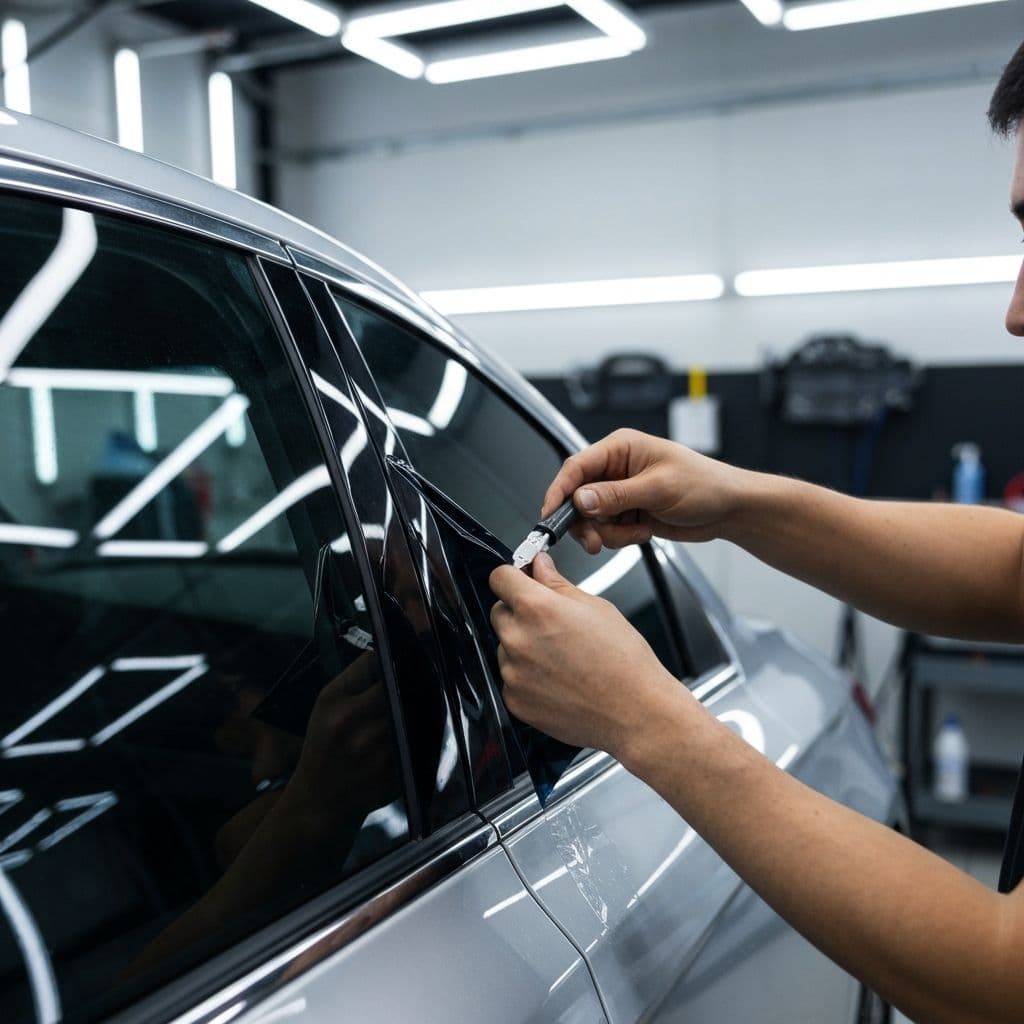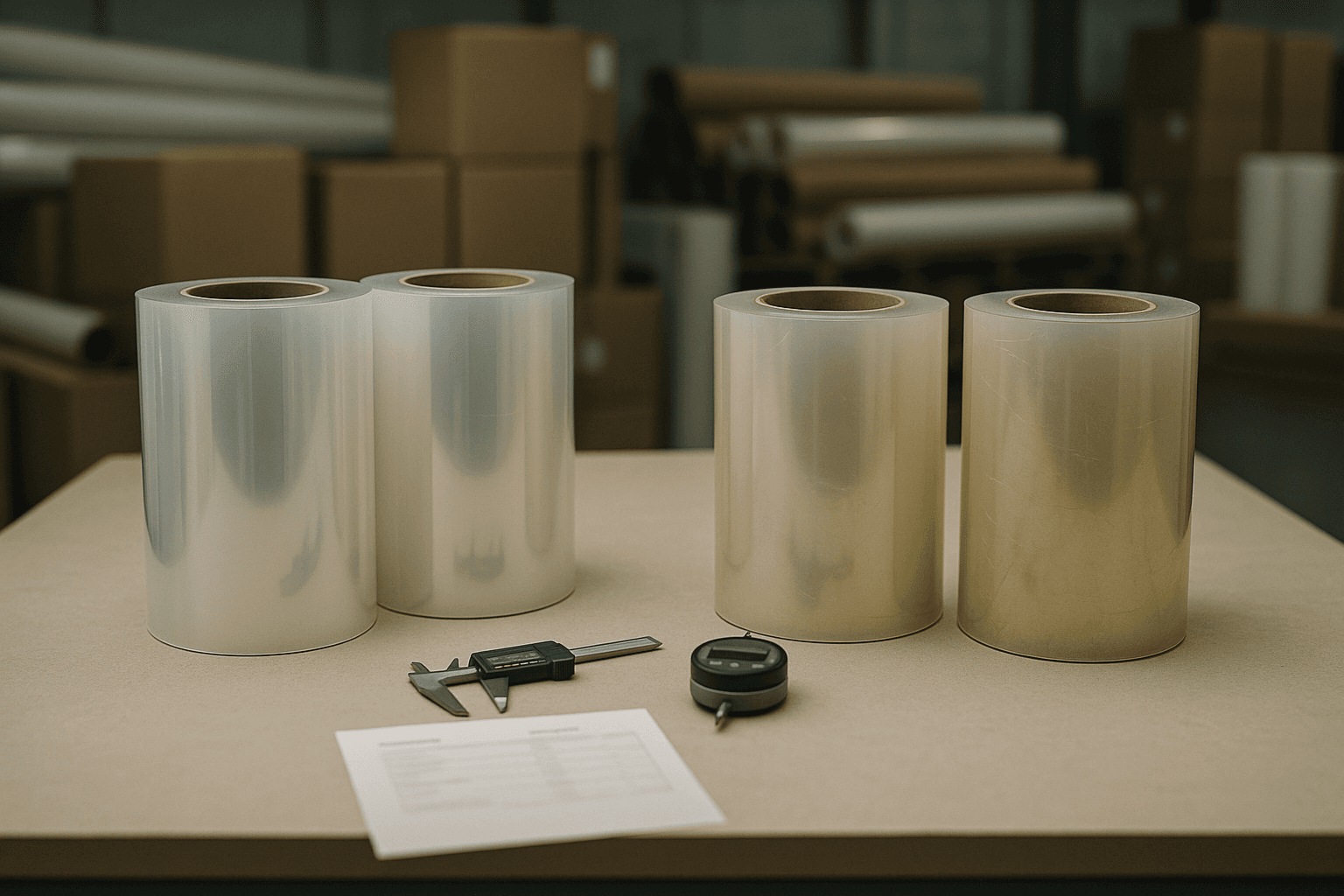
Paint protection film has become a core profit center for tint, wrap, and detailing businesses worldwide. As Tesla volumes grow and margins on big legacy brands tighten, more shops and distributors are exploring PPF China options and evaluating each XPEL alternative or STEK alternative for performance, consistency, and program support.
Why PPF China Is on Every B2B Buyer’s Radar
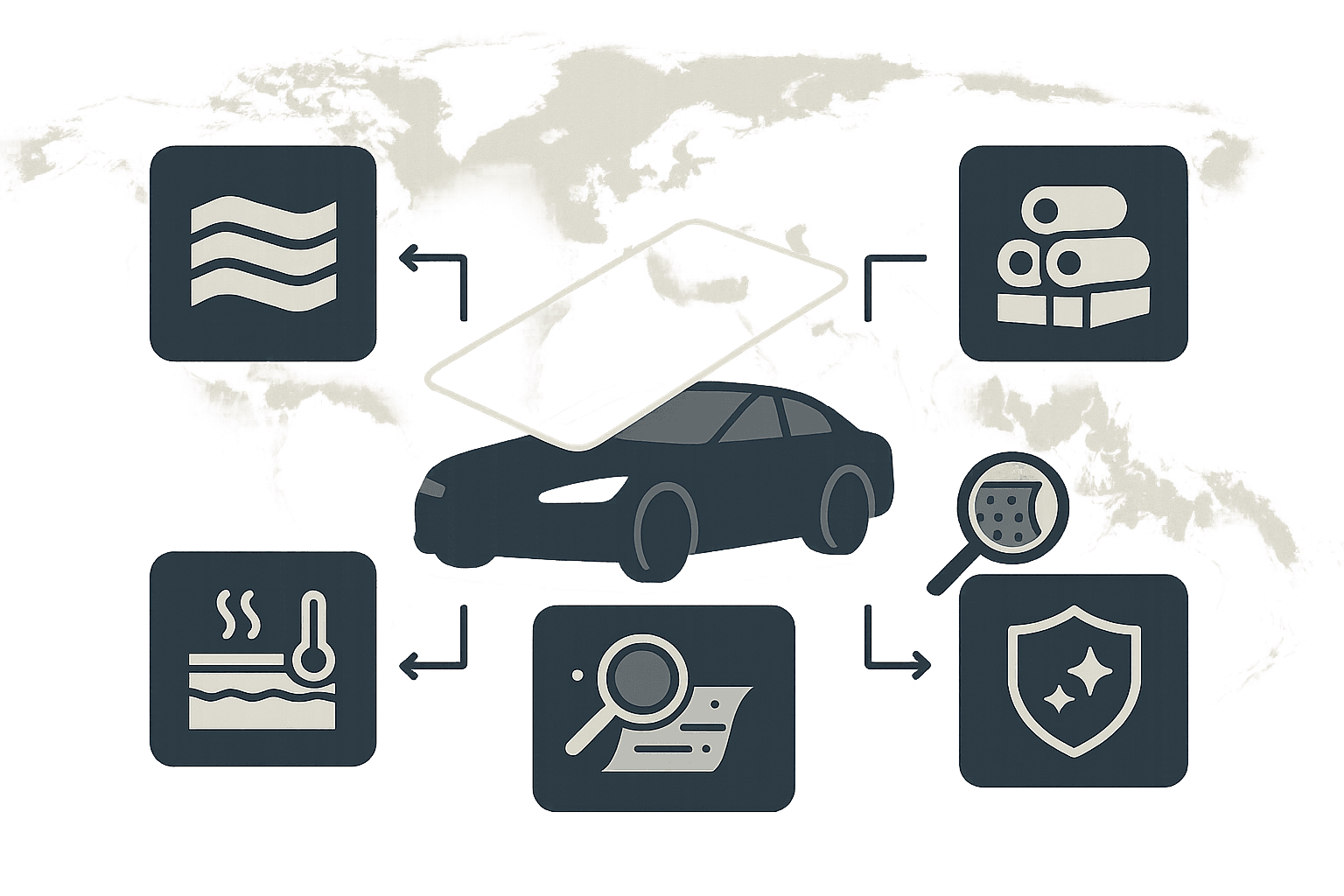
For B2B buyers, PPF China is no longer a “cheap backup”; it is a primary sourcing channel. Manufacturing capability in China now covers high-clarity TPU, self-healing topcoats, and advanced adhesive systems, with many plants serving global brands alongside private-label and OEM programs.
Well-established Chinese manufacturers supply PPF for a wide range of vehicles, including cars, trucks, and SUVs. Their films are engineered for long-lasting protection against chips, stains, and surface damage, while also enhancing appearance through gloss, matte, or color-change options.
From a business point of view, the attraction is clear:
- Factory-direct pricing that supports healthier distributor and installer margins.
- Wide product mix (standard, premium, color, matte) from a single source.
- Scalable capacity for multi-country distribution and consistent batch quality.
When evaluating PPF China suppliers, the focus should be less on geography and more on the depth of their R&D, quality control, and ability to support B2B partners.
What “PPF Tesla” Really Requires from a Film
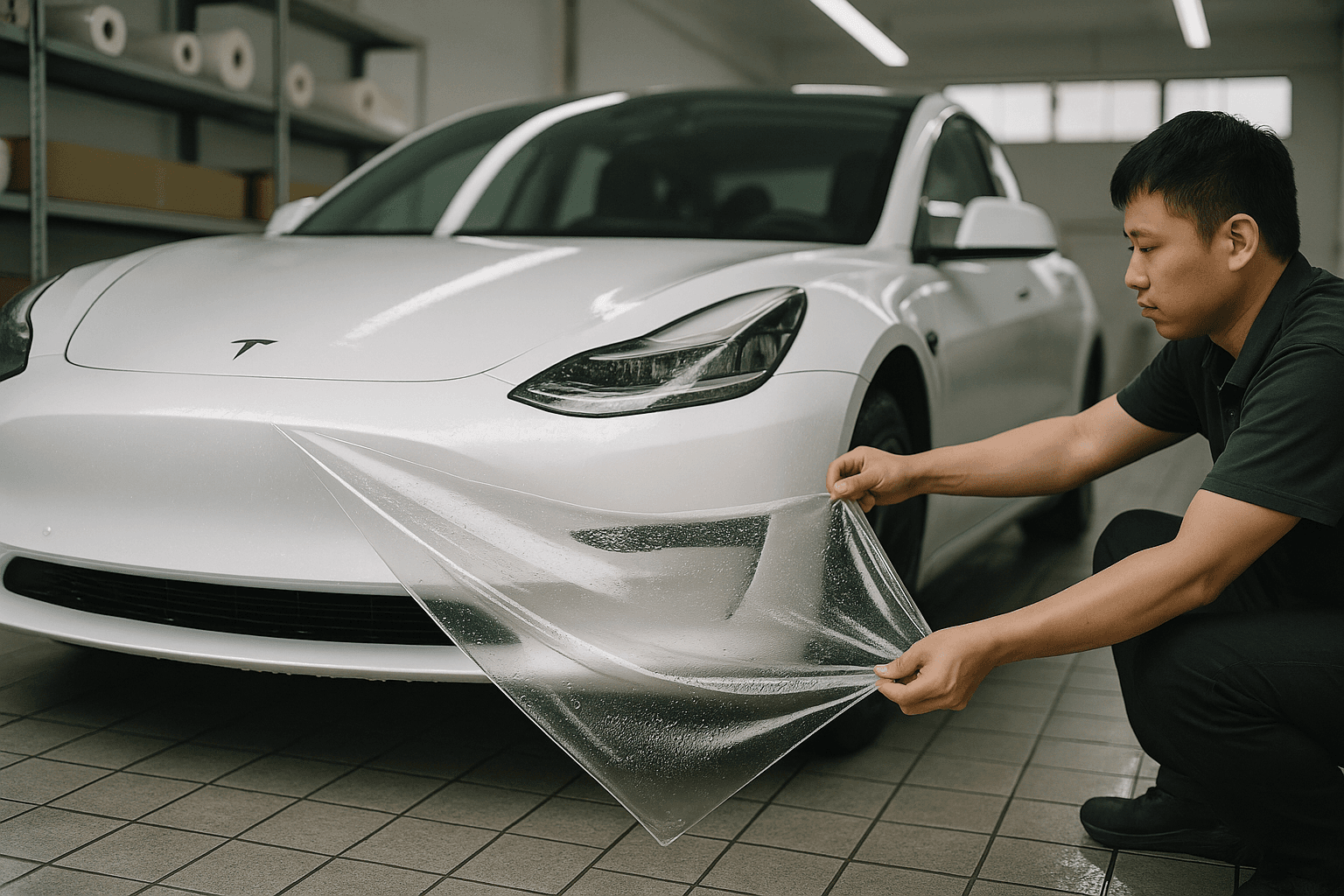
Tesla owners are highly demanding, and Tesla surfaces expose any weakness in a film or workflow. For PPF Tesla programs (especially Model 3 and Model Y), you need more than a nice spec sheet.
Key film characteristics for Tesla applications
Tesla vehicles share some common traits that influence PPF selection and installation:
- Large, exposed panels (hoods, bumpers, doors) that highlight optical clarity and orange peel.
- High-visibility edges around headlights, mirrors, and trunk lines that reveal adhesive behavior.
- Premium paint finishes where yellowing, staining, or lifting quickly becomes a warranty headache.
For Tesla-focused PPF programs, look for films that offer:
- High optical clarity to preserve Tesla’s glossy finish without visible texture.
- Reliable self-healing to keep the surface looking new under daily wear.
- Strong resistance to discoloration for long panels and light colors.
- Installer-friendly handling with predictable stretch and tack, to speed up complex bumper and front-end installs.
In regions with strong EV penetration, including China, specialized PPF for Tesla is becoming standard, with OEM-level films designed to match Tesla body lines and paint systems.
B2B implications: building Tesla packages
For wholesalers, distributors, and shops, Tesla demand tends to cluster in a few profitable offerings:
- Full-front kits (bumper, hood, fenders, mirrors) as the core ticket.
- Full-body wraps for buyers planning to keep the car longer or maximize resale.
- Stealth / matte conversions for owners wanting a different look without repainting.
Your PPF Tesla strategy should align film selection, pattern availability, and training so that installers can deliver consistent results at volume.
How to Buy PPF Wholesale Without Compromising Quality
Buying PPF wholesale is not just about getting a low roll price. For B2B buyers, film cost must be balanced with defect rates, installation time, and warranty exposure.
What serious PPF wholesale programs look like
A strong PPF wholesale partner typically offers:
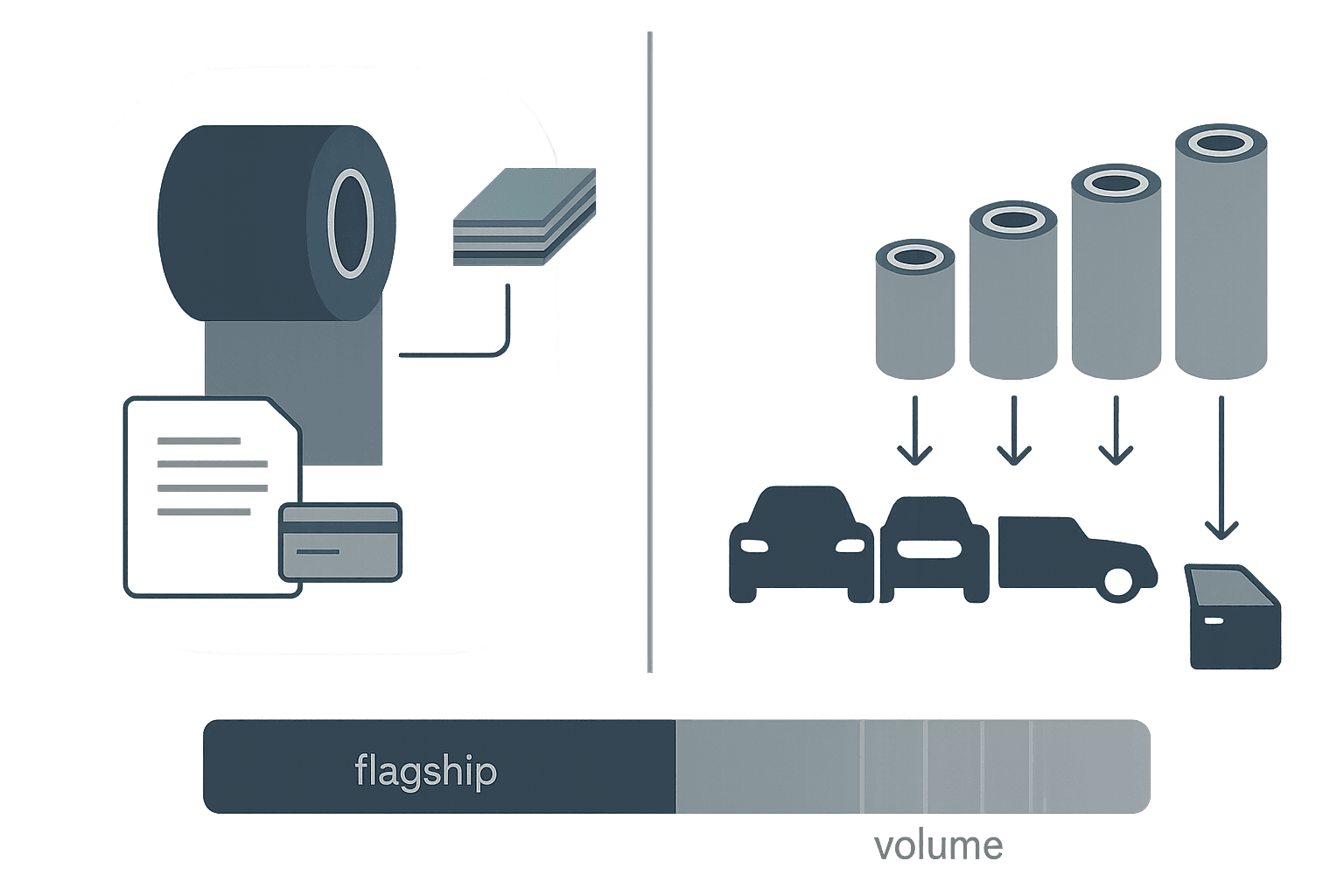
- Clear tiering: entry, mid, and flagship lines so shops can match film to customer budgets.
- Roll-to-roll consistency: minimal variation in gloss, thickness, and adhesive behavior.
- Predictable lead times and safety stock planning for growing accounts.
- Basic technical support to help shops troubleshoot installs and avoid recurring issues.
PPF wholesale pricing can deliver high value when the film is engineered for installer throughput. Handling characteristics such as a stable repositioning window, controlled stretch on curves, and clean edge behavior often matter more to your bottom line than minor spec differences.
Bundling PPF wholesale for real-world workflows
To create a profitable program, many wholesalers bundle:
- Core gloss clear rolls in the most commonly used widths.
- Matte or stealth lines for upsell packages, especially on Tesla and other EVs.
- Pre-cut kits for popular models, paired with bulk rolls for custom work.
This structure makes it easier for shops to standardize packages, train new installers, and forecast film usage accurately.
What PPF Distributors Need from Their Film Supplier
A PPF distributor bridges manufacturers and professional installers. To succeed, distributors must avoid film-related surprises that can erode credibility with shops.
Non-negotiables for any PPF distributor program
Key needs for distributors include:
- Stable quality control so one container matches the last in optics and handling.
- High-turn SKUs (mostly clear gloss) with reliable availability.
- Upsell variants (matte, hydrophobic, color) to increase average order value.
- Support assets such as training material, marketing content, and warranty documentation.
Chinese PPF manufacturers that invest in strong R&D, modern equipment, and rigorous quality control can meet these expectations and support distributors across multiple regions.
Choosing the right partner profile
For a distributor, the ideal supplier behaves like a program partner, not just a factory. Look for factories that:
- Offer channel-friendly pricing that leaves room for your margin and your installer network.
- Can scale production as you add new territories or dealer accounts.
- Are willing to co-develop private-label lines or exclusive SKUs when volumes justify it.
This type of relationship helps you build a defensible position in your market rather than competing purely on price.
XPEL Alternative vs STEK Alternative: How to Compare
When shops search for an XPEL alternative or STEK alternative, they are often trying to balance brand pull with real-world margin and performance.
How to think about XPEL alternatives
Some Chinese manufacturers openly position their films as XPEL alternative options, focusing on:
- Clarity and self-healing performance comparable to well-known premium films.
- Competitive warranties in the same general range as major brands.
- Factory-direct or OEM programs that let distributors and shops capture more margin.
Well-engineered alternatives can offer substantial cost savings while still providing strong protection and visual performance. In some markets, other well-known premium films also compete directly as XPEL alternatives, giving B2B buyers multiple viable choices.
How to think about STEK alternatives
STEK is known in the market for high-performance films and specialty finishes. A solid STEK alternative generally emphasizes:
- Strong resistance to discoloration and aging, important on light-colored cars and large panels.
- Installer-friendly handling, especially on complex curves and aggressive styling.
- A mix of standard and special finishes, so shops can offer both protection and visual differentiation.
When comparing alternatives to these premium brands, test the film in real installs on known “problem panels” like Tesla bumpers or large hoods. Track installation time, edge behavior, and post-install defects. This provides more meaningful data than a spec sheet alone.
Building a Tesla-Focused PPF Lineup from China
If your goal is to build a Tesla-focused offering with PPF China sourcing, think in terms of complete packages rather than isolated rolls.
Product mix for a Tesla-centric catalog
A practical lineup might include:
- Core gloss clear PPF for high-volume Tesla Model 3 and Model Y coverage.
- Matte / stealth PPF for full-body conversions on popular Tesla colors.
- High-impact kits (front end, rockers, rear bumper top) for budget-conscious owners.
- Headlight and light-smoke protection films as quick add-ons.
Back this up with clear installation guidelines, pre-cut patterns, and recommended combinations (for example, full front plus rockers on commuter Teslas).
Operational considerations for B2B buyers
When building this program, pay attention to:
- Forecasting common roll widths based on Tesla panel layouts.
- Training installers on film-specific behaviors, especially stretch and tack.
- Creating sales scripts that position your chosen XPEL alternative or STEK alternative clearly for Tesla buyers.
This level of structure turns film selection into a repeatable, scalable revenue stream rather than one-off decisions on each car.
Frequently Asked Questions
Is PPF from China good enough for premium cars like Tesla?
Yes, PPF from established Chinese manufacturers can be suitable for premium vehicles, including Tesla, when the film is backed by strong research and development, modern production equipment, and thorough quality control. Some Chinese suppliers focus specifically on high-performance films for cars, trucks, and SUVs, with products designed for long-lasting protection and visual clarity. The key is to vet the manufacturer carefully, request test rolls, and validate performance on real vehicles before committing to large orders.
How do I choose the best PPF Tesla film for my shop or distribution network?
Start by defining your priorities: installer speed, warranty risk, margin structure, and price point for your local market. Then evaluate films on Tesla-specific panels such as front bumpers, hoods, and doors. Pay close attention to clarity, self-healing response, edge behavior, and resistance to visible texture. Finally, review the supplier’s support for patterns, training, and warranty processes. The best PPF Tesla film for your business is the one that balances performance with predictable installation and a sustainable profit margin.
What should I look for in an XPEL alternative or STEK alternative?
When comparing alternatives, focus on practical performance instead of brand recognition alone. Test clarity, self-healing behavior, and resistance to discoloration on real vehicles. Check how the adhesive behaves during repositioning and on sharp curves, and monitor how the film looks after some time in daily use. Also review warranty terms and the supplier’s willingness to stand behind the product. A strong XPEL alternative or STEK alternative combines solid technical performance with pricing and support that make sense for wholesalers, distributors, and professional shops.
How can a PPF distributor reduce risk when switching to a new China-made film?
A PPF distributor can reduce risk by onboarding the new film gradually. Begin with test batches, restrict early use to a small group of trusted shops, and track install feedback closely. Compare defect rates, installation time, and aftercare issues against your current film. Maintain parallel inventory of your existing brand during the transition, and only expand volumes once the new film has proven stable across multiple shipments. This approach lets you validate a new PPF China supplier while protecting your relationships with installers.
Is PPF wholesale always better than buying through a local reseller?
PPF wholesale can improve margins, but it also shifts more responsibility to your business. Buying wholesale typically means larger order volumes, closer involvement in forecasting, and greater accountability for training and support. For some smaller shops, a local reseller or regional distributor offers enough margin with less complexity. For larger shops and distributors, PPF wholesale purchasing becomes attractive when they have the volume, storage capacity, and operational structure to manage film, training, and after-sales support effectively.