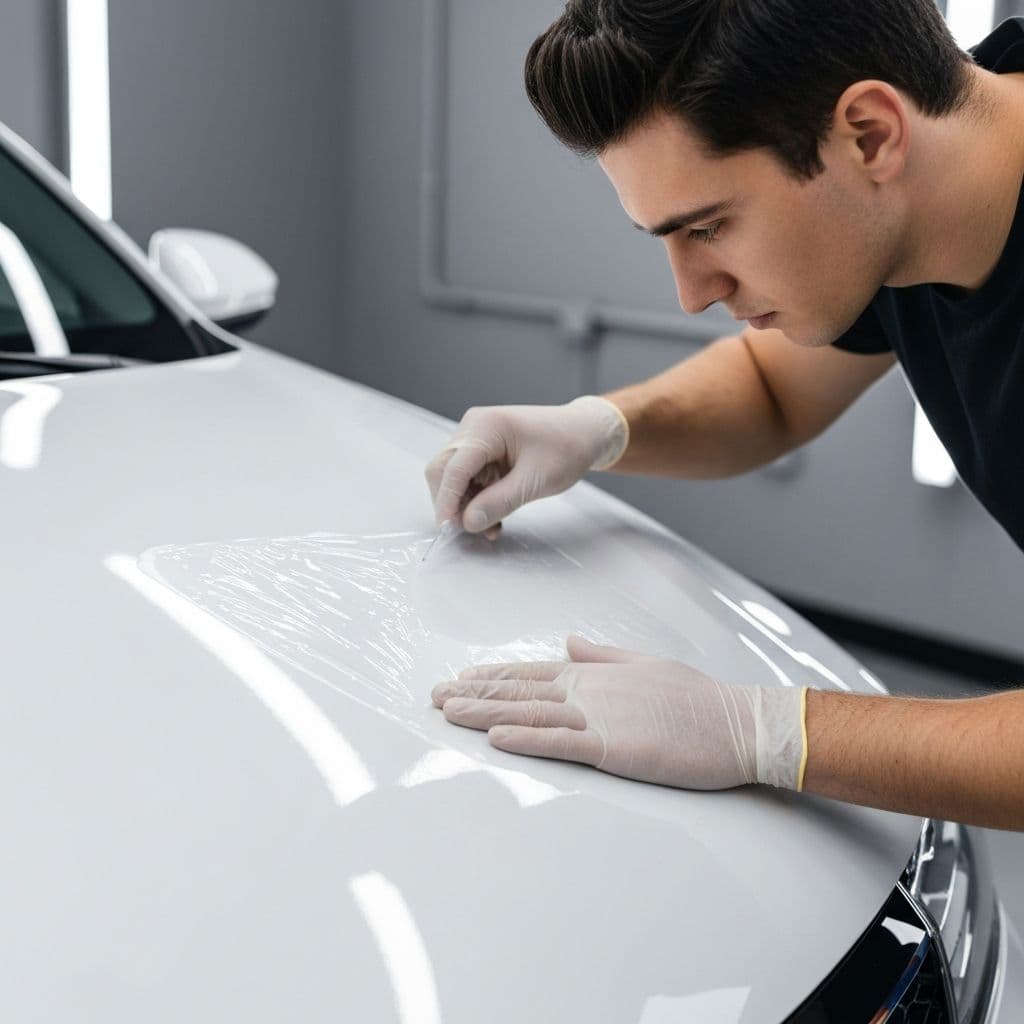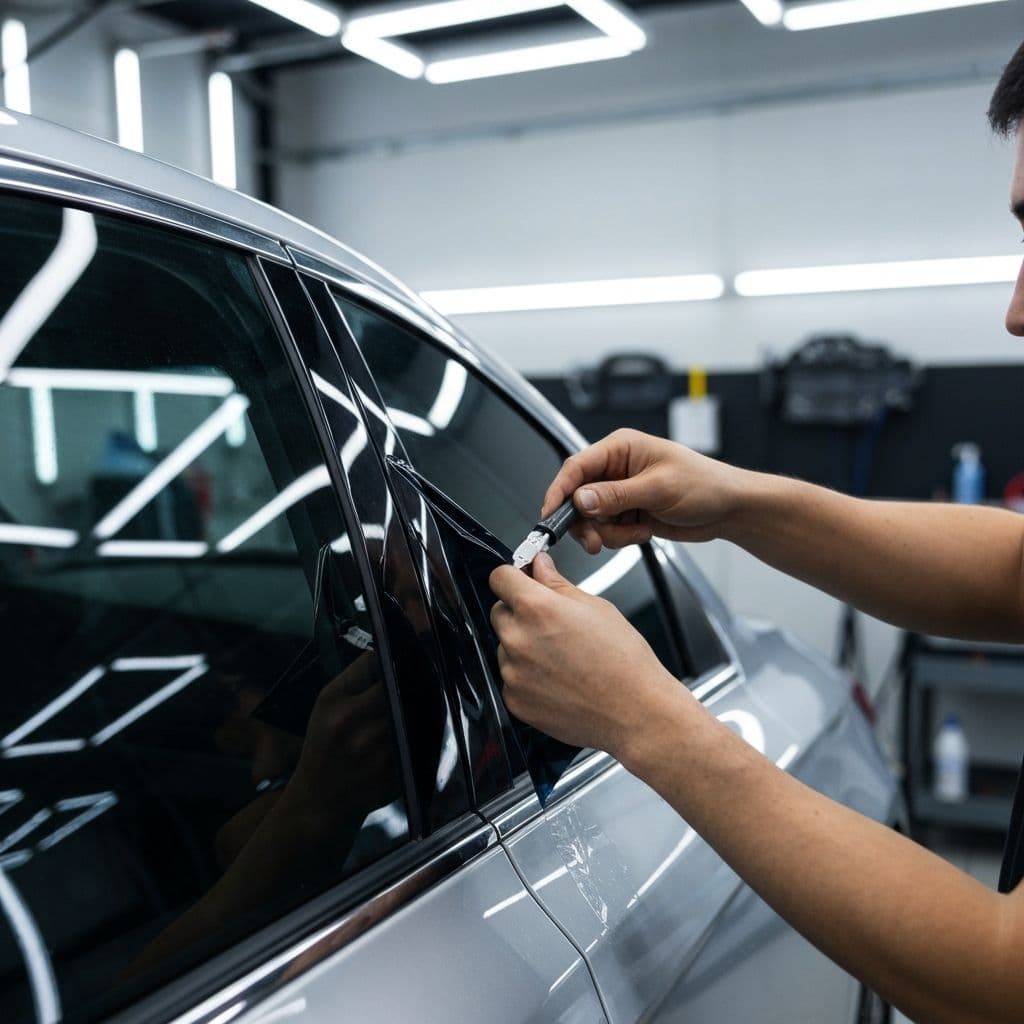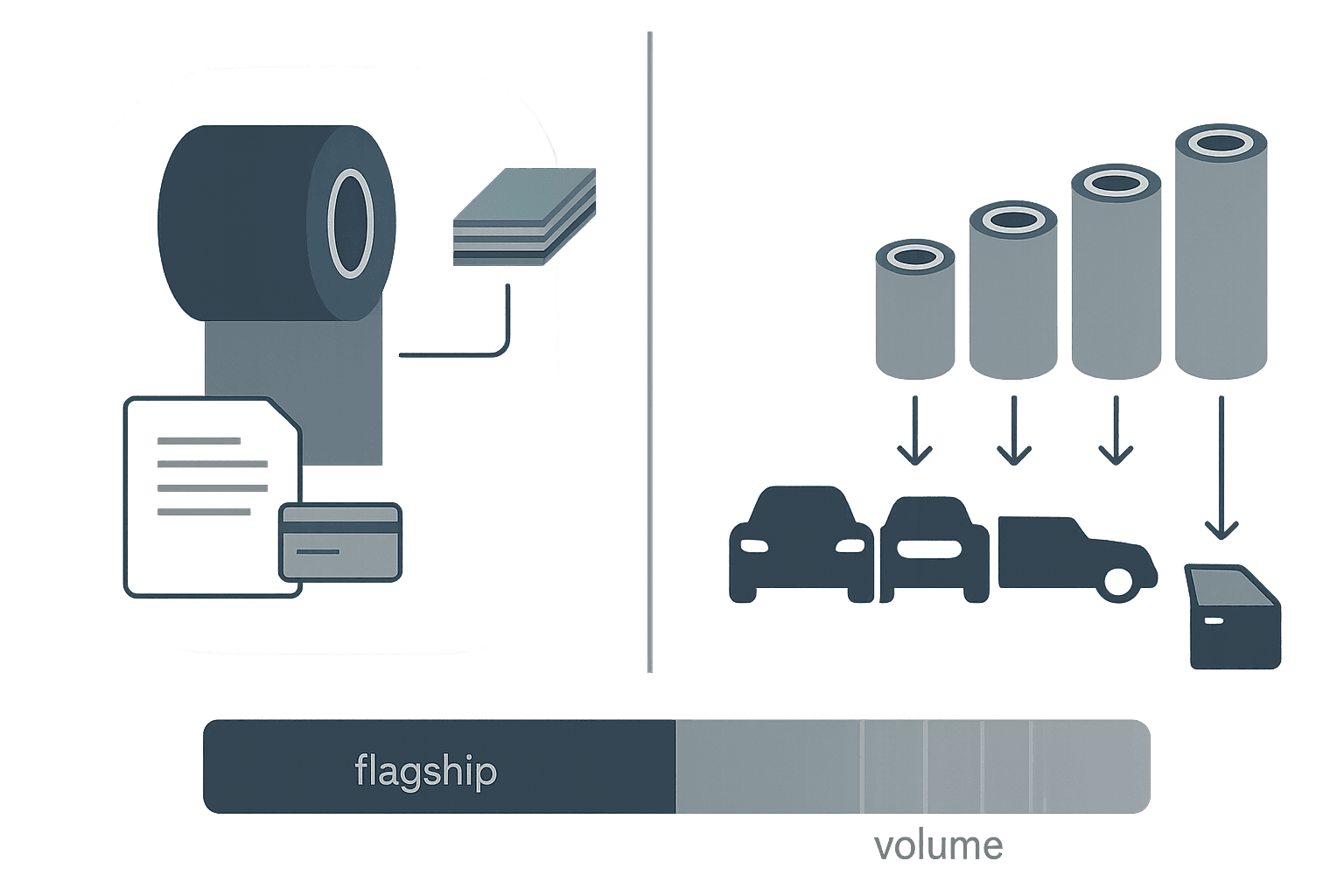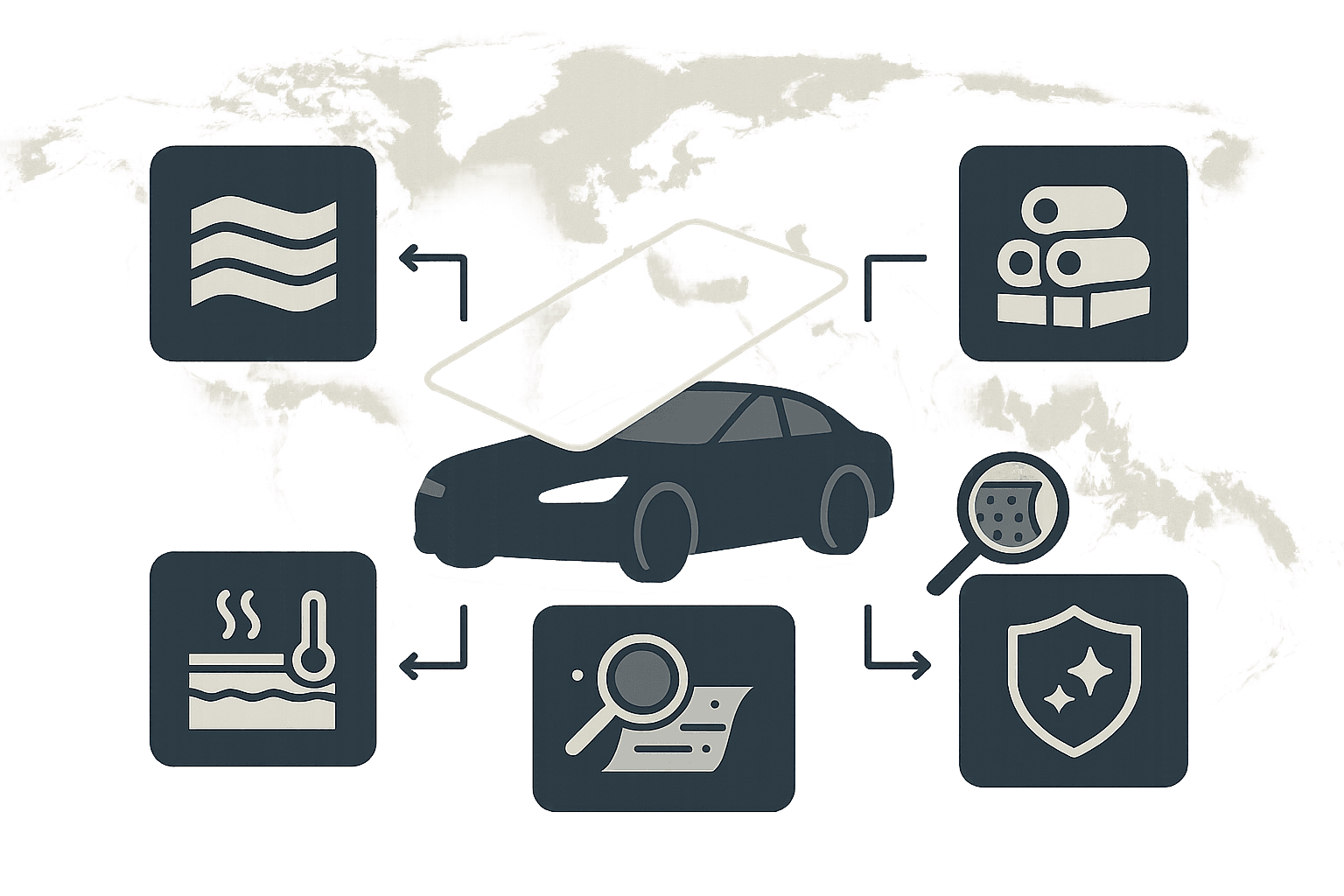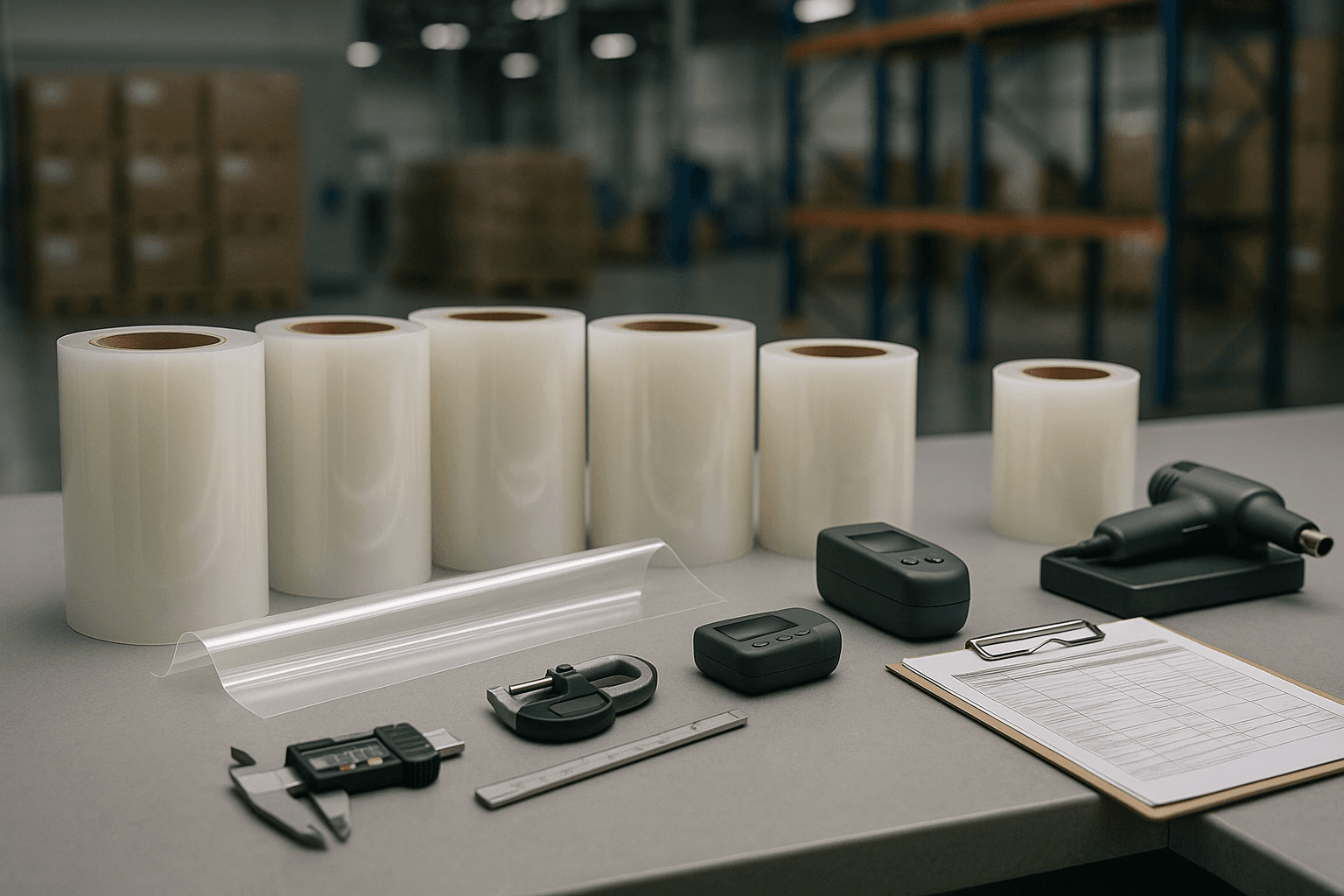
Find a reliable PPF supplier from China by testing named TPU SKUs before you fund a container. Ask for a mil thickness ladder, a stated healing trigger, series-by-series warranty cards, and sample rolls you can install. A listing that only says “China factory” or “cheap 7.5 mil” is not a supplier. Reliability is repeatable film and paperwork that match.
Paint protection film is a thermoplastic urethane layer, often with a self-healing topcoat, applied to painted panels against chips and light abrasion [1]. TPU is a polymer class that becomes pliable when heated and hardens when cooled [2]. That describes the material family, not a factory. The job of this page is the search: how a distributor, installer network, or private-label buyer finds a China PPF supplier that can still ship the same SKU on the third container.
If you already have samples in hand, switch to the receiving checklist: how to evaluate PPF supplier quality. If you are still choosing whom to email, stay here.
What a reliable China PPF supplier actually is
Wholesale is the sale of goods in bulk to businesses that will resell or use them in operations, not to the end consumer [6]. A China TPU PPF supplier that is useful to a B2B buyer therefore has to do two things at once: make film you can stock, and sell it in a wholesale or OEM channel you can reorder.
Treat these as different companies even when the website looks similar:
- Factory (manufacturer). Owns the process that makes the roll. Can usually name models, change packaging, and talk lot codes.
- Trader / catalog reseller. Buys rolls and relists them. Fast quotes, weak paper trail. Fine for a one-off if you already know the SKU; weak as a program partner.
- OEM / private-label line. An original equipment manufacturer produces parts or equipment that another company may market [7]. Using that path lets a brand get film without owning a plant [7]. It does not skip sampling.
“Factory direct” is a buying path, not a quality grade. Demand the same named-SKU sheet you would demand from a published brand page. Scotchgard Paint Protection Film Pro Series 200, for example, states heat-applied self-healing on the film surface [9]. A Chinese PPF factory that cannot produce that kind of named sheet is not ready for wholesale.
How to vet a China PPF supplier before you fly
Run this sequence. Do not skip to a container because the WhatsApp quote was cheap.
1. Shortlist by paper, not by city. Ask for model codes (not “generic 7.5 mil”), a thickness unit you can check, and whether healing is heat-activated or room-temperature. In US industrial language, 1 mil = 0.001 in [3]. 2. Separate ISO talk from roll talk. ISO 9001:2015 specifies requirements for a quality management system [4]. Use it as context for how a factory describes process. It is not a substitute for inspecting the SKU you will stock. 3. Sample the SKUs you will actually sell. Request the models that match your climate and jobs. Master-style heat-activated lines and a room-temperature line are different demos [5]. Do not accept a mixed leftover pack as proof. 4. Install, then wait. Stretch a tight curve. Check haze at an angle. Note edge lift after 24 hours. Do not publish a healing stopwatch unless that SKU’s sheet states it [5]. 5. Lock the PO language. Quote line, liner print, carton label, and warranty card must name the same model. If they disagree, stop. 6. Think in lots, not hero rolls. ISO 28590 introduces acceptance sampling by attributes for the ISO 2859 family [8]. You do not need to invent an AQL number in chat. You do need a lot code you can cite when the eighth roll looks different from the first.
Only then ask for a wholesale quote. If you need a distributor program, use dealers. If the line will carry your brand, use OEM.
Specs to lock with any Chinese PPF factory
These are the same facts a receiving dock uses. They are also the fastest way to drop weak Alibaba listings.
| Lock this | Why it matters | Fail if |
|---|---|---|
| Named SKU | Purchasing and installers must reorder the same film | “TPU PPF 7.5 mil” with no model |
| Thickness in mil | Liner and quote must use the same unit [3] | Sheet says 8 mil, liner says 200 µm with no conversion |
| Healing trigger | Heat vs room temperature are different shop tests [5] | Demo uses a heat gun on a film sold as cold-heal |
| Series warranty | One site-wide year count hides Rapid vs Apex | Same “10 years” on every carton |
| Lot / core label | Batch drift is the real loss | No code you can put on a claim |
| Sample-first path | A container is not a sample | Refusal to ship the SKUs you will stock |
A thermoplastic becomes pliable at elevated temperature and solidifies on cooling [10]. That is why heat-activated healing is a coherent class claim. It is not proof that every China TPU PPF supplier heals the same way.
Full incoming inspection, lot language, and the series table live on evaluate PPF supplier quality. Do not treat this hub as a substitute for that checklist.
Factory-direct wholesale vs an XPEL alternative program
These are different buying tests. Mixing them is how distributors get stuck with grey-market rolls or a factory that cannot support local branding.
- If shops in your market already search a big brand, you may still need that brand’s dealer gate. That is a program, not a China factory search.
- If you need named rolls you can sample, wholesale, or private-label, you are looking for a china ppf manufacturer wholesale path: factory-direct supply with a receiving standard.
- Positioning language stays at XPEL alternative, STEK alternative, LLumar alternative, or 3M alternative. Never same-as, replica, or official-alternative copy.
Do not steal the comparison cluster. Brand-alternative choice stays on the XPEL alternatives hub. This article only answers how to find a reliable Chinese factory that can support that kind of program.
Red flags that mean you have not found a supplier yet
- No factory process talk except “we are a manufacturer in China.”
- Price-only quotes with no model codes.
- One warranty number for every thickness and every climate.
- Healing demo that does not match the series on the carton [5] [9].
- Copy that calls the film identical to XPEL, STEK, or 3M.
- Specs that move between the chat, the PDF, and the box.
- ISO 9001 used as if it appointed you a dealer or certified the roll in your warehouse [4].
A trader can still be useful after you already locked a SKU. A trader is a poor first contact when you are still trying to find a PPF supplier.
How XPSHELL fits this search
XPSHELL is a China-based automotive film manufacturer selling named paint protection film SKUs to distributors, installers, and private-label buyers. The commercial path is sample testing, then wholesale or OEM packaging — not a consumer ranking of “best PPF.”
Clear-line ladder you can ask for by model (confirm size on the PO; typical roll is 1.52 m × 15 m, OEM sizes available):
| Series | Models | Thickness | Healing | Warranty to confirm per order |
|---|---|---|---|---|
| Master | M-65, M-75, M-85, M-100 | 6.5 / 7.5 / 8.5 / 10 mil | Heat-activated | Up to 8 years |
| Apex | A-75 | 7.5 mil | Heat-activated | Up to 10 years |
| Rapid | R-75 | 7.5 mil | Room-temperature | Up to 5 years |
| Finish | Matte, Satin, Gloss Black, Matte Black | 7.5 mil | Do not assume the clear-line healing story | Up to 8 years |
Every warranty term is up to, with supplier conditions. Finish is a restyle tier; do not claim self-healing on Finish in public copy until that SKU is tested.
ISO 9001 is a current site claim without a published certificate number or scope [4]. Facility size, patents, and founding year do not prove the roll. Use the sample path: request samples for the models you intend to stock.
FAQ
How do I find a reliable PPF supplier from China?
Shortlist factories that will name SKUs, write thickness in mil [3], state a healing trigger [5], and ship the models you will stock before a container. Run those samples through a receiving check, then lock the same codes on the PO. Use contact when you are ready for samples. A city name on a website is not a vet.
What makes a Chinese PPF factory reliable for wholesale?
Wholesale buyers need bulk film they can resell or install, not retail leftovers [6]. Reliability is repeatable lots: same model, same mil, same warranty card, a lot code, and a factory that will still talk after the first shipment. ISO 9001 describes a management system [4]; it does not replace that check.
How do I vet a China TPU PPF supplier before a container?
TPU is a thermoplastic polyurethane class [2], not a grade. Ask for named models, confirm 1 mil = 0.001 in on the liner [3], write down heat vs room-temperature healing [5] [10], and install two rolls of the same SKU if you can. Keep lot-sampling language from ISO 28590 in mind [8]. Then open a wholesale conversation.
Is factory-direct China PPF the same as a big-brand dealer program?
No. Factory-direct is a supply path. A dealer program is a gated brand channel. You can run both, but you should not mix grey-market branded rolls with a China TPU line and call it one inventory. If shops need brand search demand, read the XPEL alternative hub. If you need named factory SKUs, stay on this page and request samples.
What warranty should a China PPF supplier provide by series?
Not one number for the whole catalog. Confirm the card that ships with that roll. XPSHELL’s current split to confirm per order is Master up to 8 years, Apex up to 10, Rapid up to 5, Finish up to 8. A factory that quotes 10 years on every SKU will make you eat Rapid claims.
Can I buy China PPF manufacturer wholesale without joining a locked dealer seat?
Yes, if the factory will sample named SKUs and sell in bulk to a business user [6]. That is the factory-direct wholesale path. Start with samples, then a wholesale quote or a dealers discussion if you need a program, not a one-off roll.
How do OEM and private label change the search?
OEM manufacturing means another company may market parts you produce [7]. It adds packaging, labels, and warranty materials. It does not replace the film check. If the line will carry your brand, use OEM after the SKUs pass samples.
How do I avoid a poor Chinese PPF supplier?
Stop when there are no model codes, one warranty for every series, a healing demo that does not match the carton [9], a refusal to sample, or replica / “same as” copy. Poor suppliers fail on paperwork first. Use the quality checklist before you fund inventory.