A PPF factory is suitable for distributors when it can supply named wholesale SKUs you can reorder, not a one-off Alibaba roll. Look for a mil ladder, a stated healing trigger, series warranty cards, sample books, and a factory that still answers after the first shipment. Traders and locked brand dealer seats fail that test.
Paint protection film is a thermoplastic urethane layer, often with a self-healing topcoat, applied to painted panels against chips and light abrasion [1]. TPU is a polymer class that becomes pliable when heated and hardens when cooled [2]. That is the material, not the channel. A ppf factory for distributors has to feed installer shops: repeatable models, a thickness mix, and paperwork shops can show a customer.
If you are still choosing whom to email in China, start with how to find a reliable PPF supplier from China. If samples are already on the bench, use how to evaluate PPF supplier quality. This page is the middle question: is this factory a distribution partner, or only a roll seller?
What “suitable for distributors” means
Wholesale is bulk sale to businesses that will resell or use the goods in operations, not to the end consumer [6]. A distributor sits in that chain: buy in lots, break bulk for shops, hold a small assortment, and take the claim when a roll is wrong.
A factory that fits that job can usually do all of the following:
- Named SKUs purchasing and installers can reorder. “Generic 7.5 mil TPU” is not a line.
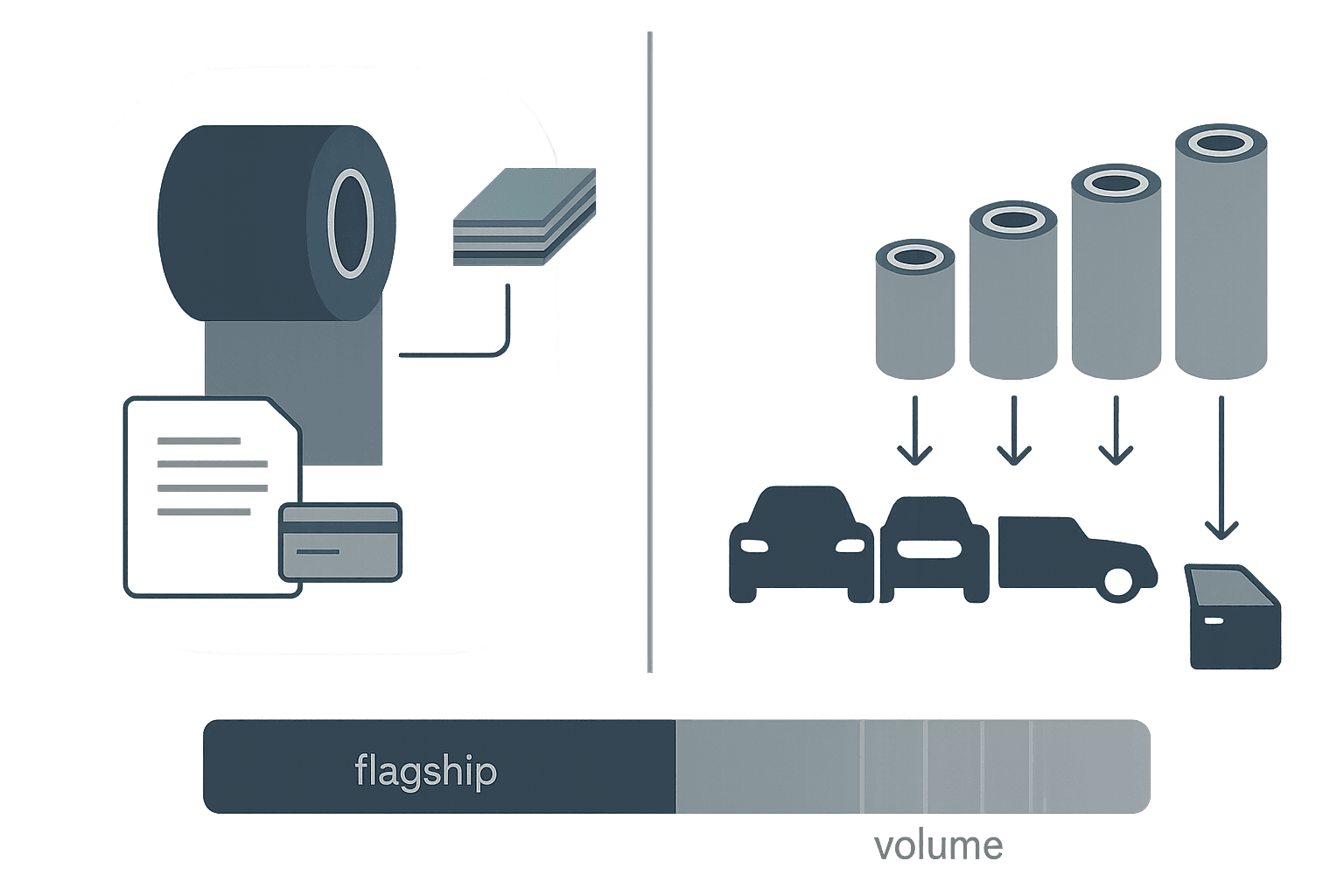
- A thickness ladder, not one roll for every job. In US industrial language, 1 mil = 0.001 in [3]. Hoods, tight wraps, and high-impact panels are different stocking decisions.
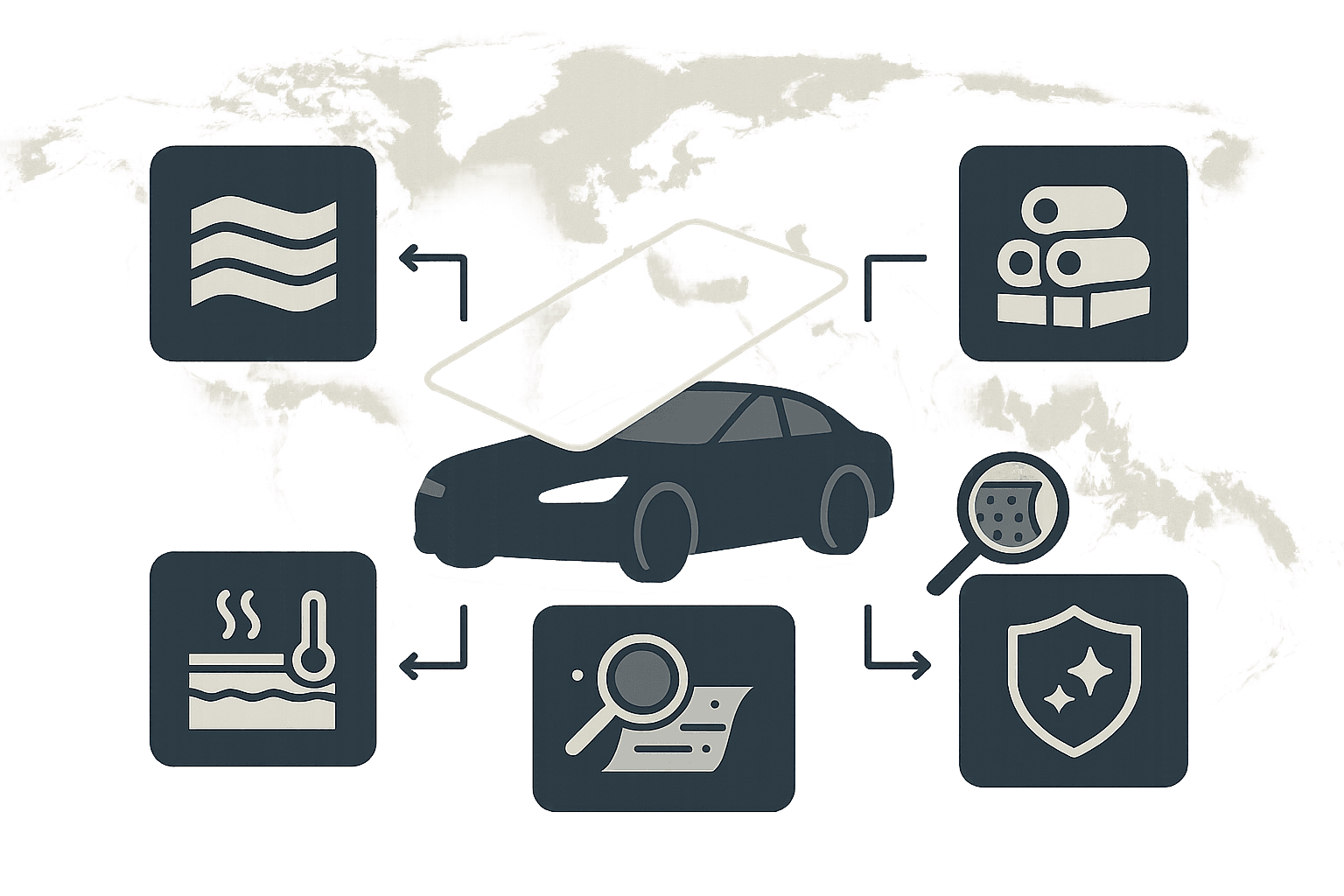
- A stated healing trigger. Heat-activated and room-temperature lines are different shop demos [5]. A thermoplastic becomes pliable at elevated temperature [10]; that does not make every SKU a heat-gun film.
- Warranty cards that vary by series. One site-wide year count hides Rapid jobs claimed as Apex jobs.
- Reorder support. The eighth container must match the first. ISO 28590 introduces lot-by-lot attribute sampling language for that risk [8]. You do not invent an AQL in WhatsApp.
- Distributor-facing materials you are allowed to ask for: sample books, roll labels, and warranty cards. Do not assume exclusive territory; that is Needs confirmation per program.
ISO 9001:2015 specifies requirements for a quality management system [4]. Use it as how a factory talks about process. It does not appoint you a regional exclusive, and it does not replace a receiving check.
Factory, trader, or brand dealer seat
These three are easy to mix on a website. They are not the same partner.
| Partner type | What you actually buy | Fits a distributor when |
|---|---|---|
| Wholesale PPF factory | Named rolls from the maker | Reorder codes, lot labels, sample-first path |
| Trader / catalog reseller | Someone else’s film, relisted | You already locked the SKU and only need logistics |
| Gated brand dealer program | Brand inventory plus training rules | Shops in your market already search that brand |
An original equipment manufacturer produces parts or equipment another company may market [7]. That OEM / private-label path can sit beside wholesale, for buyers who want their own carton. It does not replace the film check, and it is not the same as “become the local XPEL dealer.”
If shops need big-brand search demand, keep alternative language on the XPEL alternatives hub. Do not stock grey-market branded rolls and a factory line as one inventory.
A published brand sheet is the paper-trail standard you should demand from any wholesale ppf factory. Scotchgard Paint Protection Film Pro Series 200, for example, states heat-applied self-healing on the film surface [9]. If a China factory cannot produce a named-SKU sheet of that kind, it is not ready to feed a dealer network.
How to choose a PPF factory for wholesale
Run this as a partner test, not a price contest. Do not publish MOQ, roll prices, or exclusive maps — those stay on the signed quote.
1. Map the shops you will serve. Daily-driver full fronts need a mainstream thickness. Cold bays may need a room-temperature heal line. Flagship cars may need a premium gloss SKU. One mystery roll cannot cover that mix. 2. Lock models before volume. Ask for the codes you will print in a local catalog. Confirm mil on the liner against the quote [3]. 3. Sample the SKUs shops will actually sell. Install, wash, and wait. Compare two rolls of the same model if you can [5] [8]. 4. Read the warranty as a claim process. The card that ships with the roll is the document, not the homepage slogan. 5. Ask who answers after the first container. Reorder support is a person and a lot code, not a new Alibaba chat. 6. Separate OEM packaging from wholesale stocking. Labels and dealer kits are allowed capability talk [7]. They do not skip sampling.
Then request samples. If you need a distributor onboarding path, use dealers. If the line will carry your brand, use OEM.
Red flags that the factory is not a distribution partner
- Fast quotes, no model codes.
- One thickness and one warranty for every climate.
- Healing demo that does not match the carton [5] [9].
- Refusal to send the SKUs you will stock.
- Replica / “same as XPEL” copy.
- Specs that move between the chat, the PDF, and the box.
- ISO 9001 used as if it were a dealer appointment [4].
- “Exclusive country rights” in the first email with no program file. Treat territory as Needs confirmation.
A trader can still move a known SKU. A trader is a poor ppf factory partner for distribution when you are still building the line shops will reorder.
How XPSHELL maps to this partner test
XPSHELL is a China-based automotive film manufacturer selling named paint protection film SKUs on a sample-first wholesale and OEM path. The distributor-fit claim is the ladder plus reorder paperwork, not a consumer ranking.
| Series | Models | Thickness | Healing | Warranty to confirm per order |
|---|---|---|---|---|
| Master | M-65, M-75, M-85, M-100 | 6.5 / 7.5 / 8.5 / 10 mil | Heat-activated | Up to 8 years |
| Apex | A-75 | 7.5 mil | Heat-activated | Up to 10 years |
| Rapid | R-75 | 7.5 mil | Room-temperature | Up to 5 years |
| Finish | Matte, Satin, Gloss Black, Matte Black | 7.5 mil | Do not assume the clear-line healing story | Up to 8 years |
Typical clear roll format is 1.52 m × 15 m, with OEM sizes available. Confirm the size on the PO. Finish is a restyle tier; do not claim self-healing on Finish in public copy until that SKU is tested. Every warranty term is up to, with supplier conditions.
ISO 9001 is a current site claim without a published certificate number or scope [4]. Do not treat facility size or patents as proof that shops will get the same gloss next quarter.
FAQ
Which PPF factory is suitable for distributors?
A factory that sells named wholesale SKUs you can reorder, with a mil ladder [3], a stated healing trigger [5], series warranty cards, and a lot code for claims [8]. If you cannot reprint the model on a shop invoice, it is not a distribution line. Request samples for the SKUs you will actually stock.
What makes a wholesale PPF factory a partner for distribution?
Wholesale buyers resell or use film in operations [6]. Partnership here is reorder support: same codes, same cards, someone who answers after the first container. ISO 9001 describes a management system [4]; it does not replace that. Use dealers when you need a program conversation, not a one-off roll.
How do I choose a PPF factory for wholesale reorder support?
Lock models first, sample two rolls of the same SKU if you can, then write the codes on the PO. Demand liner print in mil [3] and a healing trigger that matches the series [5] [10]. Lot language from ISO 28590 is the claim language [8]. Price-only chats skip this on purpose.
Is a China PPF factory good for distributors?
Country is not a grade. TPU is a polymer class [2]. A Chinese factory is a fit when it behaves like a china ppf factory distributors can restock: named models, sample-first path, and paperwork that survives a shop claim. Start the search on the China supplier hub, then run this partner test.
How is a distributor factory different from a brand dealer program?
A factory sells you a line you can sample and wholesale. A dealer program sells gated brand inventory and training rules. You can run both, but do not mix grey-market branded rolls into the factory SKU list. Brand-alternative positioning stays on the XPEL alternative hub.
What warranty should a distributor demand by series?
The card on the roll, not one homepage number. XPSHELL’s current split to confirm per order is Master up to 8 years, Apex up to 10, Rapid up to 5, Finish up to 8. A factory that quotes 10 years on every SKU will make you eat Rapid claims.
Can OEM packaging sit next to wholesale stocking?
Yes. OEM means another company may market what the factory produces [7]. Ask for labels, warranty cards, and sample books after the film passes. Use OEM for that path. Do not skip quality evaluation because the carton will carry your brand.
How do I avoid a factory that cannot support shops?
Stop when there are no model codes, one warranty for every series, a healing demo that does not match the carton [9], a refusal to sample, or replica copy. Poor partners fail on reorder, not on the first glossy photo. Request samples before you print a local catalog.