Paint protection film and ceramic coating are often discussed together, but for distributors, professional shops, and OEM buyers they are fundamentally different program decisions. One is a physical film barrier, the other is a surface treatment. Choosing the right mix affects package structure, installation model, margin strategy, and supplier risk.
1. PPF vs Ceramic Coating: What B2B Buyers Are Actually Deciding
At the commercial level, PPF vs ceramic coating is not a simple product comparison. It is a decision about:
- What kind of protection your program actually promises
- How complex your installations will be
- How you structure good/better/best packages
- What type of manufacturer partnership you need
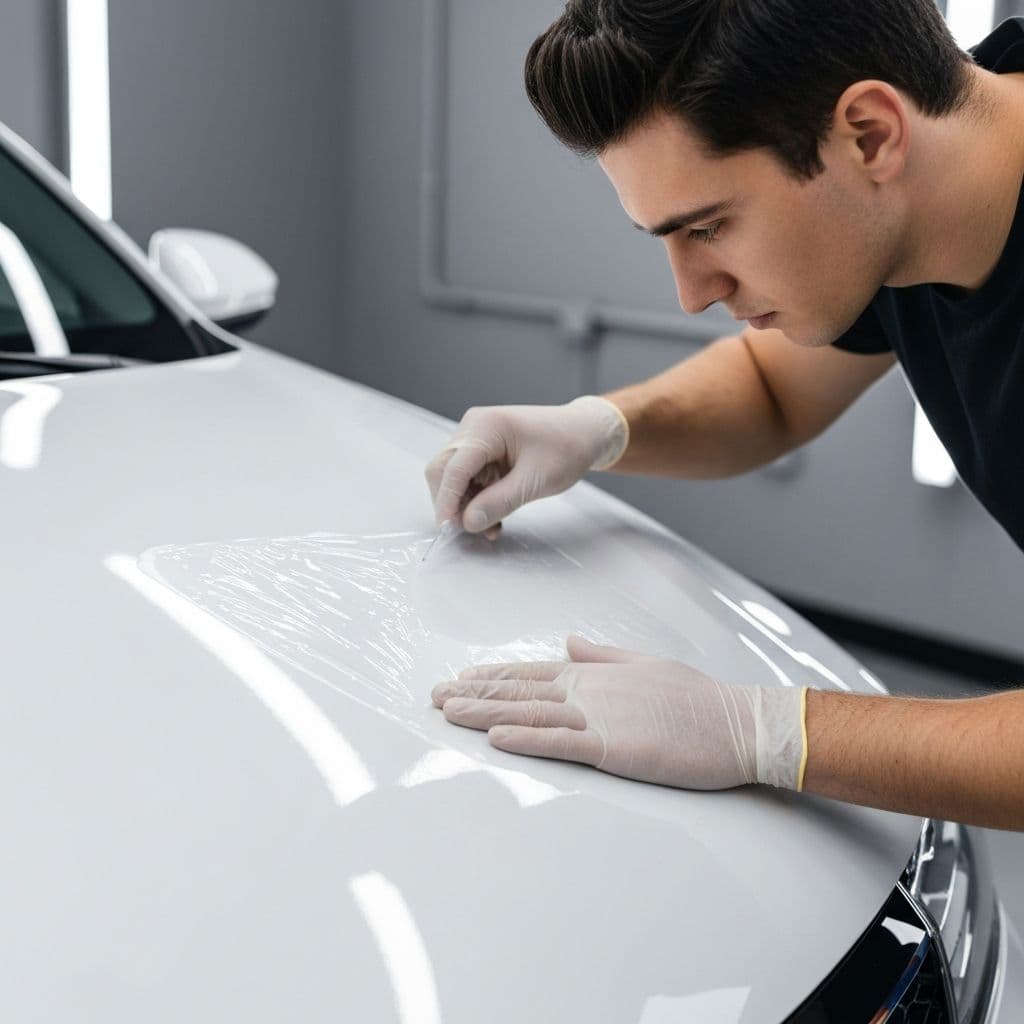
Paint protection film (PPF) is a clear, flexible polyurethane or similar film applied over painted surfaces to help absorb physical impact and abrasion.
Ceramic coating is a liquid-applied product that cures on the surface to enhance gloss, hydrophobic behavior, and ease of cleaning, but it does not act as a thick impact-absorbing barrier in the same way as film.
For B2B buyers, the real decision is: Do you want a film-led protection program focused on physical paint preservation, an appearance-led coating program, or a combination of both?
2. Paint Protection Film vs Ceramic Coating: Core Performance Differences
What Paint Protection Film Is Designed To Do
Paint protection film is engineered as a sacrificial barrier between the environment and the OEM paint. Key functional roles:
- Help protect against road rash, minor stone chips, and everyday abrasion
- Absorb small impacts that would otherwise mark the clear coat
- Provide a buffer against swirl marks and light surface damage
- In many modern films, maintain optical clarity and gloss while doing so
PPF is thick enough to take mechanical abuse first, so that the underlying paint remains closer to its original condition.
What Ceramic Coating Is Designed To Do
Ceramic coatings are surface enhancers rather than physical shields. Their typical roles:
- Increase gloss and depth of color
- Create hydrophobic behavior so water and light dirt release more easily
- Make maintenance washing more efficient
They form a hardened layer that can offer some resistance to light micro-marring, but they are not comparable to a full film layer for impact or chip resistance. [1][2][3]
Direct Comparison: PPF vs Ceramic Coating
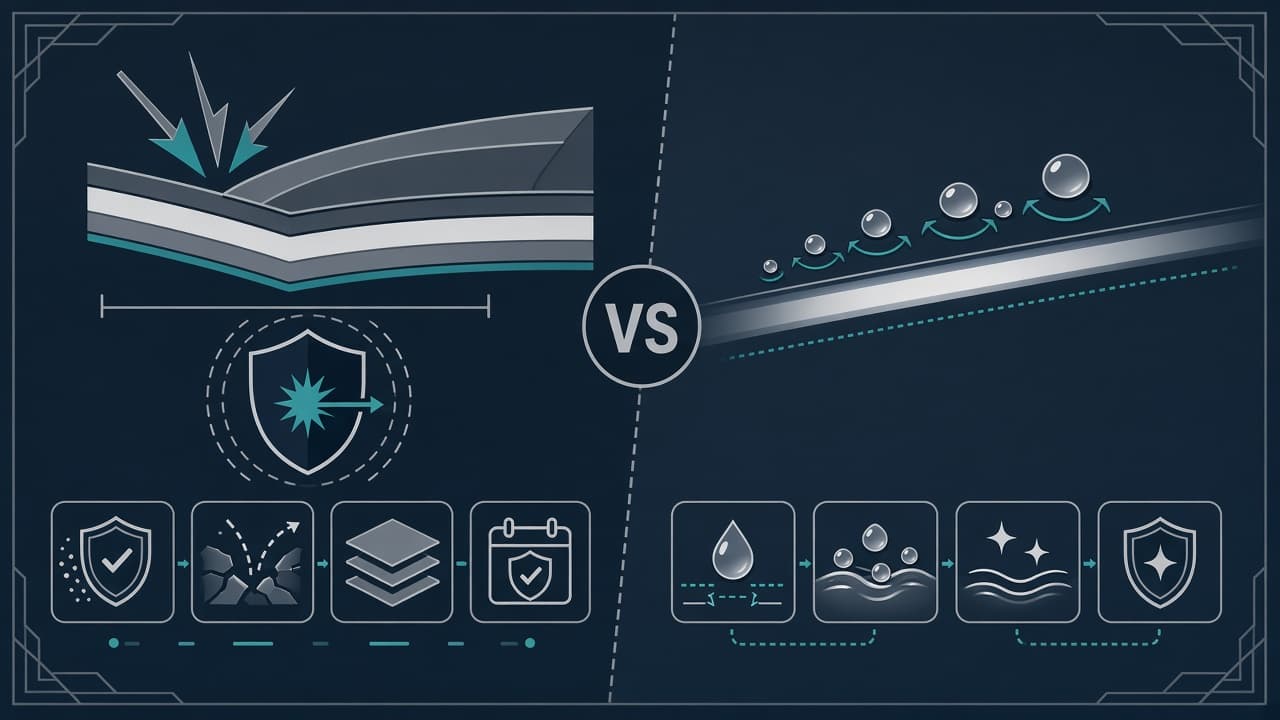
The most important distinction for any B2B program is impact protection vs appearance enhancement.
| Aspect | Paint Protection Film (PPF) | Ceramic Coating |
|---|---|---|
| Core role | Physical barrier over paint | Surface treatment on paint or film |
| Main benefit | Helps protect against chips, abrasion, road rash | Enhances gloss, hydrophobicity, ease of cleaning |
| Thickness | Relatively thick film layer | Very thin cured coating layer |
| Primary value to end user | Preservation of paint condition | Appearance and maintenance convenience |
| Typical positioning | Premium protection packages, front-end or full-body wraps | Detailing, maintenance, appearance upgrades |
| Works together? | Can be coated on top for easier cleaning | Often applied over PPF for gloss and hydrophobics |
Conclusion for buyers: PPF and ceramic coating are complementary categories, but ceramic coating should not be treated as a direct substitute for the physical impact protection of film.
3. When PPF Is the Better Wholesale Program Choice
PPF becomes the stronger choice when your core promise is preserving painted surfaces against physical wear and building premium ticket packages.
Premium Retail Packages and High-Value Vehicles
For high-end vehicles, performance cars, luxury SUVs, and enthusiast segments, the expectation is often visible, long-term protection against road damage. PPF aligns well with:
- Front-end protection (bumper, hood, fenders, mirrors)
- Full-body wraps for high-value or collectible vehicles
- Custom or matte paints where repainting is costly or risky
These customers are usually willing to invest more in a protection package that visibly takes the hits instead of the paint.
Distributors and Dealer Networks
For distributors managing networks of installers or dealerships, a film-led program allows:
- Clear differentiation between entry-level appearance packages and true protection packages
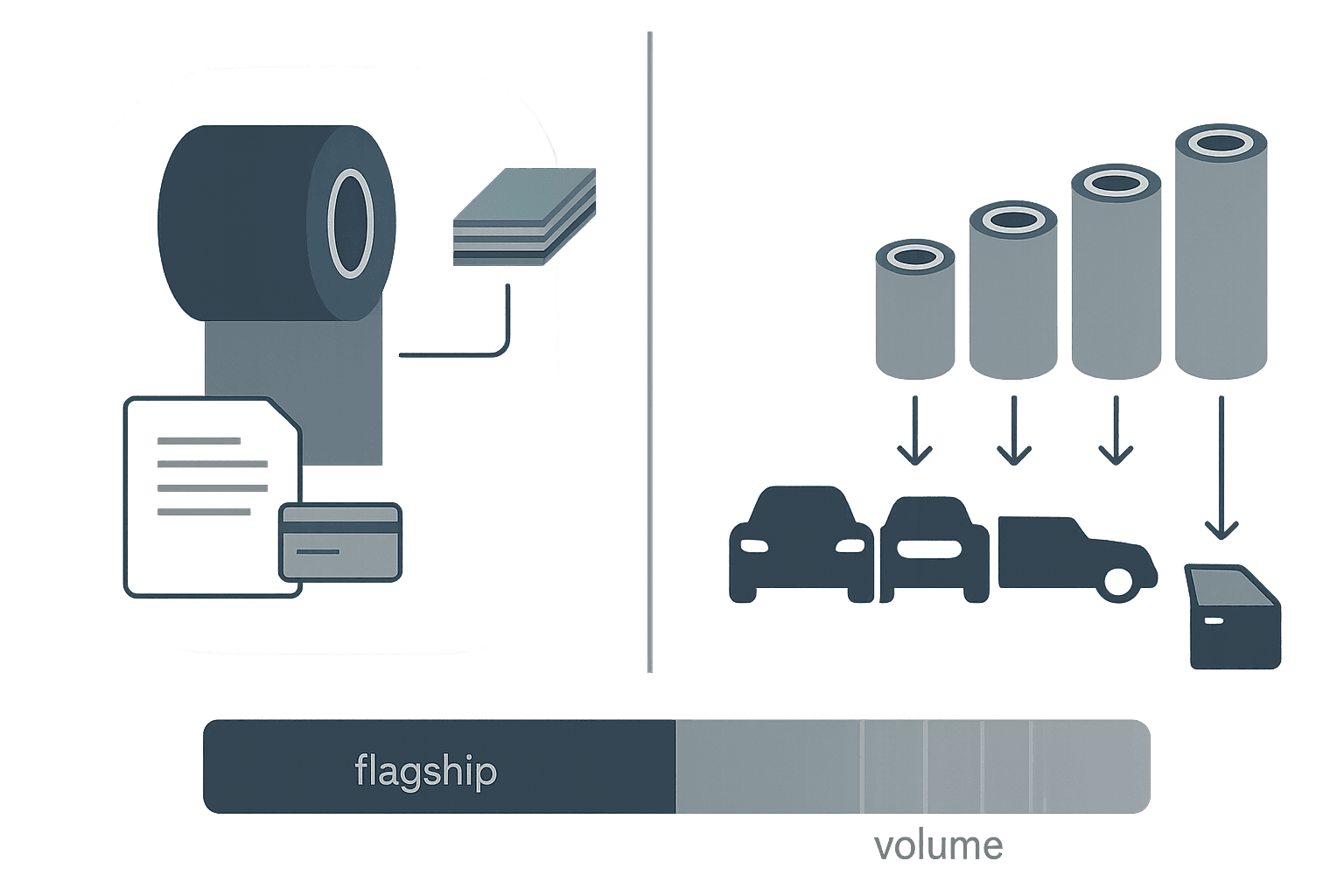
- Scalable SKUs (roll widths, pre-cut kits) that support consistent installations across multiple locations
- Stronger program stories for new-vehicle protection, certified pre-owned upgrades, or premium accessory menus
PPF becomes a logical centerpiece whenever the channel wants a “protection-first” offer, with ceramic coating optionally layered as an appearance booster.
Professional Installers and Detailing Shops
For independent shops, PPF commonly sits at the top of the service menu pyramid. It can:
- Anchor high-value services like full-front or full-body wraps
- Differentiate the shop’s capability compared with coating-only competitors
- Support tiered structures (partial front, full front, track package, full body)
This structure lets shops use PPF as the primary protection upgrade, then optionally add ceramic coating on top of film and on unfilmed areas to complete a premium bundle.
4. Where Ceramic Coating Still Fits in a Professional Offering
Ceramic coating still plays an important role for many installers and distributors; the key is to position it correctly.
When the Customer Prioritizes Appearance Over Impact Defense
If the end customer mainly wants:
- High gloss and a “just detailed” look
- Easier washing and less time spent on maintenance
- Some resistance to light surface marring but not heavy road debris
…then a coating-first package can make sense, especially on lower-risk driving profiles or lower-mileage vehicles.
Workflow and Complexity Considerations
In some shop models, ceramic coating services can fit more easily into existing detailing workflows because they:
- Do not require pattern plotting or bulk-film trimming
- Often rely more on paint correction skills than on advanced film-installation experience
This does not mean coating is universally easier or lower-risk; it means that for some teams, coating integrates naturally with existing detailing processes.
Coating as an Add-On, Not a Replacement
From a program-design point of view, many successful businesses treat ceramic coating as:
- A standalone appearance package for budget-conscious or appearance-focused clients
- An add-on over PPF to enhance gloss and cleaning on film-wrapped vehicles
The key is clarity: coating is not the same category of impact protection as PPF and should not be marketed as such. [4][5]
5. How Distributors, Shops, and OEM Buyers Should Evaluate the Decision
For PPF Distributors
Distributors need PPF lines that are repeatable, reliable, and scalable across many installers.
Key evaluation points:
- Product breadth: Clear, matte, color, and different thickness options as required
- Consistency: Stable optical clarity and adhesive behavior from batch to batch
- Reorder reliability: Predictable lead times and inventory support
- Channel support: Technical guidance, installation recommendations, and marketing assets where available
For Professional Shops and Installer Networks
Shops are primarily concerned with installability and finished result:
- Handling characteristics: Stretch, tack, repositioning window, and conformability
- Finish quality: Clarity, orange peel level, edge behavior
- Training support: Guidance on techniques, common failure modes, and repair approaches
- Package fit: Ability to build clear front-end, full-body, and partial packages using the same film family
For OEM and Program Buyers
OEMs and large fleets look at system-level stability and compliance:
- Specification stability: Defined construction and properties that remain consistent over time
- Supply continuity: Capacity and logistics that can support ongoing programs
- Validation readiness: Documentation, test data, and processes to support internal qualification
For these buyers, paint protection film vs ceramic coating is often less about which product is better and more about matching the material to the program’s promise and validation requirements.
6. What to Check Before You Buy PPF Wholesale from a China Manufacturer
Sourcing PPF wholesale from China can be a strong strategy if quality and process controls are in place. Due diligence protects your brand and downstream installers.
Sample-Based Material Verification
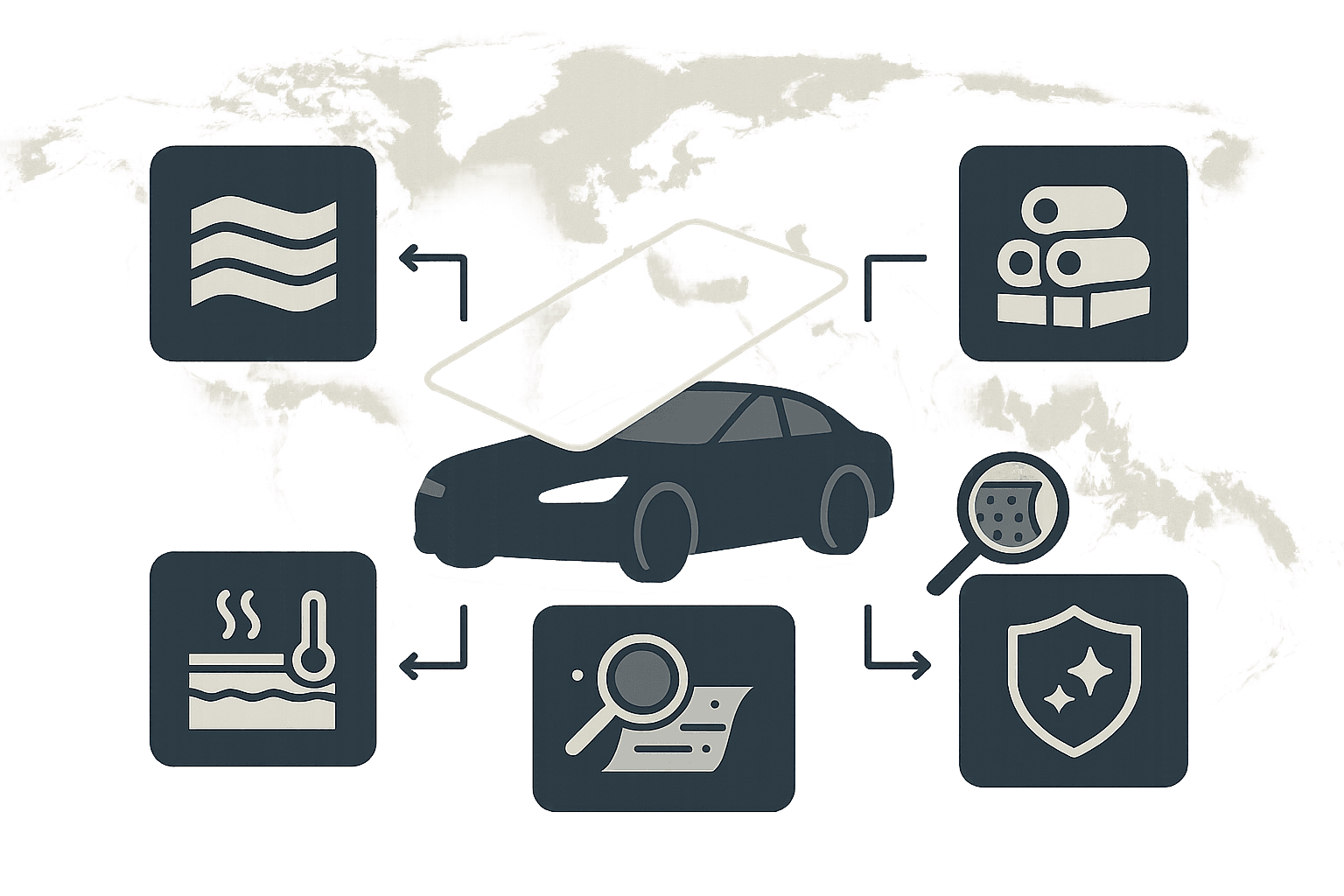
Before any significant order, request production-representative samples and evaluate:
- Optical clarity: On dark and light panels, in sunlight and workshop lighting
- Surface feel: Top-coat slickness and resistance to light marring during installation
- Adhesive behavior: Initial tack, repositioning, and final bond after curing
- Liner release: Smooth release without tearing or inconsistent peel
- Roll consistency: Check multiple areas across the width and along the length
| Checkpoint | What to Look For | Why It Matters |
|---|---|---|
| Clarity on dark paint | Minimal haze and distortion | Avoids complaints on dark vehicles |
| Edge behavior | Limited edge lift after curing | Reduces warranty issues and rework |
| Stretch and memory | Controlled stretch without thinning out | Better fit on complex curves |
| Adhesive residue | Clean removal in test patches | Supports safe re-do and future removal |
| Batch labeling | Clear lot IDs and dates | Enables traceability and quality control |
Documentation and Communication
Beyond the film itself, evaluate the supplier’s professionalism:
- Clear product data sheets and specifications
- Packaging standards that protect rolls in transit
- Transparent lot identification and documentation
- Responsiveness to technical questions
- Clear process for handling quality issues and claims
These elements indicate whether the manufacturer is prepared to support a long-term B2B relationship, not just one-off orders.
Pilot Orders and Field Trials
Before scaling up:
- Run a pilot order with a limited number of SKUs
- Deploy film with a small group of trusted installers
- Monitor installation feedback, failure rates, and customer response over an initial period
Only after consistent performance in real conditions should you treat any manufacturer as a core PPF wholesale partner.
7. How to Position a China PPF Manufacturer in a Competitive Market
XPSHELL operates as a China PPF manufacturer focused on serving wholesale buyers who want a credible supply option for film-based programs.
For distributors and shops, XPSHELL can be positioned as an XPEL alternative or STEK alternative in the sense that it offers:
- Film products for professional installation
- A pathway to build branded or private-label protection programs
- Sampling and quotation support for B2B buyers
The emphasis should remain on fit, responsiveness, and partnership rather than on unsupported performance superlatives. When discussing any manufacturer, avoid implying affiliation with other brands and focus instead on:
- Whether the product range matches your channel
- Whether the supplier can support your SKUs and volumes
- How quickly and clearly they communicate during qualification
8. A Practical Selection Framework: PPF Only, Coating Only, or a Film-Led Program
To simplify PPF vs ceramic coating decisions, use a scenario-based approach.
Choose PPF-First (Film-Led Program) When
- Your promise centers on preserving paint from chips, road rash, and abrasion
- You serve high-value vehicles, performance cars, or long-distance drivers
- Your installers are trained (or willing to be trained) in professional film application
- You want premium packages that stand clearly apart from standard detailing offers
Choose Coating-First When
- The primary customer demand is gloss, beading, and easier washing
- Vehicles see lighter use or low-risk driving environments
- Your business is currently detailing-heavy and not yet ready to add complex film work
Combine Both for a Tiered Program
For many distributors and shops, the most robust strategy is film-led protection with coating as a complement:
- PPF on high-impact areas (or full body) to provide physical defense
- Ceramic coating over film and remaining painted panels to enhance gloss and maintenance
This approach is often easier to explain to customers:
- Film = physical protection
- Coating = appearance and cleaning convenience
Align your offer with the service promise you want to make, rather than treating PPF and coating as interchangeable.
Next Steps: How to Qualify XPSHELL for PPF Wholesale
If you are building or upgrading a film-led program and want to evaluate XPSHELL as a China PPF manufacturer, keep the process structured and low-risk.
Recommended steps:
1. Share your use case Briefly describe your channels (distributor, shop network, OEM, fleet) and target packages (front-end, full-body, mix with coating, etc.).
2. Request targeted samples Ask for sample rolls or panels in the specific finishes and thicknesses that match your program concept.
3. Define test criteria internally Agree with your installers on what you will evaluate: clarity, handling, edge behavior, adhesive performance, and after-cure appearance.
4. Run a pilot order Once samples pass, place a limited pilot order and track installer feedback, customer satisfaction, and logistics performance.
5. Discuss long-term terms After successful trials, review SKUs, packaging, forecast volumes, and replenishment cycles for a stable PPF wholesale supply.
You can contact XPSHELL to request samples, technical specs, and a wholesale quote aligned with your volume expectations and target positioning.
Frequently Asked Questions
Does ceramic coating provide the same protection as PPF?
No. Ceramic coating is primarily designed for appearance and maintenance benefits such as gloss and hydrophobic behavior. Paint protection film is a physical barrier that helps protect against chips, road rash, and abrasion. Coating alone should not be positioned as a direct replacement for PPF when the promise is impact protection. [1][5]
Can I apply ceramic coating on top of PPF?
Yes, many professional installers apply ceramic coating over PPF. This combination lets PPF handle the physical impacts while the coating improves gloss and makes cleaning easier. When you design packages, this can become a clear “premium” tier: film for protection, coating for appearance and maintenance. [4][5]
When should a shop start with PPF instead of ceramic coating?
Start with PPF when your market values paint preservation and high-level protection more than basic appearance upgrades. This is common in areas with heavy road debris, on premium or performance vehicles, and in dealer programs that want a clear differentiation from standard detailing. Once PPF is established, you can add ceramic coating as an enhancement rather than as your core protection offer.
What should I look for in a PPF wholesale partner from China?
Focus on material consistency, documentation, and responsiveness. Verify clarity, adhesive behavior, and handling via samples, insist on clear labeling and packaging, and run a pilot order before committing to larger volumes. A strong partner will support your evaluation process, respond quickly to technical questions, and demonstrate stable quality from batch to batch.
Can XPSHELL support private-label or program-level PPF supply?
XPSHELL operates as a China PPF manufacturer serving wholesale buyers and can support program-level supply discussions. The exact structure—whether open brand or private program—depends on your requirements, target channels, and volume. The first step is to share your program concept and request samples plus a tailored quote so both sides can determine the right cooperation model.