Choosing the right PPF distributor in 2026 is no longer just about price per square foot. The aftermarket has matured into a four-tier ecosystem where paint protection film brands — XPEL, SunTek, LLumar, 3M, STEK, Hexis — run distinct dealer programs, warranty schemes, and channel margins. This guide walks shop owners and procurement teams through the brand matrix, the four-tier distribution structure, and how authorized dealers actually price their inventory.
The PPF Brand Landscape in 2026
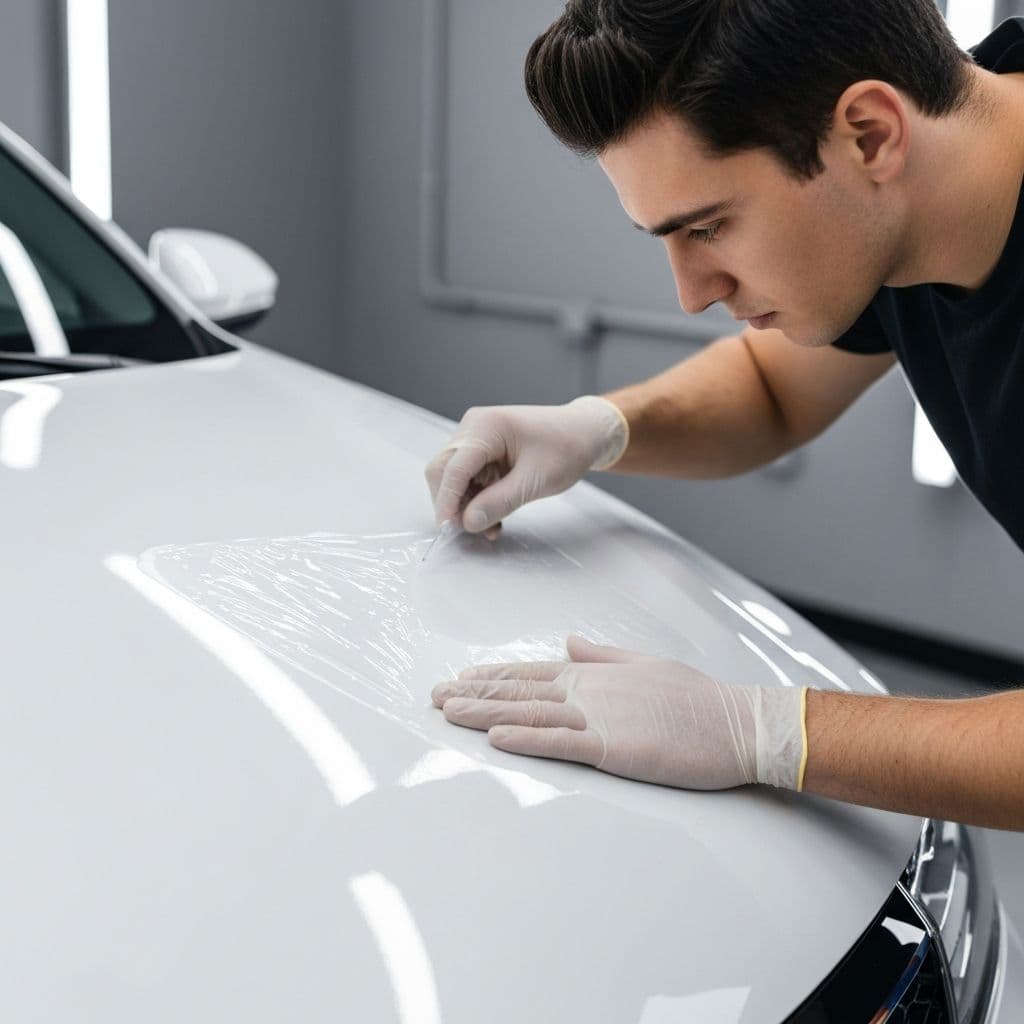
Paint protection film is a thermoplastic urethane layer, often with a self-healing topcoat, applied to painted panels against chips and light abrasion [1]. Five brands account for the vast majority of premium aftermarket installations in North America and EMEA: XPEL, SunTek (Eastman), LLumar (Eastman), 3M Scotchgard Pro, and STEK. A second tier — Hexis, Avery Dennison Supreme Defense, Ceramic Pro Kavaca — competes on price-per-mil or specific niches like satin finishes.
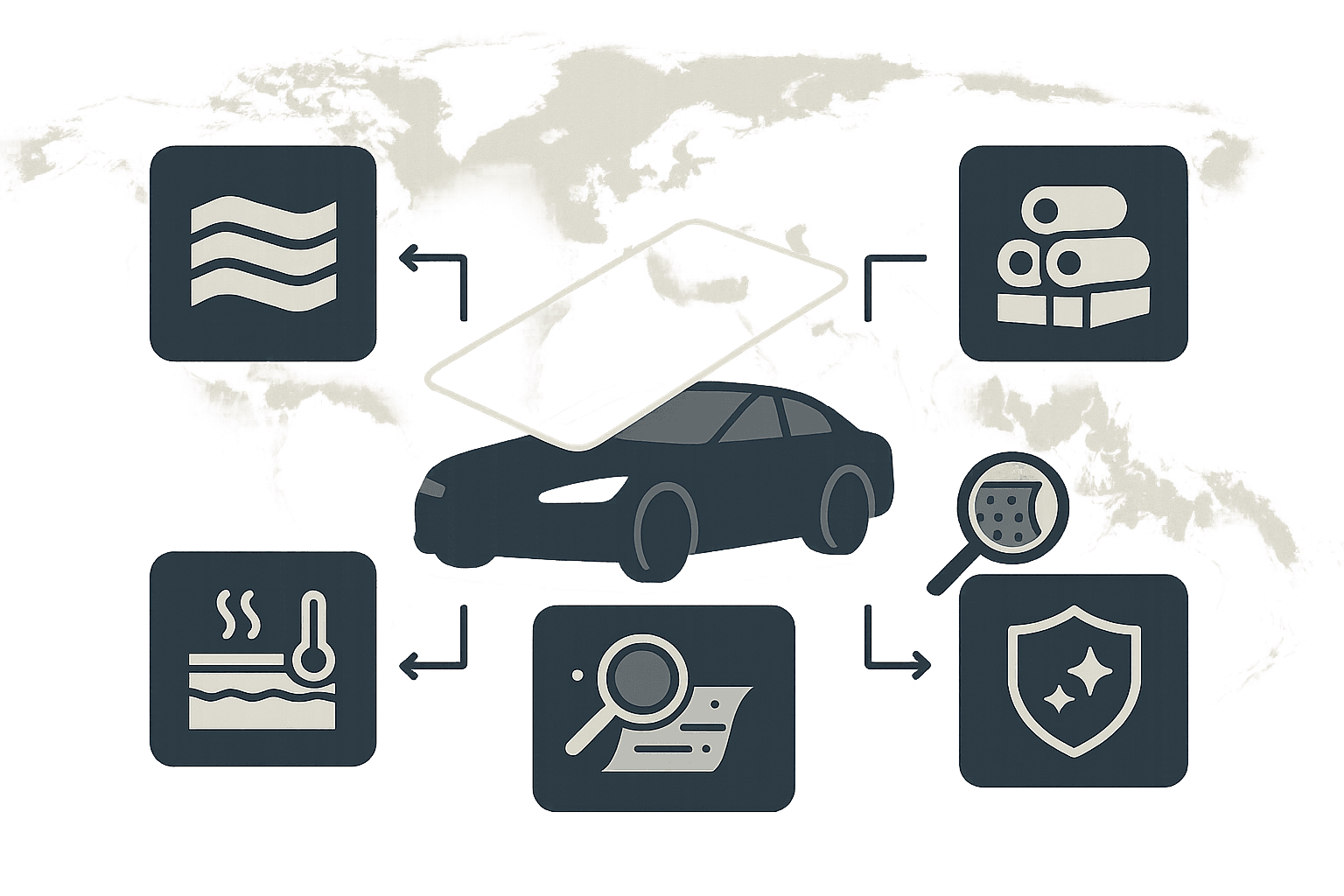
What separates the leaders is not the polyurethane formulation itself (most use thermoplastic polyurethane around 6 to 10 mil) [2], but the self-healing top coat, the hydrophobic clear-coat technology, and crucially, the warranty registration infrastructure. A 10-year warranty backed by a publicly traded parent (XPEL, Eastman) carries different risk than a 5-year warranty from a private importer.
Brand snapshot
- XPEL — Premium positioning, Ultimate Plus is the most-installed top-tier film, Stealth offers matte conversion, dealer network is the largest globally with mandatory PDR (Paint Damage Repair) certification [5] [6].
- SunTek Ultra — Eastman-owned, slightly thicker self-healing top coat (~ 1.6 mil), commonly priced 10-15% below XPEL Ultimate Plus at the wholesale level. Confirm current dealer pricing; 10-15% is not an XPSHELL published figure. SunTek describes Ultra as using heat from a vehicle’s engine or the sun [7].
- LLumar Platinum / Valor — Eastman's premium tier; Valor adds an enhanced gloss layer; LLumar's strength is automotive dealership channels (OEM reflash programs). LLumar publishes dealer support, training, and product access [8].
- 3M Scotchgard Pro Series — Industrial pedigree, strong in fleet and OEM, slightly less responsive self-healing than XPEL/SunTek per detailing-shop reports. A published Pro Series page describes heat-activated healing on the film surface [9].
- STEK DYNOshield — Smaller dealer network but a cult following for its hydrophobic top coat; popular in luxury and exotic segments.
- Hexis Bodyfence X — Strong in Europe, very competitive pricing; the warranty network in North America is thinner.
The AutoDetailing community on Reddit consistently flags one practical truth: at the installer level, the difference between XPEL Ultimate Plus and SunTek Ultra is largely the warranty paperwork and the brand-name lift on resale, not a hands-down win on visual or self-healing performance. For a shop deciding what to stock, this means brand selection is a marketing and channel decision more than a chemistry one.
How PPF Distribution Actually Works
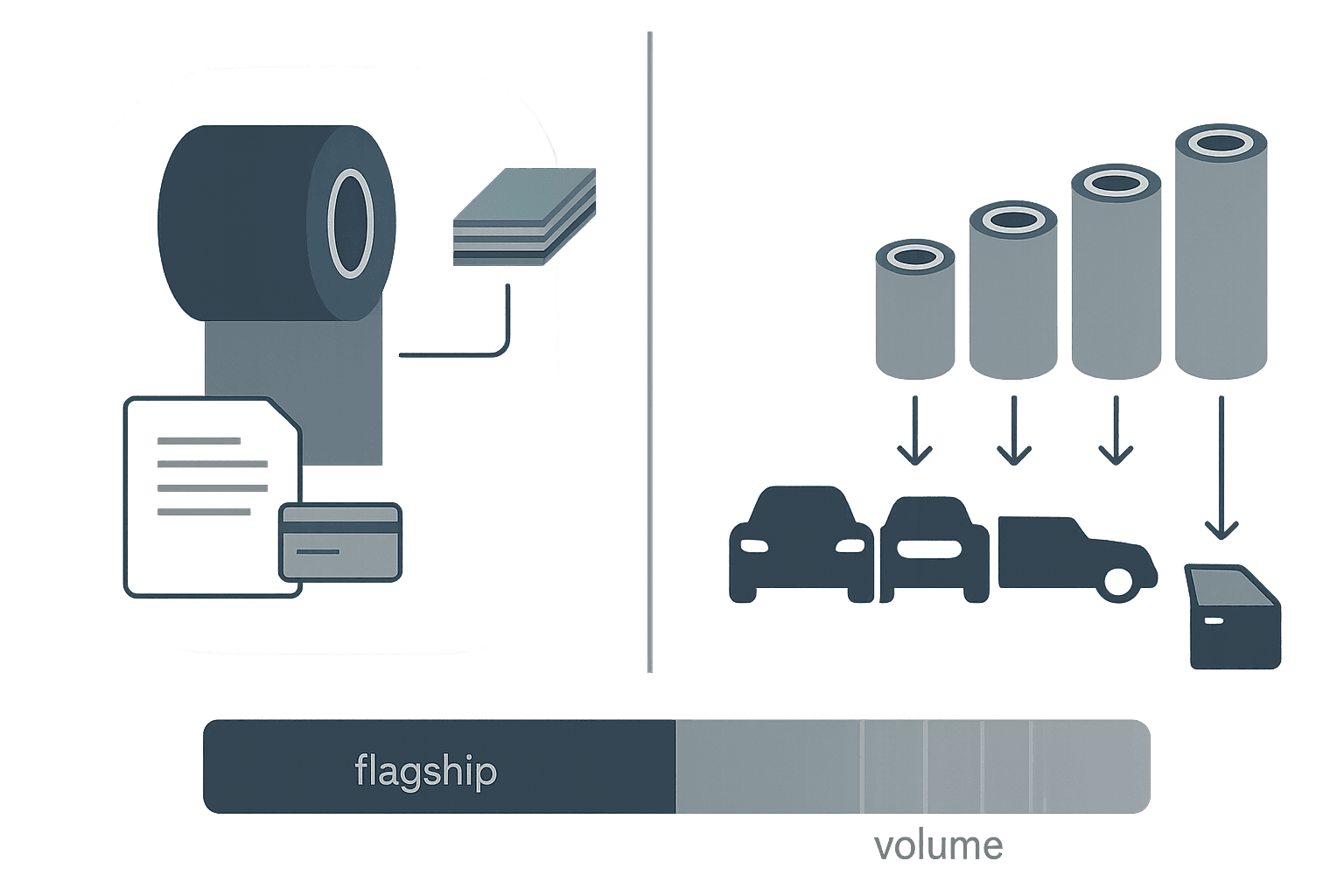
Most paint protection film brands operate a four-tier structure. Understanding which tier you sit in determines your margin, your minimum order quantity (MOQ), and whether you can carry the brand at all. ISO 9001:2015 is the widely used quality-management standard [4]. It describes a factory’s process talk. It does not appoint you as an XPEL dealer.
The four tiers
- Manufacturer — The film maker (XPEL, Eastman for SunTek/LLumar, 3M, Entrotech for STEK). Sells in master-roll quantities to regional distributors.
- Master Distributor — One per region or country. Handles import, customs, warehouse, and downstream distributor recruitment. Typical MOQ: container quantities, 50-200 master rolls per order. Needs confirmation before you treat any roll count as a market average.
- Authorized Dealer / Sub-Distributor — Buys in case quantities (often 5-20 rolls), resells to installers. Required to carry liability insurance and pass brand-specific certification.
- Certified Installer — The shop that applies film to vehicles. Buys per roll or per square foot, registers the warranty for the end customer.
Margins compress as you go down the chain. Master distributors typically run 25-35% gross on premium brands; authorized dealers see 18-25%; installer markup over wholesale ranges 40-80% depending on geography and labor rates. Do not treat those percentages as XPSHELL or industry-official figures. Confirm gross margin in the signed dealer or master-distributor agreement.
XPEL's authorized dealer program is the most documented in the industry. Their public dealer-application portal lists requirements: dedicated installation bay, completion of the XPEL University training, demonstrated business license, and a signed reseller agreement that includes minimum annual purchase commitments. XPEL’s public dealer page offers paint protection film, window tint, ceramic coating, training, pattern software, and support to businesses that join the network [5]. SunTek and LLumar (Eastman) operate similar programs through their North American distribution arm [7] [8]; STEK and Hexis tend to be more flexible at the dealer level but stricter on master-distributor exclusivity.
Spec Sheet: What Actually Matters
Mil thickness — the headline number, not the whole story
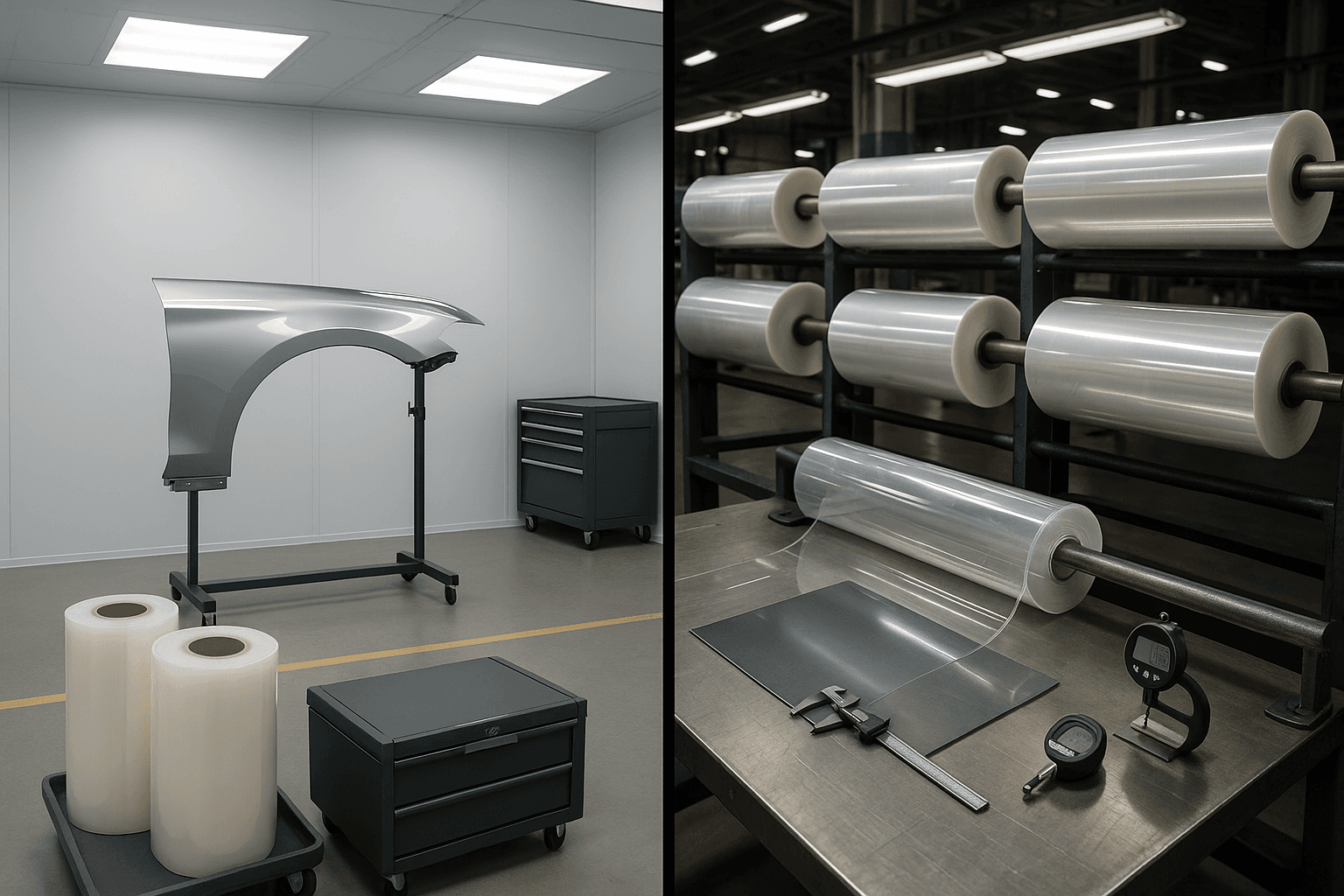
In US industrial language, thickness in mils means thousandths of an inch: 1 mil = 0.001 in [3]. Most premium aftermarket films land at 8 mil total thickness (~ 200 microns). XPEL Ultimate Plus, SunTek Ultra, and LLumar Platinum are all in this band. The thickness budget breaks down roughly:
- Top coat: 0.5 to 1.6 mil — the hydrophobic and self-healing layer
- TPU body: 6 to 7.5 mil — the impact and abrasion absorber
- Adhesive: ~ 1 mil — pressure-sensitive acrylic
- Release liner: discarded during install, not part of installed thickness
Going thicker (10 mil films exist for track and rally duty) trades stretch and conformability for impact resistance. For a daily-driver hood, 8 mil is the modern consensus. Demand that the liner print and the quote use the same unit [3].
Self-healing — heat-activated TPU
All premium brands use a self-healing top coat that reflows minor abrasions when heated by sun, hot water, or a heat gun. Performance varies: XPEL and SunTek typically heal in 1-3 minutes under sun on a hot day; lower-tier films may need direct heat-gun application. Do not publish that stopwatch unless the order file for that film states it. Autonomous self-healing would run without human intervention; many polymer systems instead need a stimulus such as temperature [10]. XPEL states that PPF can self-heal minor scratches and swirls, and that deeper scratches that penetrate the film may not fully heal [6]. SunTek Ultra is described as using heat from the engine or the sun [7]. None of them heal deep gouges or tears — self-healing is for swirl marks and very light scratches.
Warranty — read the registration requirements
The 10-year limited warranty is the top-tier industry standard (XPEL, SunTek, LLumar, 3M). SunTek directs warranty restrictions to the dealer [7]. The fine print matters more than the headline number:
- Warranty must be registered within 30-60 days by a certified installer — DIY install voids it.
- Coverage typically excludes yellowing from environmental contamination (industrial fallout, tree sap), aggressive solvents, and untreated bird-dropping etch.
- Transferability differs: some warranties stay with the vehicle, others are owner-bound.
- Claim process requires the original installation invoice and warranty card; missing paperwork is the most common reason claims get denied.
Buying Decisions That Actually Matter
Sourcing for a single shop or building a distribution network?
If you run a single installation shop, your decision tree is simpler: pick one or two brands your local market recognizes (XPEL is the safe brand-equity bet; SunTek the value play), get certified, and focus on installation craft. The ROI on perfect installation craft beats brand-shopping by a wide margin.
If you are building a regional distribution operation, the math changes. You need:
- Capital — typical container-load purchase order to become a master distributor runs USD 80,000 to 250,000 depending on brand and territory. Needs confirmation; that range is not an XPSHELL published figure.
- Warehouse — climate-controlled, since uncured PPF stored over 30°C loses adhesive performance. A storage-temperature cutoff such as 30°C is Needs confirmation unless the brand’s handling sheet states it.
- Salesforce — installer recruitment is relationship-driven; pure inbound marketing rarely works in this category.
- Warranty fulfillment — you'll be the one resolving end-customer claims when the manufacturer routes them to your territory.
Watch out for the grey market
A meaningful share of XPEL and 3M product circulating outside official channels (eBay, Alibaba relistings, off-territory parallel imports) is real material with voided warranties. The film performs the same; the warranty registration system rejects it. For shops, selling grey-market film without disclosure is the fastest way to lose installer certification when a customer files a claim.
If you need film without a locked dealer seat
A gated dealer program and a factory-direct line are different buying tests. If you need the brand the local market already searches, apply to that program and follow their training gate [5] [8]. If you need named rolls you can sample, wholesale, or private-label, use a receiving checklist first: how to evaluate PPF supplier quality. Then request samples, or use dealers / OEM for the path that matches the business. XPSHELL sells paint protection film on that factory path. Series warranty to confirm per order: Master up to 8 years, Apex up to 10, Rapid up to 5, Finish up to 8.
Conclusion
The 2026 PPF market is a textbook case of channel-driven differentiation: chemistry has converged at the premium tier, but distribution programs, warranty infrastructure, and brand recognition are where the economic moats live. Pick the brand whose dealer program fits your business model, get the certifications, and treat warranty paperwork as a first-class deliverable — not a footnote.
Frequently Asked Questions
Is XPEL the best PPF brand in 2026?
XPEL Ultimate Plus is the most-installed premium film and carries the strongest warranty network. Whether it is 'best' depends on your weighting: SunTek Ultra is functionally close in chemistry at 10-15% lower wholesale cost; LLumar has stronger OEM dealership channels [8]; STEK has the strongest cult following on hydrophobic feel. Confirm current dealer pricing; 10-15% is not an XPSHELL published figure. For mainstream luxury work in North America, XPEL is the safe default.
What is the difference between an authorized PPF dealer and a master distributor?
An authorized dealer (or sub-distributor) buys in case quantities from a master distributor and resells to installers, with margins typically in the 18-25% range. A master distributor handles country or regional import, holds container-quantity inventory, recruits and certifies dealers, and runs at 25-35% gross margin. Master distributor agreements usually include exclusivity for a defined territory. Gross margin is Needs confirmation in the signed agreement — not a blog average.
Can I buy XPEL or SunTek film without being a certified installer?
Through official channels, no — both XPEL and SunTek require business credentials, training completion, and a signed reseller agreement [5] [7]. Material does circulate in grey markets, but warranty registration requires the installation to be logged by a certified shop using legitimate inventory; grey-market film delivers the same physical performance with no warranty coverage.
How thick should a hood PPF be?
8 mil total thickness is the modern standard for daily-driver hoods [3]. 10 mil films exist for track, rally, or extreme stone-chip duty, but they cost more, stretch less, and are harder for installers to wrap around complex contours. For street use, 8 mil delivers full impact protection without conformability penalties.
Does PPF really self-heal?
Yes — for swirl marks and very light surface scratches in the top-coat layer [6] [10]. Heat (sun, hot water, heat gun) reflows the thermoplastic polyurethane top coat and the visible mark disappears in 1-3 minutes. Do not treat 1-3 minutes as a published XPSHELL figure. Self-healing does not repair deep gouges, tears, or impacts that penetrate to the TPU body or paint underneath [6].
What are typical PPF distributor margins?
Master distributor: 25-35% gross on premium brands. Authorized dealer: 18-25% gross. Installer markup over wholesale: 40-80% depending on geography, labor cost, and whether the shop sells install-only or install-plus-detail. These are blended figures; promotional rolls and end-of-quarter pricing can compress margins 5-10 points. There is no XPSHELL-published “typical” margin. Confirm gross margin, promotional rolls, and end-of-quarter pricing in the agreement you will sign.
Does the warranty transfer when I sell the car?
It depends on the brand and territory. XPEL's standard warranty is owner-bound by default but can be transferred once with paperwork. LLumar Platinum and 3M Scotchgard Pro typically tie warranty to the vehicle (transferable on resale). Always confirm with the original installer before assuming a used car carries valid PPF coverage.
How do I evaluate PPF supplier quality before I fund inventory?
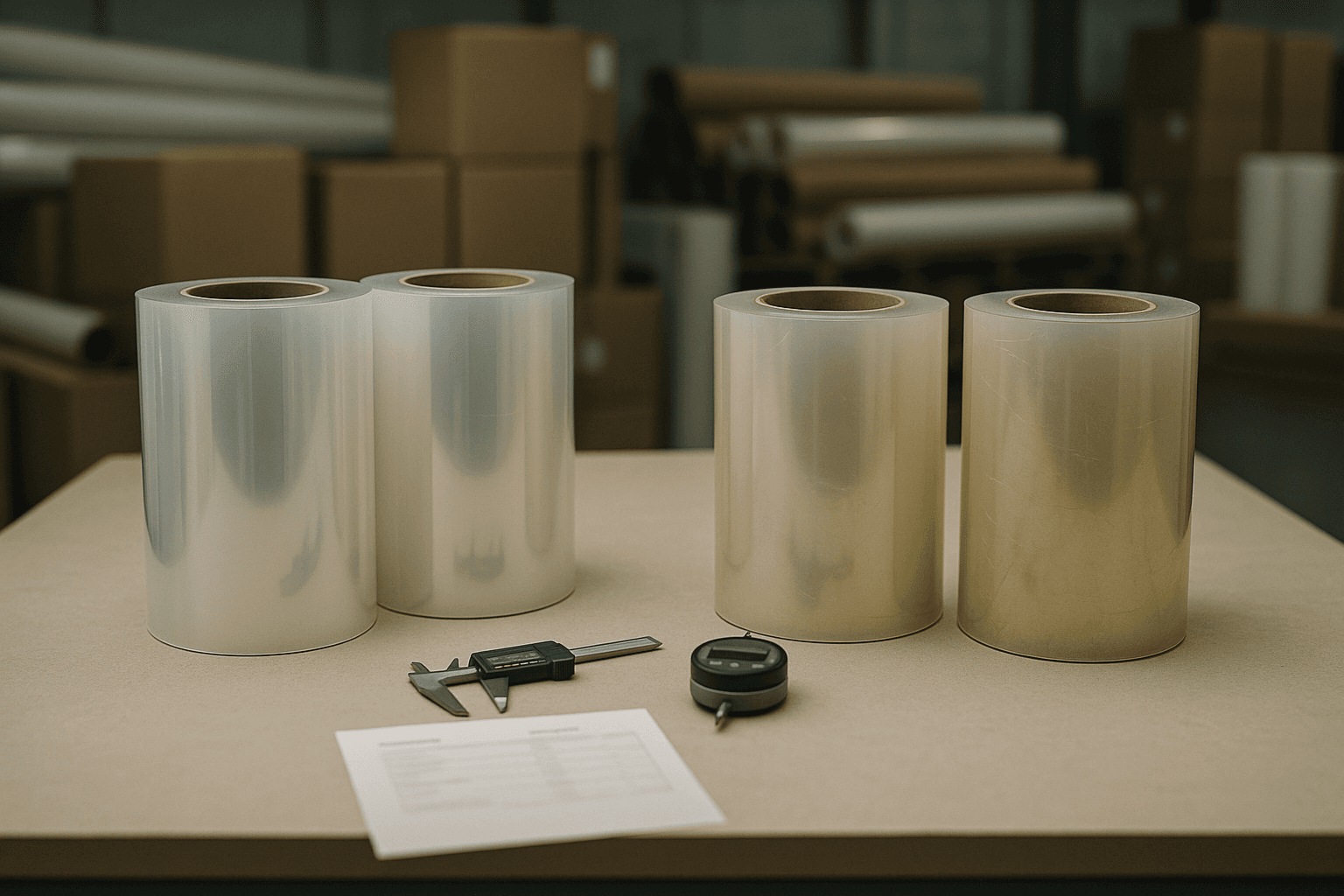
Use a receiving checklist: named SKUs, mil ladder [3], healing trigger [10], lot code, and a sample install. ISO 9001 describes a management system [4]; it does not replace that check. Full table: evaluate PPF supplier quality.
Can I wholesale PPF without joining a big-brand dealer program?
Yes, if your model is factory-direct or private label rather than a locked XPEL/SunTek/LLumar seat [5] [8]. Sample first, then a wholesale quote or an OEM discussion.
References
External references for this article. Links carry rel="nofollow" to comply with Google's guidelines for outbound links used as editorial citations.
1. Paint protection film 2. Thermoplastic polyurethane 3. Thickness (NIST / ASTM E1732) 4. ISO 9001:2015 Quality management systems 5. Become An XPEL Dealer 6. XPEL Automotive Paint Protection Film 7. SunTek Paint Protection Film 8. Why Choose LLumar Dealers 9. Scotchgard Paint Protection Film Pro Series 200 10. Self-healing material