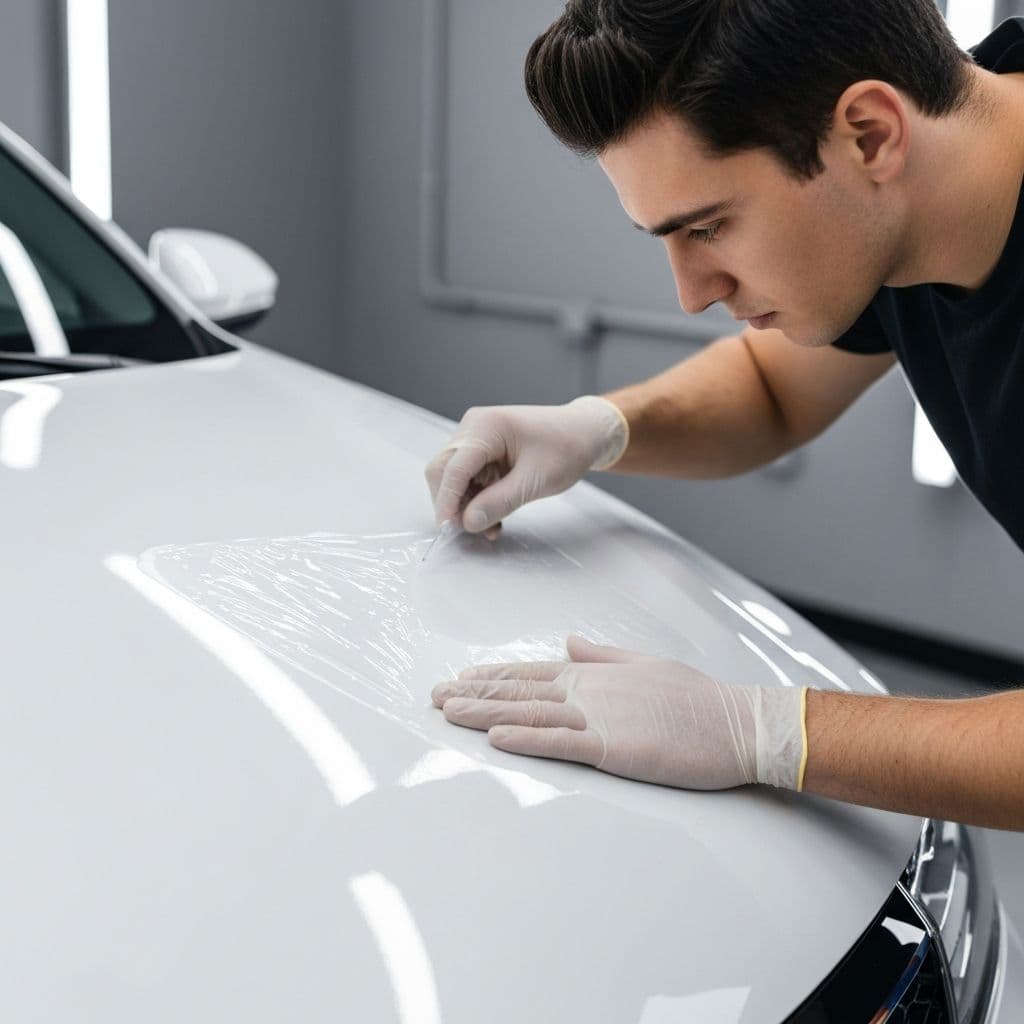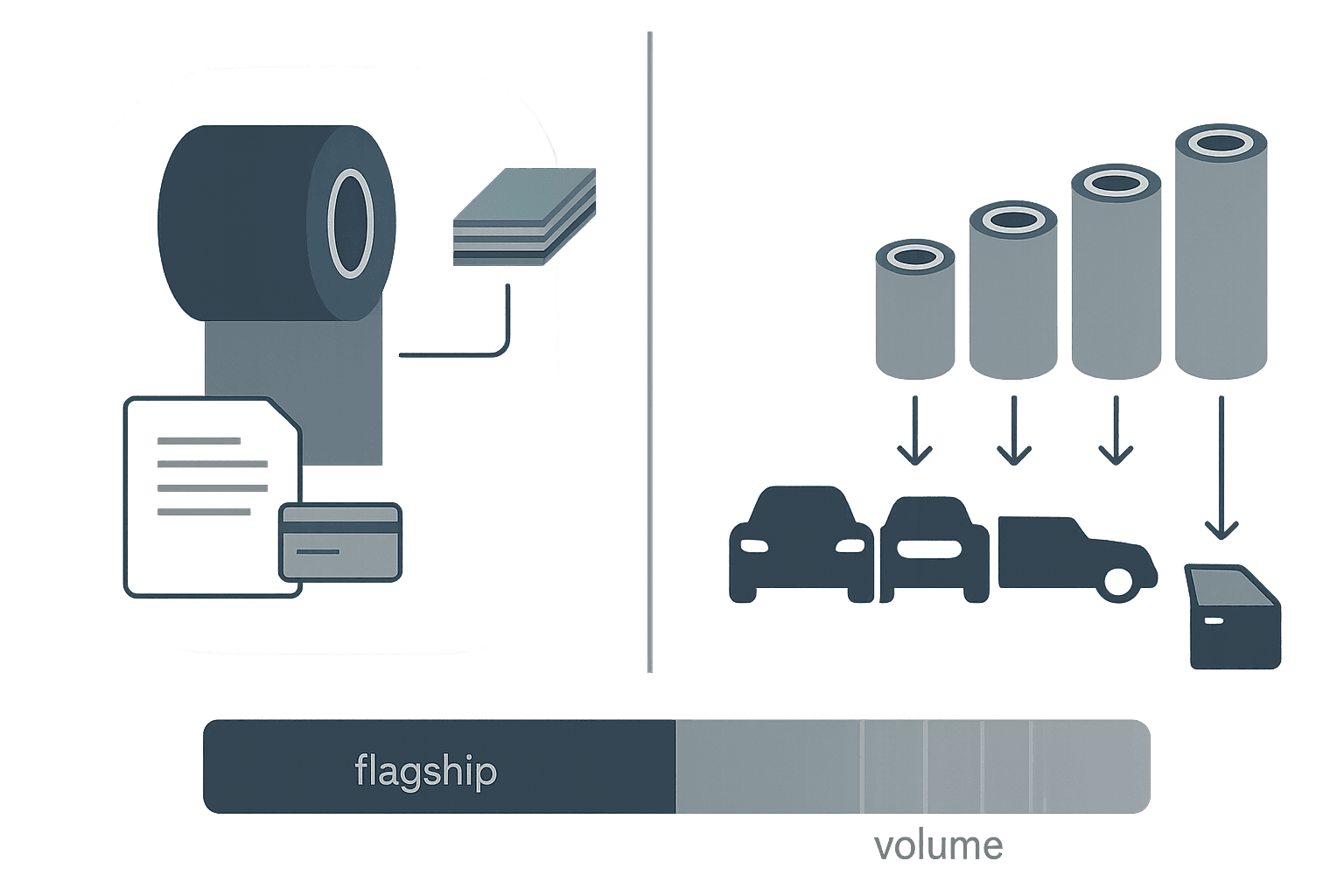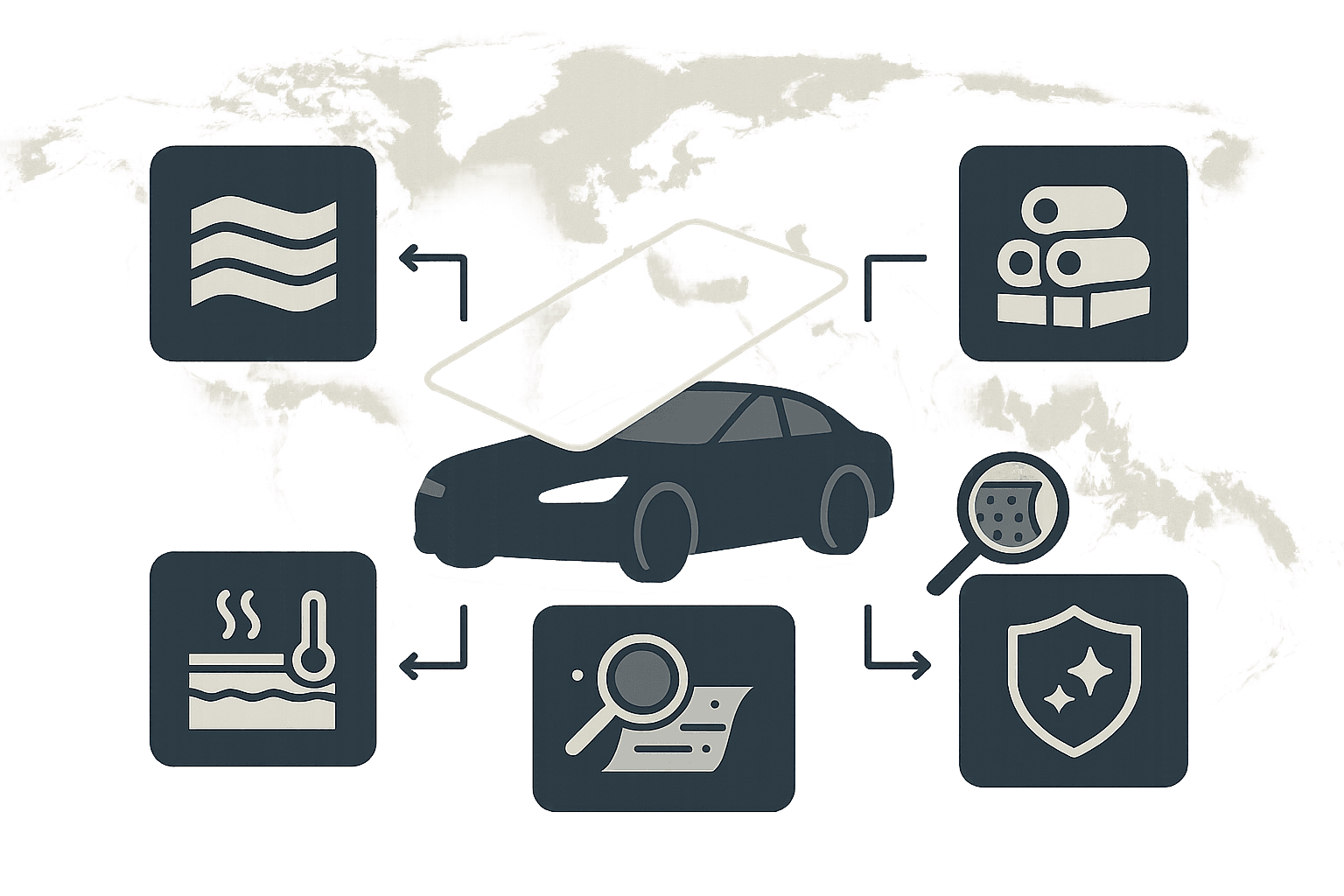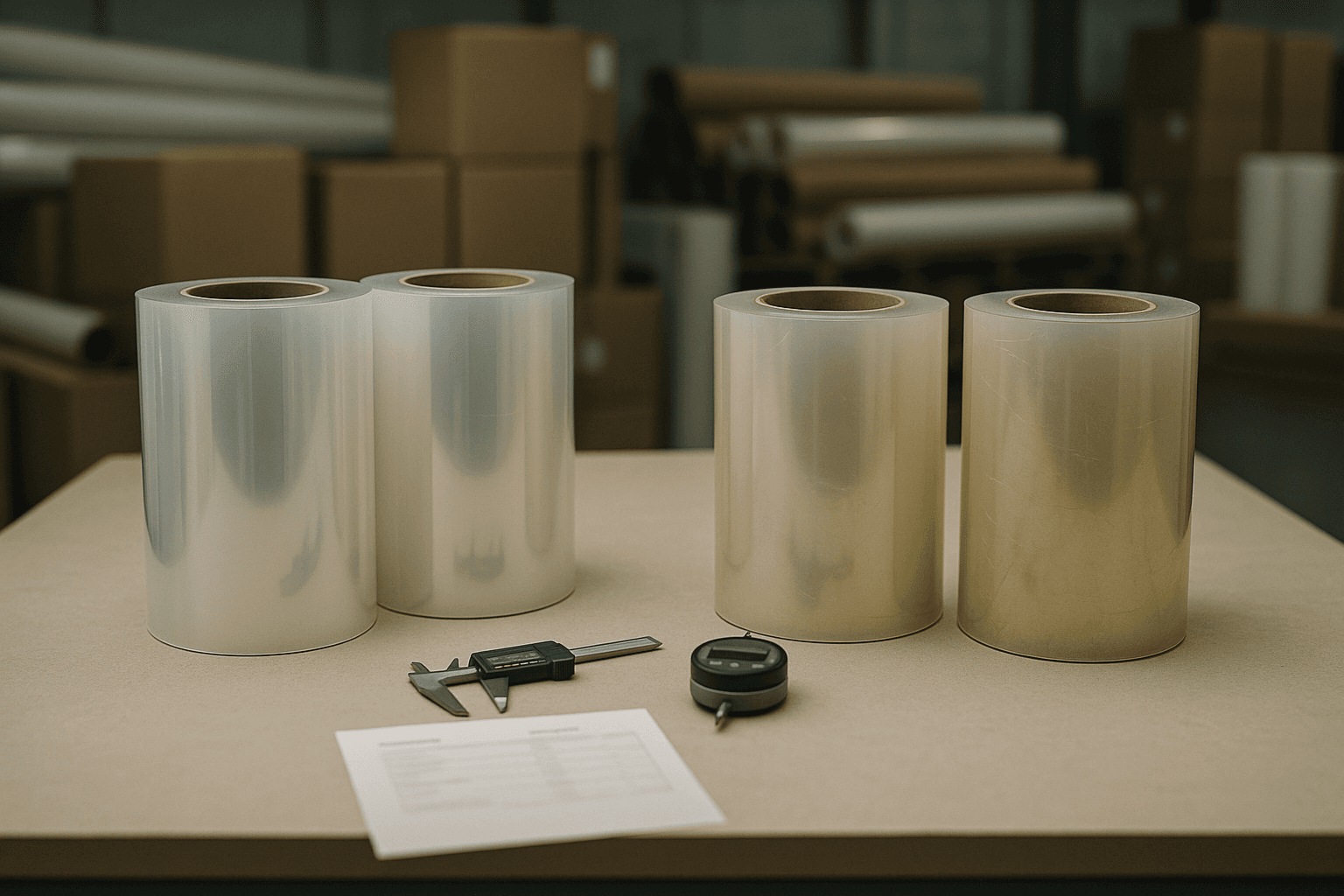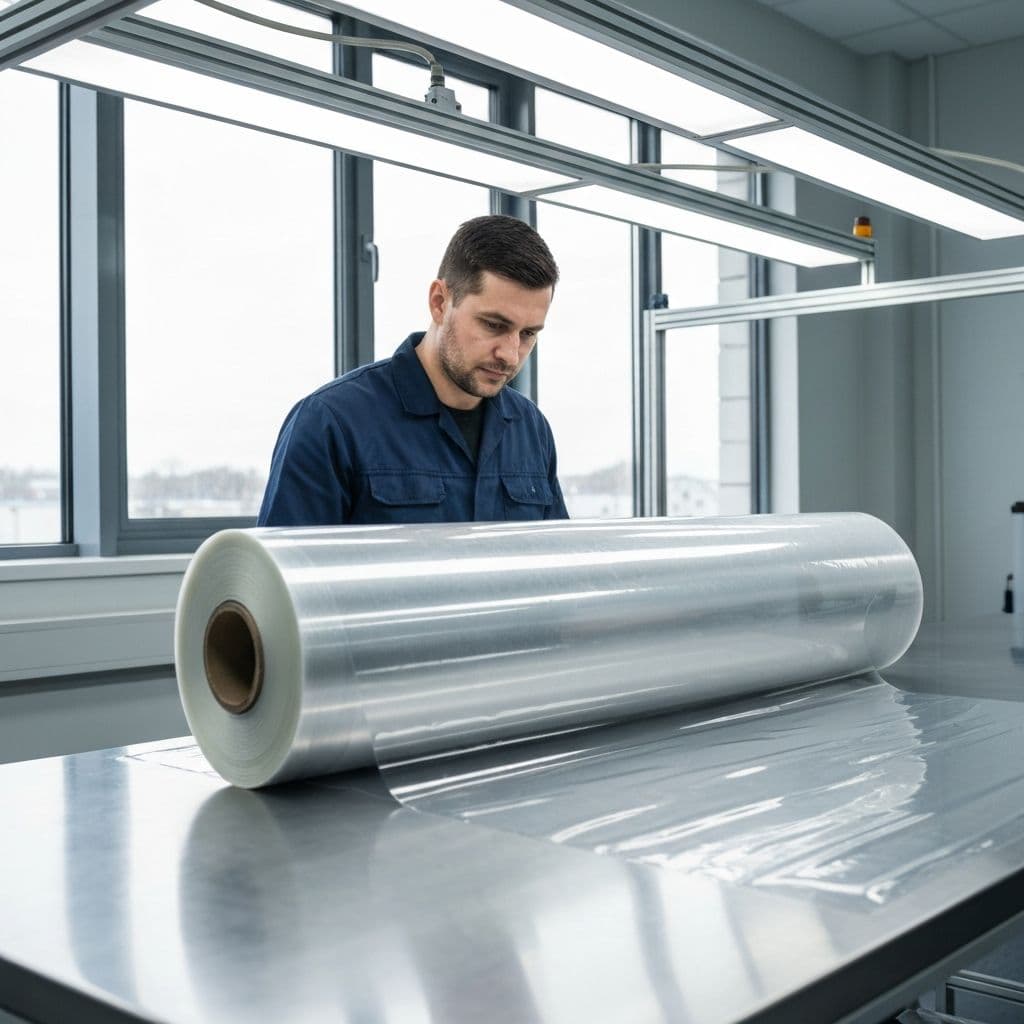
Choosing the right PPF manufacturer is one of the most important decisions for a paint protection film distributor, installer, or car film importer. A good supplier can help you build a profitable product line. A poor supplier can create installation complaints, edge lifting, yellowing, adhesive residue, unstable batches, and warranty disputes.
Many buyers start by searching for premium brands such as STEK PPF or XPEL PPF. These brands help the market understand what high-quality film should offer: optical clarity, self-healing, hydrophobic top coat, durability, and strong installer support.
But for distributors, the real question is not only brand. The real question is whether the product gives you stable quality, strong margin, reliable supply, local positioning, and long-term after-sales confidence.
That is why many buyers search for a PPF China factory, paint protection film manufacturer, STEK PPF alternative, or XPEL alternative PPF.
Why Distributors Look Beyond Big PPF Brands
Big PPF brands are useful for building customer trust, especially in mature markets. They offer brand recognition, marketing support, installer networks, and a premium image. However, they may not always be the best commercial option for every distributor.
A distributor has to think differently from a retail car owner. A car owner usually asks, "Which film should I install on my car?" A distributor asks, "Which film can I sell repeatedly, profitably, and safely in my local market?"
Common reasons distributors look for factory-direct PPF:
- Better margin — factory-direct sourcing can give distributors more control over wholesale and retail pricing
- Private label opportunity — distributors can build their own local brand instead of only reselling another brand
- Flexible product tiers — entry, mid-range, and premium lines can serve different installer groups
- Local market positioning — some markets need a strong value option, not only a premium global brand
- Supply stability — direct factory relationships may improve production planning and inventory control
- Custom packaging — boxes, labels, warranty cards, and sample books can be localized
- Faster product adjustment — factories can help develop matte, gloss, color, black, and hydrophobic PPF options
A factory-direct PPF strategy does not mean selling cheap film. The best strategy is to find a reliable PPF manufacturer that can support technical quality and commercial growth at the same time.
What Makes a Good PPF Manufacturer?
A good PPF manufacturer is not simply a company that can offer a low roll price. PPF is a multi-layer product. The final performance depends on the TPU base film, adhesive, top coat, production environment, coating process, aging resistance, batch consistency, and quality control.
Modern paint protection film is commonly built around a polyurethane film structure. 3M, for example, describes its automotive PPF as using a tough, flexible polyurethane base with a protective clear coat and acrylic pressure-sensitive adhesive.
Key signs of a reliable PPF factory:
- TPU sourcing — can the supplier explain the TPU type, grade, and performance target?
- Coating line — does the factory control coating thickness, smoothness, and contamination?
- Adhesive system — can the adhesive balance tack, repositioning, edge stability, and removability?
- Top coat technology — does the film offer hydrophobicity, stain resistance, gloss stability, and self-healing?
- Testing ability — can the factory provide UV aging, gloss, tensile, elongation, and peel test data?
- Batch consistency — can the same product perform consistently across repeated orders?
- OEM service — can the factory support private label boxes, labels, samples, and marketing materials?
- After-sales support — does the supplier help solve installer complaints with technical analysis?
The best PPF China factory should act as a long-term product partner, not only a roll supplier.
TPU Raw Material: Aliphatic TPU, Yellowing Resistance and Durability
TPU is the core material of many premium PPF products. For distributors, TPU quality affects clarity, stretch, yellowing resistance, durability, and long-term customer satisfaction.
One important concept is aliphatic TPU. Covestro explains that TPUs based on aliphatic diisocyanates do not display yellowing due to UV radiation, while general-purpose products can show clear surface yellowing after UV exposure. Lubrizol also positions color-stable aliphatic TPU around UV resistance, yellowing resistance, abrasion, and scratch performance.
What to ask about TPU:
- Is the TPU aliphatic or aromatic? — aliphatic TPU is generally preferred for outdoor optical applications where yellowing resistance matters
- What is the TPU origin? — raw material consistency affects long-term product stability
- Is the film designed for optical clarity? — high-end PPF should not make paint look cloudy or distorted
- How does the film behave after stretching? — poor TPU may whiten, distort, or lose surface quality after installation
- What aging data is available? — UV and weathering tests help evaluate long-term performance
- Is the product suitable for hot and humid climates? — some markets require stronger hydrolysis and weathering resistance
A good paint protection film manufacturer should not avoid these questions. If the supplier only says "high quality TPU" but cannot explain the material system, the buyer should be cautious.
Adhesive Stability and Edge Yellowing
Adhesive is one of the most important parts of PPF performance. Many end users talk about gloss and price, but installers care deeply about adhesive behavior.
A good adhesive should allow smooth positioning during installation, bond strongly after drying, hold edges well, reduce glue marks, and remove cleanly when the film is removed correctly. 3M's PPF documentation refers to pressure-sensitive adhesive for fast application, and describes a clear acrylic PSA layer that adheres to automotive paint systems.
Why edge yellowing happens
Edge yellowing is often misunderstood. It may be blamed only on TPU yellowing, but in real installations, the issue can also involve adhesive contamination, edge lifting, dirt accumulation, chemical exposure, and poor sealing.
Common causes include:
- Unstable adhesive near exposed edges
- Slight edge lifting that traps dirt and moisture
- Aggressive chemicals used during washing
- Poor installation tension around curves
- Low-quality coating or adhesive interaction
- Long-term UV and heat exposure
- Bad storage conditions before installation
Adhesive checklist for distributors:
- Initial tack — does the film grab too aggressively or too weakly?
- Repositioning — can installers move the film during installation without glue marks?
- Edge hold — do edges stay down after drying, washing, and heat cycles?
- Stretch zones — does adhesive create visible lines on bumpers and mirrors?
- Removal — can the film be removed without excessive residue under proper conditions?
- Compatibility — does it perform on different paint types and climates?
- Aging — does adhesive remain stable after heat, UV, and humidity exposure?
Top Coat: Hydrophobicity, Self-Healing and Stain Resistance
The top coat is the surface layer customers experience every day. It affects gloss, water beading, stain resistance, scratch recovery, cleaning experience, and surface smoothness.
Hydrophobic PPF is easier to demonstrate because customers can immediately see water beading. Self-healing is also easy to market because light swirl marks may recover with heat or sunlight. SunTek describes its self-healing PPF as helping protect against rock chips, surface scratches, bird droppings, and debris, while 3M Pro Series describes using a self-healing formula for minor scratches.
What makes a strong top coat:
- Hydrophobicity — easier washing, visible water beading, better customer demonstration
- Self-healing — helps reduce light swirl marks and minor surface scratches
- Stain resistance — protects against bug splatter, bird droppings, road tar, and dirt
- Gloss retention — keeps the film looking premium after installation
- Low orange peel — improves reflection clarity and paint depth
- Chemical resistance — helps the film survive car wash chemicals and detailing products
- Stretch stability — prevents coating cracks or marks in curved areas
A top coat should not only perform well on day one. It should stay stable after months of washing, sunlight, heat, and real-world use.
Factory Testing: UV Aging, Gloss, Tensile Strength and Elongation
A reliable PPF manufacturer should be able to support product claims with testing. Testing does not guarantee perfection, but it helps distributors separate serious manufacturers from trading companies or low-end suppliers.
ASTM D882 is commonly used to evaluate tensile properties of thin plastic films and sheeting, including tensile strength and elongation.
Important PPF test items:
- UV aging — yellowing resistance and weathering stability; important for outdoor durability claims
- Gloss test — surface brightness and finish consistency; important for premium visual quality
- Tensile strength — mechanical strength of the film; helps evaluate durability and handling
- Elongation at break — stretch capacity before failure; important for installation on curves
- Tear strength — resistance to tearing during handling; helps installers avoid film failure
- Peel adhesion — adhesive bonding behavior; critical for edge stability and removal
- Hydrophobic angle — water repellency of the surface; useful for marketing and coating comparison
- Stain resistance — resistance to contamination; important for daily maintenance
- Thickness measurement — total film consistency; affects protection, installation, and pricing
OEM, Private Label and Distributor Support
OEM and private label support is one of the main reasons buyers look for a PPF manufacturer in China. For distributors, selling only unbranded rolls is not enough. A strong local business needs product identity, packaging, samples, technical documents, and installer support.
What a manufacturer should support:
- Private label box — helps distributors build a local brand
- Roll core label — makes stock management easier
- Warranty card — gives installers and customers clear terms
- Sample book — helps retail customers choose film options
- Technical data sheet — supports professional B2B sales
- Product catalog — helps distributors present clear product tiers
- Marketing photos — supports website, social media, and installer promotion
- Training material — helps installers understand product handling
- Distributor price list — makes wholesale channel management easier
- Sample policy — allows local testing before larger orders
OEM PPF does not mean counterfeit PPF
A "STEK PPF alternative" or "XPEL alternative PPF" should not mean copying another brand's name, packaging, logo, or claims. A proper OEM alternative means building your own product line that competes in the same market category with clear positioning, honest claims, and your own brand identity.
For long-term business, distributors should avoid counterfeit branding and focus on real product quality.
MOQ, Samples and Trial Orders
MOQ is important, but it should not be the first question. The first question should be whether the product is suitable for your market.
A professional sourcing process usually looks like this:
- Request sample meters or a test roll
- Install the film on real vehicle panels
- Test gloss, clarity, orange peel, stretch, adhesive, and coating
- Compare the film with local market products
- Collect installer feedback
- Start with a small trial order
- Scale only after stable feedback
What to request before a wholesale order:
- Sample meters — fast initial test on flat and curved panels
- One full test roll — real installation evaluation
- Technical data sheet — product specification and sales support
- Warranty terms — after-sales clarity
- Packaging options — private label planning
- Wholesale price list — margin calculation
- Lead time — stock planning
- Shipping options — landed cost calculation
- Distributor program — long-term cooperation structure
A reliable PPF manufacturer should be willing to support testing. If the supplier pushes only for large orders without sample validation, the buyer should slow down.
China Factory vs Local Distributor: Which Is Better?
Buying from a local distributor and buying directly from a China factory are different strategies. Neither is always better. It depends on your business stage.
- China PPF factory — better cost control, OEM support, private label, flexible product development; best for distributors, wholesalers, and brand builders
- Local distributor — faster delivery, lower import complexity, local support; best for installers and small shops
- Premium global brand — strong customer recognition, premium image, dealer ecosystem; best for high-end studios and mature markets
- Hybrid model — combines brand credibility with OEM margin; best for growing distributors
For new installers, buying from a local distributor may be safer. For serious distributors, factory-direct sourcing can create a stronger long-term business if quality control is done properly.
How to Evaluate a PPF Manufacturer Before Cooperation
Before signing a distributor agreement, buyers should evaluate both product quality and business support.
Manufacturer evaluation checklist:
- Product — does the film match your target market: entry, mid-range, or premium?
- Material — can the factory explain TPU, adhesive, and top coat structure?
- Testing — can the factory provide UV aging, gloss, tensile, elongation, and adhesion data?
- Samples — can you test sample meters or full rolls before scaling?
- Installation — does the film perform well on bumpers, mirrors, edges, and dark paint?
- Warranty — are the warranty terms realistic and clearly written?
- OEM — can the factory support boxes, labels, catalogs, and warranty cards?
- MOQ — is MOQ suitable for your cash flow and market testing stage?
- Lead time — can production and delivery match your sales plan?
- Communication — does the supplier respond professionally to technical questions?
A good supplier should make your business easier, not more risky.
FAQ
What is a PPF manufacturer?
A PPF manufacturer produces paint protection film, usually by combining TPU base film, adhesive, top coat, release liner, coating process, testing, and packaging. A real manufacturer should be able to explain its materials, production process, quality control, and testing standards.
How do I choose a PPF manufacturer in China?
Choose a PPF manufacturer by checking TPU quality, adhesive stability, top coat performance, UV aging data, gloss, tensile strength, elongation, peel adhesion, batch consistency, OEM support, sample policy, MOQ, lead time, and after-sales support.
Is China PPF good quality?
China PPF quality varies widely. Some factories produce low-cost films with unstable performance, while others can supply strong optical clarity, hydrophobic top coat, stable adhesive, and private label support. The key is testing samples and verifying factory capability before scaling.
What is the difference between a PPF manufacturer and a PPF distributor?
A PPF manufacturer produces or controls the film production process. A PPF distributor buys film and resells it to installers or local dealers. Some distributors build their own private label brand through OEM cooperation with a manufacturer.
What is a STEK PPF alternative?
A STEK PPF alternative is a film positioned for buyers who want premium features such as clarity, hydrophobicity, self-healing, matte options, color PPF, and fashion PPF, but want different pricing, private label support, or factory-direct supply. It should not copy STEK branding.
What is an XPEL alternative PPF?
An XPEL alternative PPF is a paint protection film positioned as another option for protection, clarity, self-healing, installation performance, and distributor margin. It should compete honestly by product quality, not by copying XPEL branding or packaging.
What should I test before buying wholesale PPF?
Test optical clarity, orange peel, gloss, self-healing, hydrophobicity, adhesive tack, repositioning, edge stability, stretch behavior, stain resistance, and removability. Also test the film on real vehicles, not only on small sample cards.
What is the normal MOQ for PPF?
MOQ depends on the factory, product type, color, packaging, and private label requirements. Standard clear PPF usually has a lower MOQ than custom color PPF or fully customized packaging. Buyers should start with samples or trial orders before committing to large volume.
Can I build my own private label PPF brand?
Yes. A PPF China factory can often support private label boxes, roll labels, warranty cards, technical data sheets, catalogs, sample books, and distributor price structures. This is one of the main advantages of OEM sourcing.
What makes premium PPF different from cheap PPF?
Premium PPF usually has better TPU, stronger yellowing resistance, higher optical clarity, lower orange peel, more stable adhesive, better hydrophobic top coat, stronger stain resistance, more consistent batches, and clearer warranty support.
References
1. STEK USA: Hydrophobic Paint Protection Film
2. XPEL ULTIMATE PLUS Paint Protection Film
3. 3M Surface Protection Films for Automotive OEM
4. 3M Scotchgard Paint Protection Film SGH12
5. Covestro: Chemical Properties of TPU
6. Lubrizol: Color-Stable Aliphatic TPU
7. ASTM D882 - Tensile Testing of Thin Plastic Film
8. SunTek Paint Protection Film
9. 3M Scotchgard Paint Protection Film Pro Series