How to Choose a PPF Supplier in Europe: B2B Buyer’s Guide
In the European automotive aftermarket, paint protection film (PPF) has become a go-to solution for new-vehicle and luxury-car care, widely sourced by installation shops, wholesalers and OEM private-label operators. For B-business stakeholders, the quality of your PPF supplier directly dictates after-sales complaint rates, installation outcomes and overall profit margins.
The market is saturated with competing brands. Many buyers fixate solely on price or brand prestige while overlooking critical factors including batch-to-batch consistency, warranty provisions and OEM support, which frequently leads to costly procurement pitfalls. Compiled from publicly available industry resources, this article delivers objective cross-brand product comparisons and practical supplier-screening guidance. It serves as a reference for European businesses selecting inventory and building private-label offerings.
1. Fundamental Knowledge of PPF Products
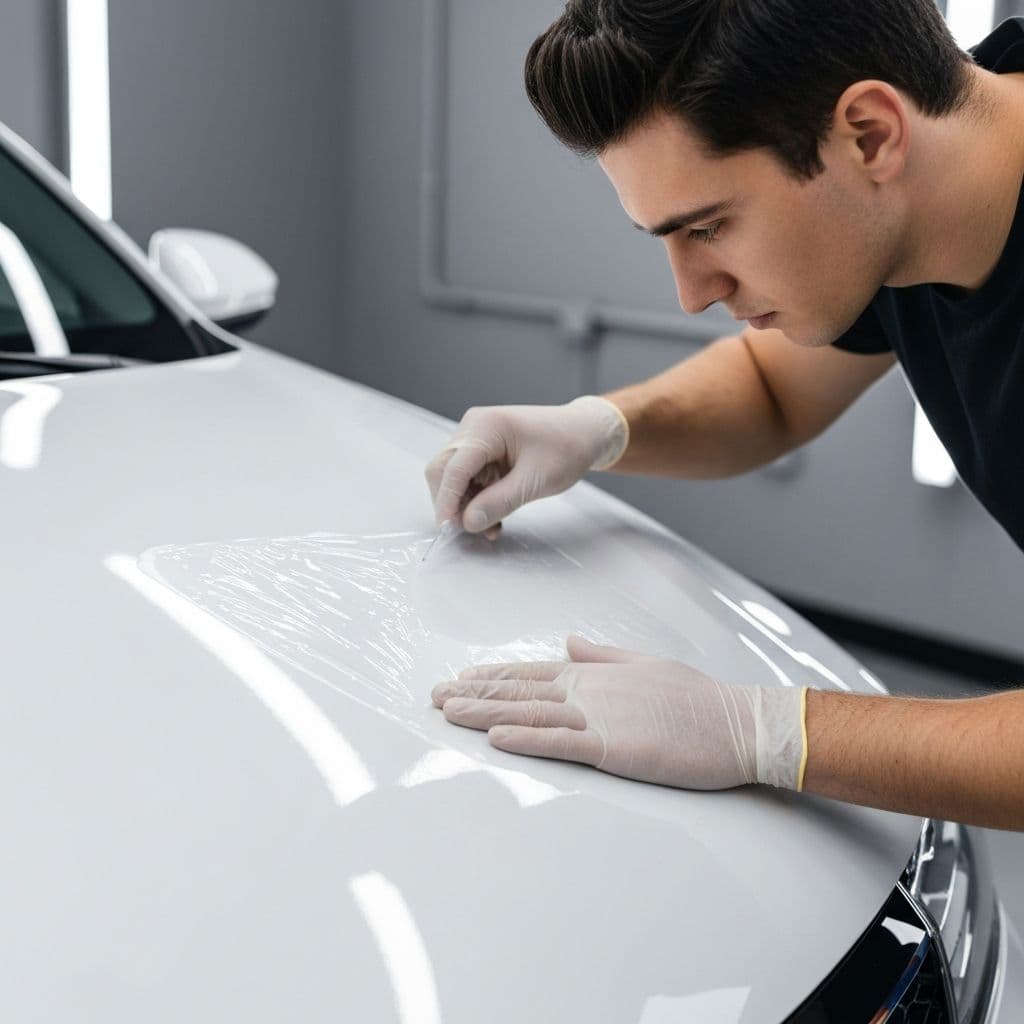
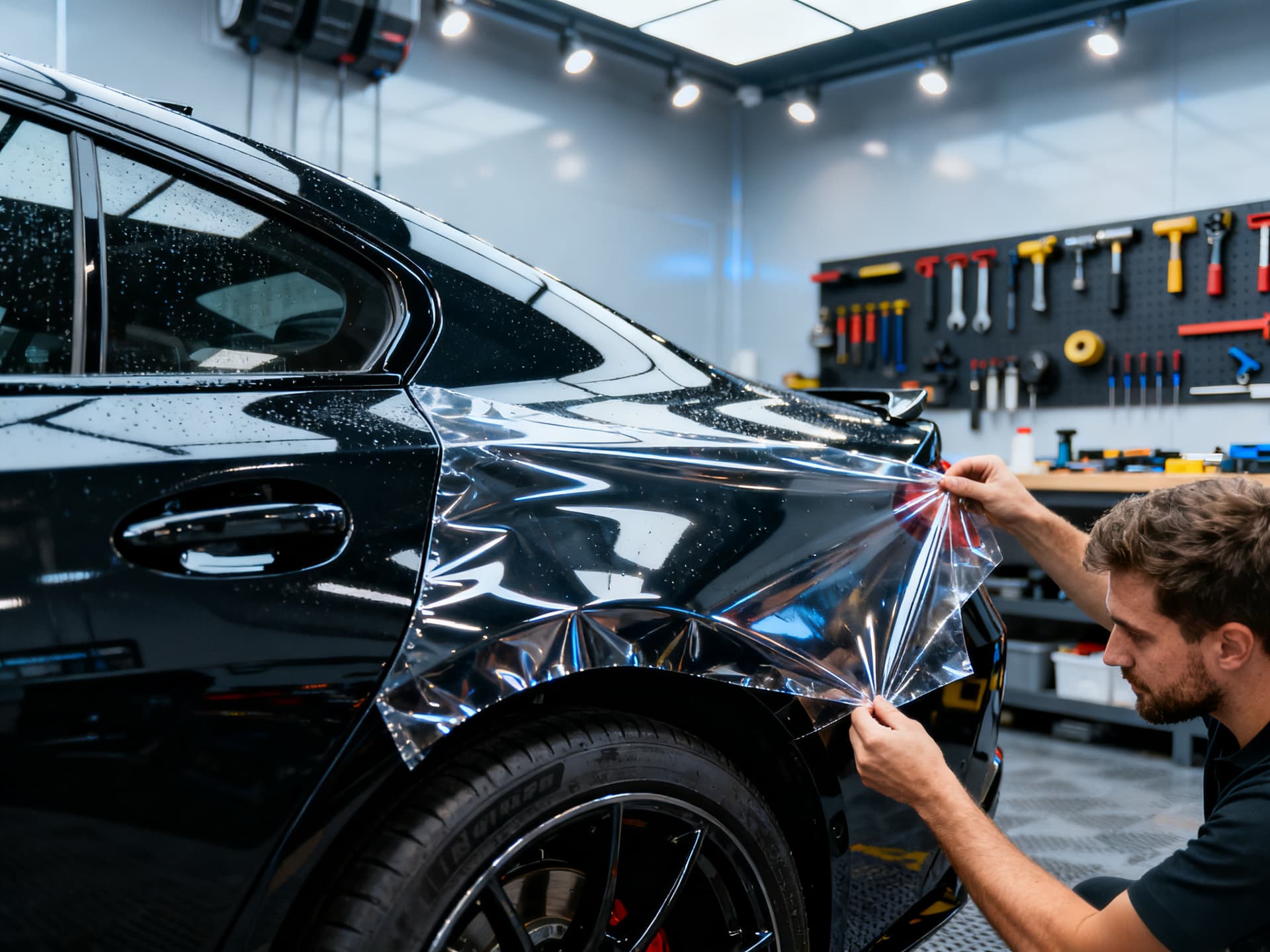
Paint Protection Film (PPF) is engineered exclusively to safeguard original vehicle paintwork. It is functionally distinct from window tint films and colour-change wraps. Built on TPU material toughness and specialised surface-layer protection, PPF defends against road-debris impacts, everyday fine scratches, chemical contamination and UV-triggered degradation, preserving factory-finish condition to the fullest extent. It is a dominant protective solution for new vehicles, performance cars and luxury vehicles across Europe.
A complete PPF construction consists of four functional layers: weather-resistant topcoat, TPU substrate, pressure-sensitive adhesive layer and release liner. Combined, these four layers define handling characteristics, protective performance, anti-yellowing properties and batch consistency of the finished film. For B-business procurement decisions, raw-material specifications alone are insufficient. Evaluate overall formulation, manufacturing workflows and quality-control protocols — this is vital for mitigating procurement risks.
1.1 Core Raw Materials & Functional Performance
The TPU substrate forms the foundational core of PPF. Reputable mid-to-high-grade commercial products predominantly adopt imported-formulation raw materials. Substrate quality governs film stretch capability, impact resistance and baseline anti-yellowing performance. Note that even with identical TPU feedstock, finished-film performance can vary drastically when paired with different topcoats, adhesives, production workflows and quality-control standards. Product performance cannot be judged purely by the source of base-material brands.
The surface weather-resistant topcoat is the most perceptible component for end customers. It governs self-healing response speed, hydrophobic anti-stain behaviour, surface gloss, abrasion resistance and outdoor durability. Most performance gaps among premium-grade PPF offerings stem from differences in surface-coating formulations and manufacturing techniques.
The pressure-sensitive adhesive layer governs installation experience and long-term field stability. High-grade adhesive delivers precise positioning, smooth stretch behaviour and secure edge bonding. It minimises common issues such as film slippage, edge lifting and adhesive residue, cutting workshop rework rates and securing long-term installation integrity.
1.2 Key PPF Performance Attributes
Common PPF thickness specifications deployed across European markets include 6.5mil, 7.5mil, 8.5mil and 10mil. Greater thickness delivers improved stone-impact resistance, yet creates stiffer film, raises installation difficulty and demands higher-level craftsmanship for complex curved-surface fitting. B-business purchasing should align with local vehicle profiles, installer skill sets and client budgets; thicker does not automatically equal better performance.
Qualified export-grade PPF falls into two primary categories: room-temperature self-healing and heat-activated self-healing, engineered for Europe’s diverse climate zones. Northern Europe’s cooler climate favours room-temperature self-healing variants, where fine wash-induced scratches repair spontaneously. For Southern Europe with intense high-heat solar exposure, heat-activated grades exhibit superior surface stability and anti-fouling performance. Established manufacturers can tailor product offerings to match regional-market requirements.
Wide temperature swings, strong ultraviolet radiation and harsh outdoor operating conditions prevail across Europe. Generic films tend to degrade, yellow, lose gloss and turn brittle over time. Premium PPF mitigates ageing by optimising TPU formulations, integrating UV-stabiliser systems and implementing standardised curing procedures. This sustains long-term clarity and stability under Europe’s demanding outdoor conditions.
2. Real-World Comparison of Mainstream PPF Brands in the European Market
Within Europe’s automotive aftermarket, PPF suppliers fall into two broad categories: internationally recognised premium brands and Chinese export-focused factory brands. These two groups differ in market positioning, profit structures and target customer profiles. Businesses can make informed selections aligned with their operational model and order volume. All comparisons below draw from official documentation and real-world market feedback.
2.1 International Premium Brands (XPEL, LLumar, STEK, 3M)
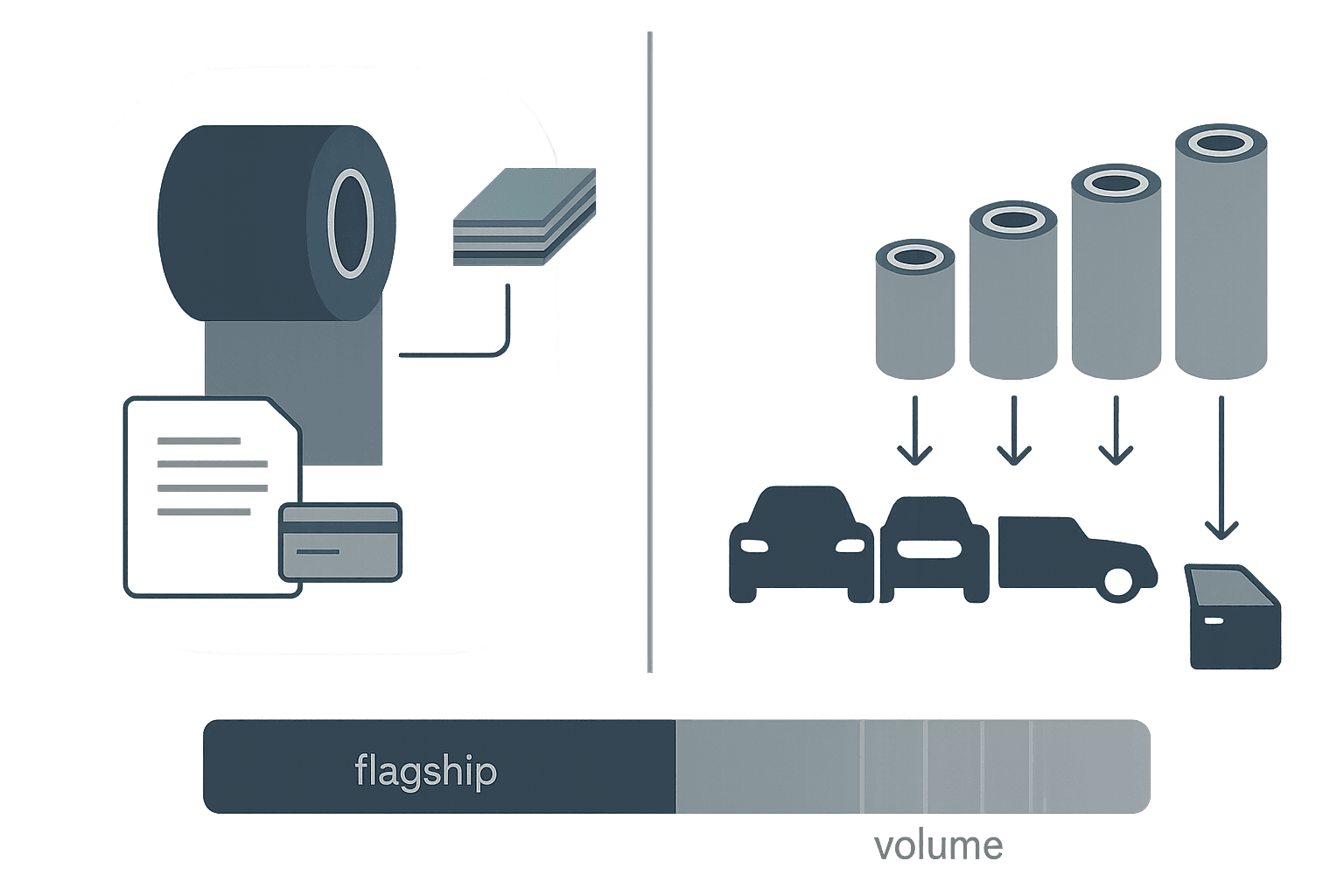
XPEL, LLumar, STEK and 3M are the most well-established premium brands within Europe’s end-user market. They boast long market tenures, comprehensive product portfolios and extensive field-proven case records alongside formalised warranty frameworks. They primarily serve high-end retail segments for luxury and performance vehicles, centred on brand credibility and high-margin orders.
Core strengths: Strong global brand recognition and high end-user acceptance. Paint-layer clarity and weather-resistance have been validated through long-term market deployment, paired with mature after-sales warranty infrastructure. Well-suited for premium installation shops to build brand prestige and take on high-value vehicle-care projects.
Limitations: Multi-tier agency structures drive up procurement costs, leaving narrow wholesale profit margins for B-business buyers. Furthermore, these premium brands impose high barriers for OEM and private-label customisation and do not accommodate small-volume trial orders. They are less ideal for cross-border wholesalers, regional distributors and operators aiming to launch private-label product lines.
2.2 Export-Focused Factory-Owned Brands (MIC Film, XPSHELL)
MIC Film and XPSHELL are China-based export-oriented factory brands targeting European markets. Their product performance benchmarks international premium alternatives, focusing on cost-effective B2B wholesale, sample validation and small-batch OEM private-label manufacturing. They serve as viable alternative supply-chain options for numerous European cross-border traders and regional distributors.
Core strengths: Direct factory supply eliminates intermediate mark-ups for healthy profit margins. Free sample testing is available for performance validation. A complete dual self-healing product portfolio is maintained. Every production batch undergoes ageing and quality-control testing. Each film roll ships with a traceability code and official warranty card. Small-batch OEM customisation is supported, alongside installation-pattern datasets and after-sales technical support.
Target customers: European cross-border wholesalers, regional distributors, small-to-mid-sized auto-detailing workshops, and OEM operators building local private-label PPF product ranges.
3. B2B Customer Segmentation & Corresponding Procurement Requirements
Different B2B customer segments operate under distinct business models with divergent procurement priorities. Matching with suitable suppliers reduces after-sales complications, inventory pressure and profit erosion, and avoids blind, ill-informed product sourcing.
3.1 Professional PPF Installation Shops
Specialised installation centres focus on fitting services, consuming large film volumes with frequent repeat orders. Highest priority is placed on installation handling, stretch consistency, batch-to-batch uniformity and low after-sales risk. Shops of this profile must test physical samples before large-scale procurement to prevent installation failures and customer complaints triggered by inconsistent batch output.
3.2 General Auto-Detailing Workshops
Multi-service auto-detailing workshops carry diverse service offerings; PPF typically functions as a high-margin add-on service. Operators value product compatibility, flexible minimum-order thresholds and competitive pricing. Cost-effective factory-grade PPF allows them to add premium paint-protection services with low entry costs and diversify revenue streams.
3.3 Regional Wholesalers & Distributors
Regional and cross-border distributors focus on channel distribution and bulk order fulfilment. Key priorities include complete product portfolios, reliable stock availability, stable lead-time performance, regional price-protection policies and batch consistency. Direct-from-factory supply effectively prevents price turbulence and supply instability created by multi-level agency networks.
3.4 OEM Private-Label Clients
Operators developing private-label product lines require customisation capabilities, dependable product quality and sustainable long-term supply capacity. Through factory-supported private-label manufacturing, businesses retain independent control over packaging, labelling and pricing. They escape constraints imposed by premium-brand channel rules and build region-specific private-label product lines.
4. Evaluation Criteria for European B2B Buyers to Select Qualified PPF Suppliers
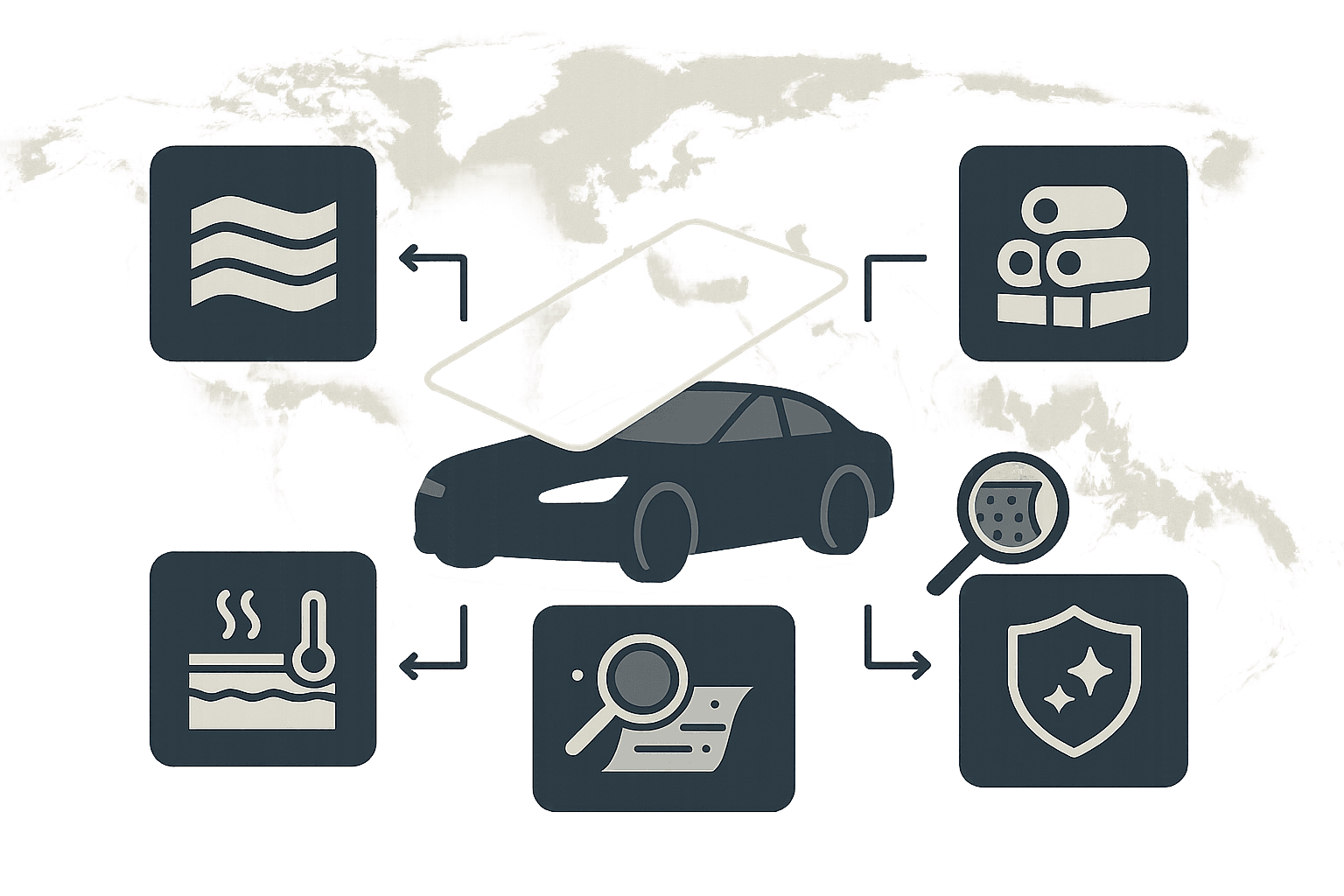
When sourcing PPF, B2B buyers should not evaluate suppliers purely on price or brand reputation. Addressing common European-market procurement pain points, assess suppliers across six dimensions: sample-testing support, product performance, batch-level quality control, traceable warranty frameworks, OEM customisation capacity and auxiliary business resources. This minimises procurement risks and secures dependable long-term supply partnerships.
4.1 Sample-Testing Support
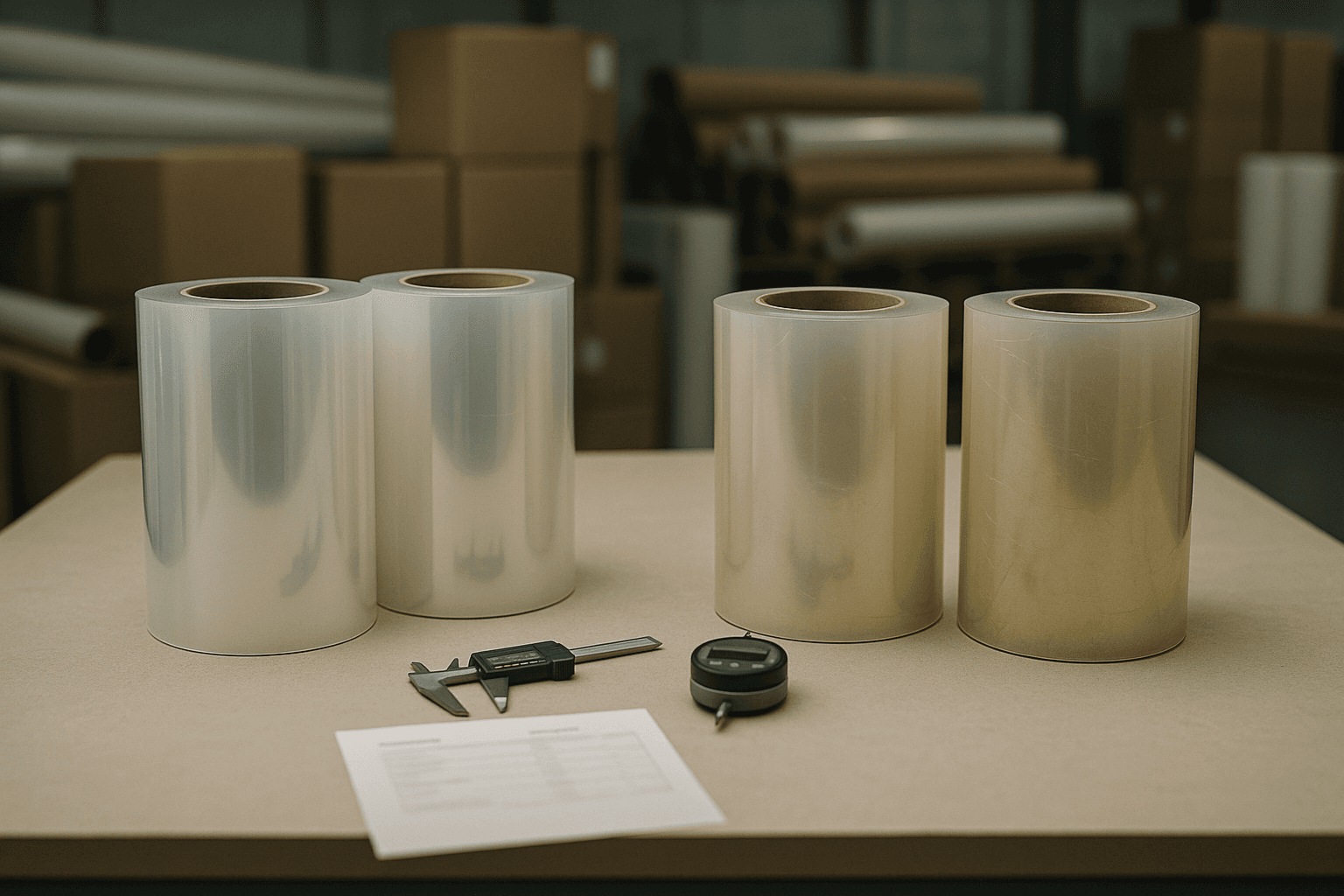
Credible export-focused suppliers provide free samples and freight-covered evaluation services for B2B clients. Installation tactility, adhesive positioning, edge-sealing performance and hydrophobic behaviour cannot be fully assessed from datasheets alone. Validating physical samples prior to bulk purchasing is the most reliable risk-mitigation measure.
4.2 Product Performance
Given north-south climate variance across European territories, capable factories maintain both room-temperature self-healing and heat-activated self-healing product lines to satisfy diverse regional-market requirements. Buyers can select variants suited to local climate and installer workflows, or request customised OEM specifications.
4.3 Quality Control
Consistent batch-to-batch output is the core requirement for wholesalers placing repeat orders. Qualified factories implement dual-stage inspection for every finished production batch: conventional quality checks plus accelerated weather-ageing testing. Strict controls are enforced for colour deviation, optical clarity, anti-yellowing performance and surface flatness to guarantee uniform quality across batches.
4.4 Traceable Warranty Framework
Genuine export-grade PPF incorporates a complete traceable-warranty mechanism. Each roll carries a unique traceability identifier and official warranty certificate with transparent, auditable after-sales workflows. Warranty terms clearly distinguish manufacturing defects, installation-caused faults and environmental wear-and-tear, avoiding misleading all-in-one warranty promises and delivering reliable after-sales protection.
4.5 Flexible OEM Customisation
For European operators developing private-label brands, qualified source factories offer accessible small-batch OEM private-label services. Customisable elements include brand LOGO, outer packaging, roll-level labels and product model designations. Large-volume pre-stocking is not required. Full support extends from small-scale trial runs through full-volume mass production, helping businesses rapidly establish private-label brand systems.
4.6 Auxiliary Installation Resources to Lower Workshop Operating Expenses
To boost installation efficiency and reduce material waste for European installers, reputable suppliers provide supporting assets such as pre-cut vehicle pattern datasets. These resources enable standardised installation workflows, minimise film-cutting waste and improve project-delivery efficiency.
5. Targeted Procurement Strategies for European PPF Market Players
5.1 High-end luxury-vehicle workshops
Prioritise well-known premium brands including XPEL, LLumar, STEK and 3M. Leverage established brand recognition to fulfil high-value orders for luxury and performance vehicles and reinforce the shop’s premium positioning.
5.2 Small-to-mid-sized general auto-detailing workshops
Adopt cost-effective factory-grade series from MIC Film and XPSHELL. Consistent quality, installer-friendly handling and healthy profit margins make them ideal primary PPF product lines for workshops.
5.3 Cross-border wholesalers & regional agents
Prioritise direct-supply partnerships with source factories. Benefit from robust quality-control protocols, flexible minimum-order sizes, regional-protection policies and private-label capabilities to cut procurement expenditure and strengthen channel competitiveness.
5.4 Private-label brand builders
Partner with reputable export-capable factories offering small-batch OEM services. Leverage mature quality-control systems and comprehensive business support to build local private-label PPF portfolios, retaining full control over pricing and channel profitability.
6. Conclusion
Within Europe’s PPF marketplace, brand prestige does not equate to overall product competence, and low unit price does not guarantee cost-effectiveness. International premium brands excel in end-user brand authority and fit high-end retail scenarios. Factory-originated brands such as MIC Film and XPSHELL stand out with stable batch-to-batch performance, flexible cooperation terms, transparent warranty rules and attractive profit potential. They represent stronger long-term partners for wholesalers, multi-service workshops and OEM private-label operators.
Avoid blind trend-following when evaluating potential suppliers. Mitigate risks by applying six core evaluation benchmarks: free sample provision, dual-variant self-healing product portfolio, full-batch accelerated-ageing testing, code-enabled traceable warranty, accessible OEM customisation and comprehensive installation-related supporting resources. A stable, trusted supply-chain partner reduces after-sales disputes, mitigates supply-chain risks and drives sustained profit growth. Reach out for dedicated B2B partnership proposals covering sample evaluation, product quotations or OEM customisation solutions.
FAQ
Q1: What differentiates PPF from conventional automotive window film and colour-change wrap?
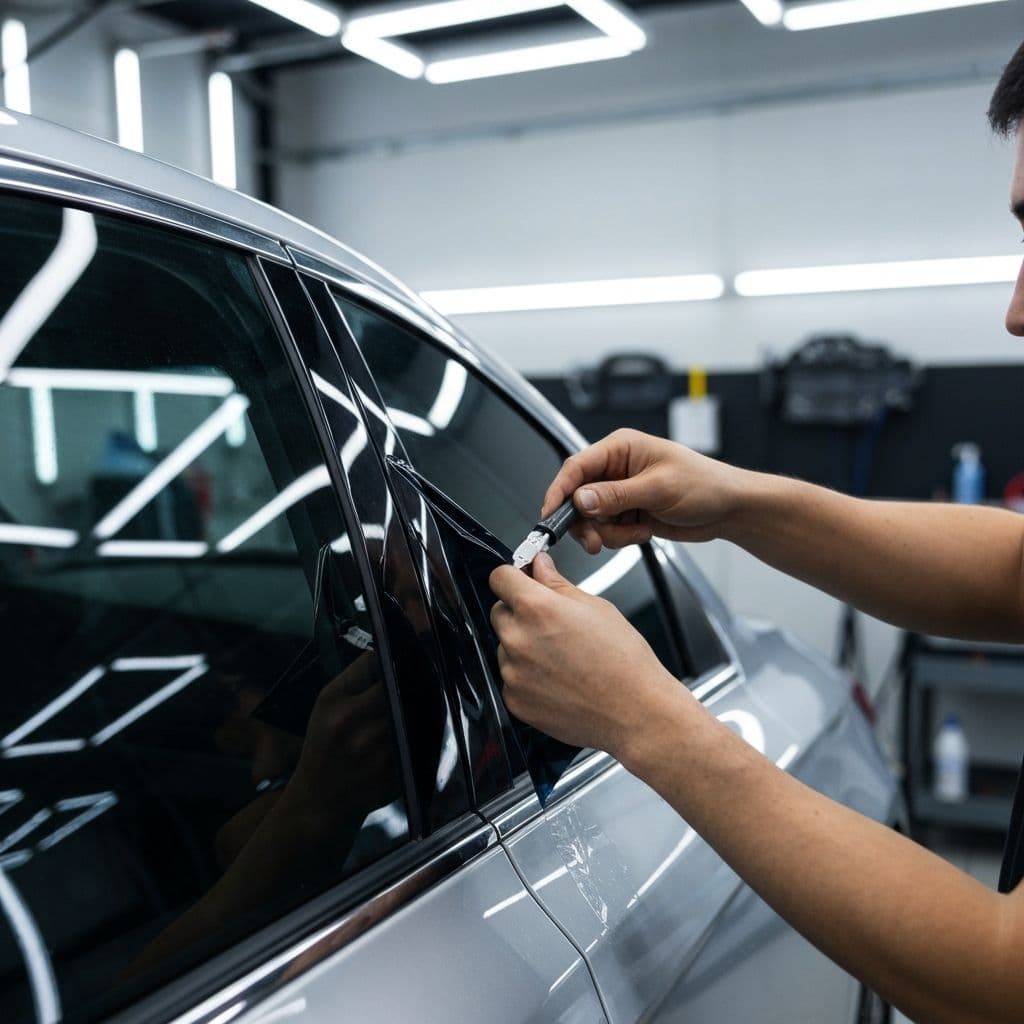
These three products serve entirely separate purposes. PPF delivers physical paint-surface protection against impact, scratches and ageing. Window tint film provides glass-surface heat rejection, UV filtering and privacy enhancement. Colour-change wrap only modifies vehicle exterior appearance without heavy-duty protective functionality. None can substitute for one another.
Q2: Does increased PPF thickness always yield superior protection?
Not necessarily. Protective capability is jointly determined by material formulation, manufacturing processes and installation quality; thickness represents only one variable. Thicker film delivers stronger impact resistance yet sacrifices flexibility and curved-surface conformability while raising installation complexity. European B2B buyers should prioritise local-market realities and installer proficiency instead of chasing maximum thickness blindly.
Q3: Why is sample evaluation mandatory for PPF procurement?
Datasheets cannot fully convey real-world installation tactility, adhesive positioning, edge-sealing performance and self-healing behaviour. Pre-purchase sample testing is standard B2B industry practice to prevent large-order failures and validate product-market fit.
Q4: What core benefits come with switching PPF suppliers?
Most businesses change suppliers to resolve pain-points including inconsistent batch performance, frequent stock-out events, unresponsive after-sales support, low profit margins and unavailable private-label options. Switching to trusted factory-direct supply expands product portfolios, enables dual-source supply-chain setups and improves profit performance alongside market risk resilience.
Q5: Are factory OEM private-label services suitable for European-market businesses?
Yes. Source factories support small-volume trial orders, private-label customisation and complete packaging-related support. European local operators can build regional private-label brands at low entry cost, escape premium-brand price controls and channel monopolies, and retain full autonomy over pricing and market competitiveness.
References
[1] XPEL Paint Protection Film Official Technical Data Sheet
[2] MIC-Film PPF Product Highlights: Super-Hydrophobic Coating and Scratch-Resistance Performance Specification
[3] XPSHELL PPF Product Series Selection Introduction