XPEL, STEK, 3M and LLumar each provide established product stories. XPSHELL enters the comparison from a different commercial position by combining high end PPF positioning with more flexible roll costs, sample support and cooperation opportunities for shops, distributors and OEM buyers.
For installers searching for the best PPF brands, broad descriptions such as premium, self healing and high gloss are no longer enough. They want to see how representative products differ in thickness, adhesive, roll size, surface texture, hydrophobic performance, self healing method, warranty and pattern support.
A PPF distributor asks an additional set of questions. Can the products be divided into clear price levels? Is there enough margin for both the distributor and partner shops? Can the same model be reordered consistently? An OEM buyer also needs to know whether product specifications, packaging and market positioning can be developed under its own brand.
This article compares representative PPF products rather than using one film to rank an entire brand. Published specifications and availability may vary by region or product version, so buyers should confirm the exact model and local terms before ordering.
Why There Is No Universal Best PPF Brand for Every Shop
A simple brand ranking may look convenient, but it often hides the differences that determine whether a product fits the business. One buyer may need a mature pattern system, another may need a hydrophobic clear film, while a distributor may care more about product hierarchy and channel margin.
| Brand and representative product | Clearest difference | Why a professional buyer may consider it |
|---|---|---|
| XPEL ULTIMATE PLUS | Premium clear PPF connected with certified installers, vehicle specific kits and the XPEL product ecosystem. | The buyer values established consumer recognition and a closely connected product and pattern workflow. |
| STEK DYNOshield | Hydrophobic clear PPF supported by a broad range of coloured, patterned and specialist surface products. | The buyer wants to combine clear protection with a broader appearance customisation menu. |
| 3M Pro Series 200 | Detailed published technical data, repositioning focused adhesive and digital pattern support. | The buyer values measurable film information and workflow tools backed by a major materials company. |
| LLumar Valor | Premium self healing PPF combined with an ultra glossy and super hydrophobic ceramic style surface. | The buyer wants to sell protection and easier surface care as one premium product. |
| XPSHELL | A high end PPF range covering multiple thicknesses and two self healing directions, supported by full roll supply and flexible B2B cooperation. | The buyer wants greater control over product tier, roll cost, shop margin, distribution or OEM development. |
XPEL’s clearest difference is its connected brand and vehicle specific product system. STEK creates stronger differentiation through its hydrophobic clear film and extensive visual range. 3M publishes unusually detailed product and adhesive information. LLumar Valor builds a clear two in one proposition around protection and super hydrophobic surface care.
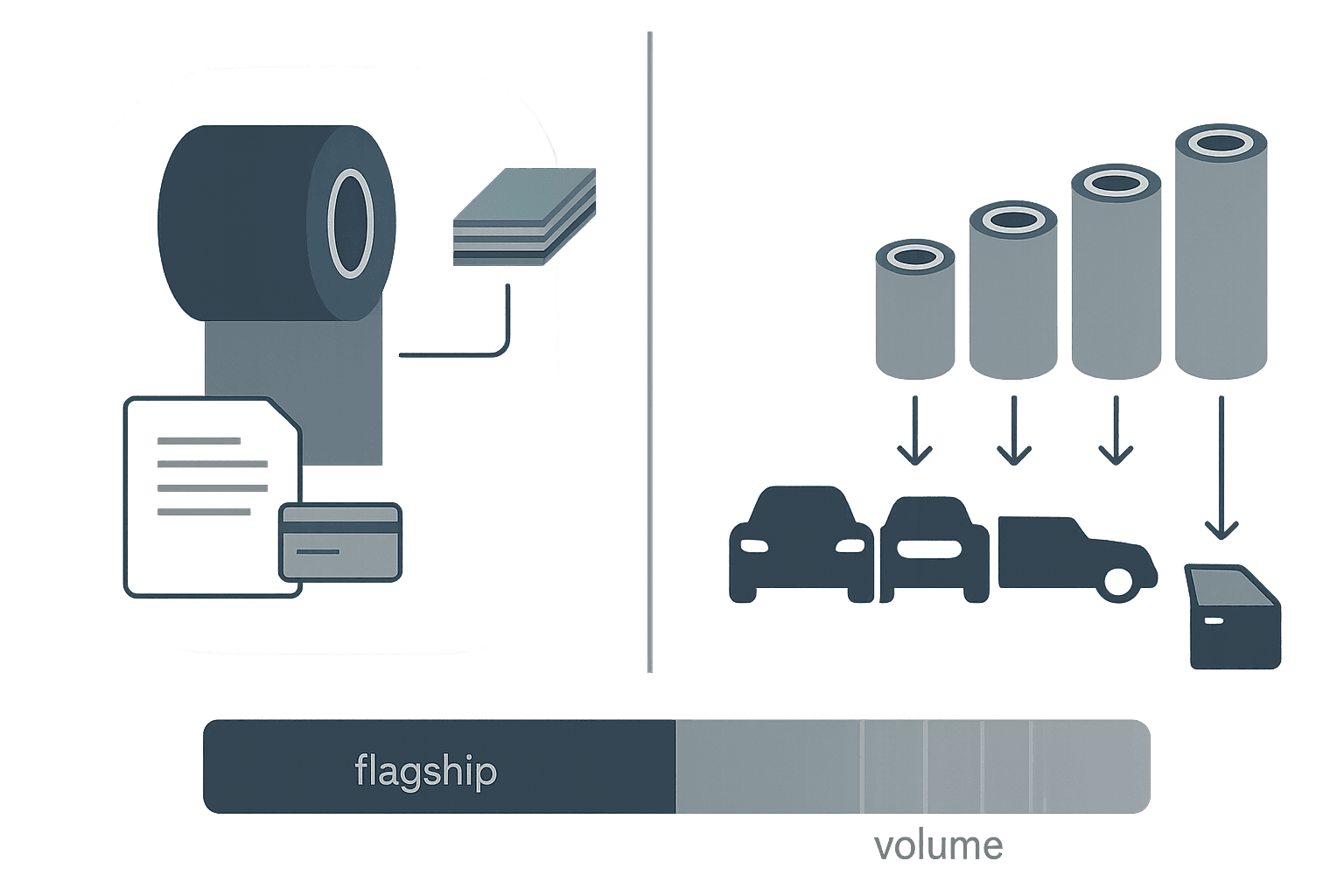
XPSHELL gives B2B buyers another route. Instead of limiting the product line to one fixed thickness or one recovery method, shops, distributors and OEM buyers can compare different product levels and select a structure that fits their own market.
Define the Customer Promise Before Comparing Film
Customers rarely choose a premium PPF package because of one technical number. They choose it because the shop can clearly explain what makes the product different and why that difference matters to the finished vehicle.
XPEL allows a shop to sell an established branded protection system. ULTIMATE PLUS focuses on clear protection, ULTIMATE FUSION adds a hydrophobic topcoat, and STEALTH provides a satin appearance. Vehicle specific kits, certified installers and the wider product range strengthen this branded service story.
STEK creates a different type of customer value. DYNOshield combines ultra gloss, hydrophobicity, resistance to contamination and stain resistance in one clear PPF. STEK then extends into matte, coloured, patterned and specialist surface products, which gives studios more room to build appearance focused services.
3M’s product story is more technical. Pro Series 200 publishes specific information about film thickness, adhesive type, adhesion, elongation and application conditions. For professional buyers who prefer measurable information before introducing a product, this creates a clearer technical basis for comparison.
LLumar Valor gives the shop a simpler premium explanation. It combines self healing PPF with a super hydrophobic Tetrashield ceramic style surface, allowing protection and easier maintenance to be presented as part of one product rather than two unrelated services.
XPSHELL gives the shop another way to establish premium value. Consumer brand recognition does not have to become the only reason supporting the retail price. The shop can place more emphasis on its own workmanship, customer service, finished appearance and package design.
For an established studio, XPSHELL can become a second premium product line rather than replacing the current brand. For a distributor, it can create more room to build local product levels and partner shop margins. For an OEM buyer, it allows several specifications to be planned under one independent market position.
Compare Installability Under the Same Shop Conditions
Installer friendly is one of the most common PPF claims, but the phrase becomes meaningless when no supporting information is provided. Professional buyers want to know what the film contains, how thick it is, what adhesive is used, what roll sizes are available and whether the supplier provides pattern resources.
| Brand and product | Thickness and adhesive | Roll format and pattern support |
|---|---|---|
| XPEL ULTIMATE PLUS | Nominal thickness without the release liner is 7.6 mil. The construction includes clearcoat, polyurethane film and an ultra clear high performance acrylic adhesive. Published elongation at break is above 300 percent. | Closely connected with vehicle specific kits and XPEL pattern resources. |
| STEK DYNOshield | 8 mil TPU PPF. The product page states that it uses UV resistant and anti yellowing adhesive. | Public roll sizes range from 18 inches to 72 inches. The 72 inch version is supplied as 72 inches by 33 feet. |
| 3M Pro Series 200 Gloss | Film with adhesive is 7.8 mil. It uses clear pressure activated acrylic adhesive. Published initial adhesion is 3.8 pounds per inch, final adhesion is 4.5 pounds per inch, and elongation at break is 380 percent. | Supports bulk installation, is available in a 72 inch width and is approved for 3M digital pattern resources. |
| LLumar Valor | The current public Valor page does not list film thickness or numerical adhesive data. | Supplied through LLumar dealers and distributors. Product availability and local support can vary by region. |
| XPSHELL | Available from 6.5 mil to 10 mil. XPSHELL PPF uses U.S. Ashland SPA pressure sensitive adhesive. | Standard roll size is 1.52 metres by 15 metres. Other widths can be discussed and customised. XPSHELL currently focuses on full roll supply rather than a proprietary precut ecosystem. |
XPEL’s technical sheet lists a 7.6 mil nominal thickness without the liner, an acrylic adhesive, more than 300 percent elongation and gloss above 90 GU. The brand’s more visible workflow difference is its connection with vehicle specific kits.
STEK provides less numerical adhesive information, but it publishes an 8 mil thickness, an anti yellowing adhesive description and several roll widths, including a 72 inch option.
Among the representative products compared here, 3M publishes the most detailed numerical adhesive data. Its technical sheet also confirms a 7.8 mil film with adhesive, 380 percent elongation and a pressure activated acrylic adhesive.
XPSHELL’s wider 6.5 mil to 10 mil range allows the buyer to create more than one product tier. A standard protection product, a premium product and a thicker protection option do not need to use exactly the same specification.
For shops already using full rolls or external pattern software, this flexibility may be more useful than joining another closed pattern system. Shops that depend heavily on proprietary vehicle kits may continue to place greater value on the XPEL model.
Judge Optical Finish on Real Panels, Not Sample Cards Alone
A premium film can lose its value quickly when the finished vehicle shows obvious surface texture, haze or optical distortion under showroom lighting. Buyers therefore need to compare how each brand describes gloss, visible texture and hydrophobic performance rather than assuming every clear PPF looks the same.
| Brand and product | Surface appearance | Hydrophobic positioning |
|---|---|---|
| XPEL ULTIMATE PLUS | The technical sheet lists gloss above 90 GU. The product is positioned as clear protection designed to remain nearly invisible over the original paint. | ULTIMATE PLUS focuses on clear protection. ULTIMATE FUSION is XPEL’s separate clear product with a hydrophobic topcoat. |
| STEK DYNOshield | Positioned around ultra gloss, strong optical clarity and a very smooth appearance with little visible surface texture. | Uses a proprietary nano ceramic infused topcoat with strong water repelling properties. |
| 3M Pro Series 200 Gloss | Excellent clarity and a smooth top surface with limited visible surface texture. | Hydrophobic properties are incorporated into the smooth top surface. Additional 3M ceramic products can be used when greater hydrophobicity is required. |
| LLumar Valor | Ultra glossy and optically clear, with very little visible orange peel like texture or optical distortion. | Uses super hydrophobic Tetrashield technology to reduce water and dirt buildup. |
| XPSHELL | Premium high gloss clear finish with a smooth surface. Depending on the selected product level, visible surface texture is minimal or not noticeable under normal viewing conditions. | Hydrophobic easy clean topcoats are available in the premium clear PPF range according to the selected model. |
XPEL separates its standard clear protection product from ULTIMATE FUSION, which is specifically presented with a hydrophobic topcoat. STEK places hydrophobicity and its nano ceramic infused topcoat at the centre of DYNOshield’s product story.
3M Pro Series 200 includes a smooth hydrophobic surface, excellent clarity and limited visible surface texture. Its technical information also explains that 3M ceramic products can be added when further hydrophobicity and stain resistance are required.
LLumar Valor makes its super hydrophobic Tetrashield surface and ultra glossy appearance central parts of the standard product, while stating that the surface is free from obvious orange peel like texture and optical distortion.
XPSHELL does not require every price level to use the same surface specification. A shop can choose a model according to its planned service package, while a distributor or OEM buyer can discuss gloss, surface smoothness and hydrophobic targets when defining the range.
For Colour PPF buyers, surface consistency also needs to remain stable across the colour range. A visually attractive colour is difficult to develop into a repeat product when gloss, surface texture or replenishment colour changes noticeably between batches.
Verify Self Healing Before Turning It Into a Sales Promise
Self healing is common across premium PPF, but the recovery method is not identical. Some films rely on sunlight, warm water or another heat source. XPSHELL also offers room temperature recovery models designed to repair suitable light surface marks immediately without additional heating.
| Brand and product | Self healing type | How suitable light surface marks recover |
|---|---|---|
| XPEL ULTIMATE PLUS | Heat assisted self healing | Light scratches and swirl marks recover over time, with light heat helping the surface recover. |
| STEK DYNOshield | Heat activated self healing | Light surface scratches recover through heat or hot water. |
| 3M Pro Series 200 | Heat activated self healing | Minor scratches or marks recover when heat is applied to the film surface. Hot water or a heat gun can be used for a fast demonstration. |
| LLumar Valor | Heat activated self healing | Surface scratches recover through heat from sunlight, warm water or the engine. |
| XPSHELL Heat Activated Self Healing PPF | Heat activated self healing | Suitable light surface marks recover through sunlight, hot water or a heat gun. |
| XPSHELL Room Temperature Self Healing PPF | Immediate room temperature self healing | Suitable light surface marks recover immediately at room temperature without sunlight, hot water or a heat gun. |
XPEL describes its advanced topcoat as recovering light scratches and swirl marks, while also describing its PPF range as heat activated. STEK states that DYNOshield self heals through heat or hot water.
3M states that minor scratches or marks recover when heat is applied to the film surface. Its FAQ also mentions hot water or a heat gun for a fast customer demonstration.
LLumar states that most surface scratches self heal when exposed to a heat source such as sunlight, warm water or a heated vehicle panel.
XPSHELL separates its product range into two clear recovery directions rather than presenting every self healing PPF as the same product.
XPSHELL heat activated self healing PPF uses sunlight, hot water or a heat gun to restore suitable light surface marks. This product direction is designed for exceptionally strong resistance to yellowing, making it relevant to buyers who prioritise long term clarity and appearance stability.
XPSHELL room temperature self healing PPF immediately repairs suitable light surface marks without additional heat. This gives shops a more direct customer demonstration and gives distributors a distinct product direction for markets where rapid visible recovery is an important selling point.
None of these films should be described as repairing cuts, punctures or damage that has passed through the topcoat or film structure. Accurate wording prevents a useful product feature from becoming an unrealistic customer promise.
Review Yellowing, Adhesive Stability and Removal Risk
The film may look perfect when the vehicle is delivered, but the real commercial cost is often decided months or years later. Yellowing, adhesive instability, visible edges or difficult removal can turn a profitable installation into an expensive return visit.
XPEL ULTIMATE PLUS has a ten year warranty and is positioned as resistant to yellowing caused by ultraviolet exposure. Its technical data also include accelerated weathering, colour change and gloss retention results.
STEK DYNOshield provides a ten year warranty covering delamination, yellowing, bubbling and cracking. STEK states that this can be extended to twelve years when the specified Final Coat programme is used.
3M Pro Series 200 carries a ten year consumer warranty and is designed for outdoor weathering, including ultraviolet exposure. Its pressure activated acrylic adhesive is designed to provide more repositioning time while reducing lift lines and adhesive marks.
LLumar Valor has a twelve year manufacturer’s limited warranty, the longest headline period among the representative products compared here. LLumar also states that product availability may vary by region.
XPSHELL heat activated self healing PPF is positioned around exceptionally strong resistance to yellowing. Together with Ashland SPA pressure sensitive adhesive and selectable product levels, this provides distributors and OEM buyers with a clearer basis for defining a long term product range.
Warranty length alone cannot predict every removal result. Paint condition, previous repairs, film age and removal temperature can all affect the outcome. LLumar states that issues involving aftermarket or repaired paint are not covered by its warranty and recommends professional removal in suitable indoor temperatures.
For a distributor or OEM buyer, the practical question is not only how many years appear on the warranty card. The buyer also needs clear product coding, approved specifications, batch records and a claim process that can distinguish a film issue from a paint or installation issue.
Compare Total Installed Cost Instead of Roll Price Alone
A famous brand does not automatically create better profit, and a lower roll quotation does not automatically create better value. Buyers searching for the best value PPF want to know what the price includes and whether those resources contribute to real sales, efficiency or channel growth.
With XPEL, part of the value comes from consumer recognition, vehicle specific kits, certified installers and the connected product system. A shop that regularly receives customers asking for XPEL by name may gain direct sales value from this structure.
With STEK, the value is more closely connected with hydrophobic clear PPF and a broad specialist surface range. A studio that can turn colours, patterns and unusual finishes into higher value orders may benefit more from this product structure than a shop selling only standard transparent protection.
With 3M, buyers are paying for measurable technical information, repositioning focused adhesive, a large film width and digital pattern resources. These advantages become commercially meaningful only when they enter the shop’s real workflow.
With LLumar Valor, the product value is built around combining premium protection and a super hydrophobic surface in one film. This may simplify the service package for customers who are already interested in both functions.
XPSHELL creates value through a different cost and cooperation structure. More flexible roll costs give the buyer room to decide how the available margin should be used.
A shop may retain more profit, invest more in skilled labour and after sales service, or create a more competitive premium package. A distributor can leave margin for both its own operation and partner shops. An OEM buyer can use more of the available budget for packaging, sample books, local sales materials and brand development.
XPSHELL also provides two metre clear PPF samples, allowing professional shops to understand a selected product before moving directly into full roll purchasing. The useful comparison is therefore not only the cost of one roll, but also the risk and commercial space created around the first order.
Evaluate the Supplier Behind the Film
A strong specification may attract the first order, but the supplier determines whether the product can remain in the shop’s service menu. Once customers begin buying the package, replenishment, technical communication and after sales support become part of the product.
XPEL provides a structured branded system that includes certified installers, vehicle specific kits and connected support. This can be valuable for shops that want a mature consumer facing programme.
STEK combines installer programmes and international cooperation with a broad clear and specialist film range. This can help a studio expand its product categories without continually changing supplier relationships.
3M brings technical documents, authorised installer support and digital pattern resources through a larger global materials organisation.
LLumar supports Valor and its other automotive films through a global dealer and distributor network. This can be attractive to buyers developing both PPF and automotive window film categories.
XPSHELL focuses more directly on B2B cooperation with installation shops, PPF wholesale buyers, distributors and OEM customers. Discussions can begin with an existing product or expand into product level, recovery method, roll specification, customised width, packaging and Private Label development.
For an installation shop, the relevant first question may be which thickness and recovery method match its current service packages.
For a distributor, the discussion may focus on the standard 1.52 metre by 15 metre roll, customised width requirements, product coding, PPF wholesale terms and replenishment planning.
For an OEM buyer, the conversation may cover product hierarchy, specifications, labels, packaging boxes, warranty cards, manuals, sample books and dealer materials.
Build a Shortlist, Score Samples and Run a Limited Pilot
A shortlist should make the decision easier, not repeat all the specifications already compared above. Once buyers understand the differences in thickness, adhesive, finish, hydrophobicity and recovery method, they only need to retain the products that solve a real gap in the current business.
For an installation shop, two or three candidates are usually enough. One may be an established brand recognised by local customers. Another may provide a surface or technical feature missing from the current range. The third may offer a different cost and supplier model that gives the shop more control over package pricing and margin.
A shop already carrying XPEL, STEK, 3M or LLumar does not necessarily need another product that performs exactly the same commercial role. It may instead need a second premium PPF line that covers another customer budget, recovery preference or package structure.
This is where an XPSHELL product can enter the shortlist without replacing the existing premium brand. The recognised brand can remain available for customers who request it by name, while XPSHELL supports another premium package with a different product and cost structure.
The sample stage should answer only the questions that public documents cannot resolve. Does the selected model fit the shop’s preferred workflow? Does the finished appearance support the planned retail package? Is the product appropriate for the vehicles and customers the shop normally serves?
XPSHELL provides two metre clear PPF samples for this first comparison. Before requesting a sample, the shop can confirm the intended thickness and whether it wants heat activated or room temperature self healing. This avoids testing a random sample that does not match the service the shop actually plans to sell.
A distributor needs to go further than first impressions. Product coding, approved specifications, reorder consistency, standard roll supply and customised width requirements should be confirmed before building a local dealer programme.
An OEM or Private Label buyer should use the pilot stage to approve one complete product specification before larger production. The final record should include thickness, self healing type, surface requirements, adhesive, roll size, packaging and warranty terms.
The purpose of the limited pilot is not to compare every brand again. It is to determine whether the selected film can move from an attractive specification into a product that the business can sell repeatedly and confidently.
Where XPSHELL Fits in a Professional PPF Comparison
Businesses searching for an XPEL alternative, STEK alternative or a new PPF supplier are not always trying to replace an established brand with a lower priced copy. In many cases, they are trying to solve a problem their current product line cannot address.
A shop may need another premium package for customers with different budgets. A distributor may need enough margin for both itself and its partner shops. An OEM buyer may need control over specifications, packaging and brand positioning. XPSHELL enters the comparison when these requirements become more important than relying entirely on one consumer brand name or proprietary pattern system.
| Buyer situation | Problem the buyer wants to solve | How XPSHELL can help | Relevant inquiry |
|---|---|---|---|
| The shop already carries XPEL, STEK, 3M or LLumar | The existing brand cannot cover every customer budget or package position. | XPSHELL can serve as a second premium PPF line with a different product and cost structure, without forcing the shop to remove its existing brand. | Ask which thickness and self healing type suit the planned package, then request a two metre sample and full roll quotation. |
| The shop wants more control over retail pricing | High purchasing costs leave too little room for skilled labour, service and profit. | More flexible roll costs allow the shop to retain margin or create a more competitive premium package. | Compare model specific pricing rather than requesting only one general PPF price. |
| The shop mainly installs PPF from full rolls | A proprietary precut system is not essential to the current workflow. | XPSHELL focuses on full roll supply and allows shops to continue using their existing bulk installation or external pattern workflow. | Confirm thickness, roll size, custom width requirements and the selected surface type. |
| The shop wants a different self healing product story | Existing products may only offer heat activated recovery, making it harder to create another clearly differentiated package. | XPSHELL offers both heat activated self healing PPF and room temperature self healing PPF. | Ask for a heat activated model if long term resistance to yellowing is the priority, or a room temperature model if immediate recovery without additional heat is more important. |
| The distributor needs profit at two channel levels | The distributor needs its own operating margin, while partner shops also need enough profit to keep recommending the product. | XPSHELL’s B2B structure gives the distributor more room to build wholesale pricing, dealer pricing and local retail positioning. | Request PPF wholesale pricing, distributor terms, product levels and expected reorder conditions. |
| The distributor wants a clearer product hierarchy | One fixed specification makes it difficult to serve shops with different customer groups and price positions. | The 6.5 mil to 10 mil range can support different product levels, while heat activated and room temperature recovery can create further differentiation. | Discuss how many product levels are needed and what role each model should play in the local range. |
| The distributor is concerned about replenishment consistency | Unclear model coding or changing specifications can make repeat orders and dealer communication difficult. | XPSHELL can confirm product models, approved specifications and repeat supply requirements before the distributor builds its dealer programme. | Confirm product coding, approved samples, batch requirements and replenishment planning. |
| The buyer wants to develop an OEM or Private Label PPF brand | Selling another manufacturer’s consumer brand does not give the buyer enough control over its own product identity. | XPSHELL can support the development of a product line under the buyer’s own brand and market plan. | Discuss thickness, self healing method, hydrophobic performance, surface finish, Ashland SPA adhesive, roll size, labels, boxes, warranty cards and sample books. |
| The project needs a nonstandard roll width | The standard roll format may not fit a particular production, distribution or application requirement. | XPSHELL’s standard roll is 1.52 metres by 15 metres, while other widths can be discussed for custom projects. | Provide the intended width, length, order volume and application scenario. |
| The buyer wants to expand Colour PPF | Carrying too many colours without a clear plan can create inventory and replenishment pressure. | XPSHELL can support colour range planning, colour cards, full roll supply and discussions around colour consistency and repeat purchasing. | Ask for colour information first, then identify which finishes should move into full roll testing or distribution. |
XPSHELL’s strongest difference is therefore not one isolated specification. It is the combination of a broad thickness range, two self healing directions, Ashland SPA pressure sensitive adhesive, standard full roll supply, custom width possibilities and flexible cooperation for shops, distributors and OEM buyers.
For a professional installation shop, the most relevant first step is usually to define the package it wants to add. The shop can then select the appropriate thickness and recovery type before requesting a two metre clear PPF sample.
For a PPF distributor, the conversation should begin with product hierarchy, PPF wholesale structure, dealer margin and replenishment planning rather than only asking for the lowest roll quotation.
For an OEM or Private Label buyer, XPSHELL can become the starting point for a complete product programme rather than a single unbranded roll. Product specifications, packaging and market position can be planned together before larger production begins.
Final Decision: Choose the Film Your Business Can Prove
The best PPF brands for installers cannot be separated through one universal score. Their differences appear in product construction, adhesive data, surface technology, self healing method, pattern support, warranty and commercial model.
XPEL deserves attention when consumer recognition and vehicle specific product resources directly support the shop’s sales.
STEK deserves attention when the business wants hydrophobic clear PPF together with a broad range of colours, patterns and specialist finishes.
3M is relevant when measurable technical information, repositioning focused adhesive and digital pattern tools are important to the workflow.
LLumar Valor is relevant when customers want premium protection, super hydrophobic surface care and a twelve year limited warranty in one product.
XPSHELL should enter the shortlist when a shop wants a second premium line, a distributor needs more channel space, or an OEM buyer wants to define product specifications under its own brand plan.
The next step does not have to be a large order. A professional shop can begin with a two metre clear PPF sample matched to the intended thickness and recovery method. A distributor can compare full roll quotations, product hierarchy and replenishment terms. An OEM buyer can discuss the complete product structure before approving production.
Frequently Asked Questions
What Is the Main Difference Between XPEL ULTIMATE PLUS and STEK DYNOshield?
XPEL ULTIMATE PLUS has a nominal thickness of 7.6 mil without the release liner and is closely connected with XPEL’s vehicle specific product and installer ecosystem.
STEK DYNOshield is listed as 8 mil and includes a nano ceramic infused hydrophobic topcoat in its standard product positioning.
Which PPF Brand Publishes the Most Detailed Adhesive Data?
Among the representative products compared here, 3M Pro Series 200 publishes the most detailed numerical adhesive information.
Its technical data list the adhesive type, initial adhesion, final adhesion and elongation at break.
Is XPEL ULTIMATE PLUS Hydrophobic?
XPEL positions ULTIMATE PLUS primarily around clear protection, self healing, stain resistance and resistance to yellowing.
ULTIMATE FUSION is the separate XPEL clear product specifically promoted with a hydrophobic topcoat.
What Makes LLumar Valor Different From Other Clear PPF?
LLumar Valor combines self healing PPF with a super hydrophobic Tetrashield ceramic style surface.
It is also backed by a twelve year manufacturer’s limited warranty.
Does XPSHELL Use Ashland Adhesive?
Yes. XPSHELL PPF uses U.S. Ashland SPA pressure sensitive adhesive.
The complete film structure should still be confirmed according to the selected model and product level.
Does XPSHELL Offer Heat Activated and Room Temperature Self Healing PPF?
Yes. XPSHELL provides both heat activated self healing PPF and room temperature self healing PPF.
Heat activated models recover suitable light surface marks through sunlight, hot water or a heat gun.
Room temperature models immediately recover suitable light surface marks without additional heating.
Is XPSHELL PPF Resistant to Yellowing?
XPSHELL’s heat activated self healing PPF is designed for exceptionally strong resistance to yellowing and is intended for buyers who prioritise long term optical stability.
The exact warranty and product specification should be confirmed according to the selected model.
What Is the Standard XPSHELL PPF Roll Size?
The standard XPSHELL PPF roll size is 1.52 metres by 15 metres.
Buyers that require another width can discuss customised roll dimensions.
Does XPSHELL Offer Clear PPF Samples?
XPSHELL provides two metre clear PPF samples for professional shops that want to compare a selected product before purchasing full rolls.
The shop can first confirm the intended thickness and self healing type so that the sample matches the service it plans to sell.
Does XPSHELL Provide a Proprietary Precut Pattern System?
XPSHELL currently focuses on full roll supply rather than a proprietary precut pattern ecosystem.
It is therefore more directly relevant to bulk installation shops, distributors and OEM buyers that already use their own installation or external pattern workflows.
Can XPSHELL Support OEM and Private Label PPF?
XPSHELL can discuss product thickness, self healing method, hydrophobic performance, surface finish, adhesive, roll specification, customised width, labels, boxes, warranty materials and sample books as part of an OEM or Private Label programme.
Final specifications, purchasing volume, warranty and packaging terms should be confirmed before production.
References
[1] XPEL Automotive Paint Protection Film (Link)
[2] XPEL ULTIMATE PLUS Technical Data Sheet (Link)
[3] STEK DYNOshield Hydrophobic Paint Protection Film (Link)
[4] STEK Paint Protection Film Range (Link)
[5] 3M Scotchgard Paint Protection Film Pro Series 200 (Link)
[6] 3M Pro Series 200 Gloss Technical Data Sheet (Link)
[7] 3M Paint Protection Film Frequently Asked Questions (Link)
[8] LLumar Valor Paint Protection Film (Link)
[9] LLumar Paint Protection Film Range (Link)
[10] LLumar Paint Protection Film Frequently Asked Questions (Link)