Tesla Paint Protection Guide
Tesla paint protection is one of the most searched topics among Tesla owners, especially for Model Y and Model 3 drivers. The reason is not simply that people want to complain about Tesla paint. A better way to understand the search intent is this: Tesla owners are highly protection-conscious. They buy a new electric vehicle, they notice every small mark on the front bumper, rocker panel or rear door area, and they start looking for practical ways to protect the finish before daily driving causes visible wear.
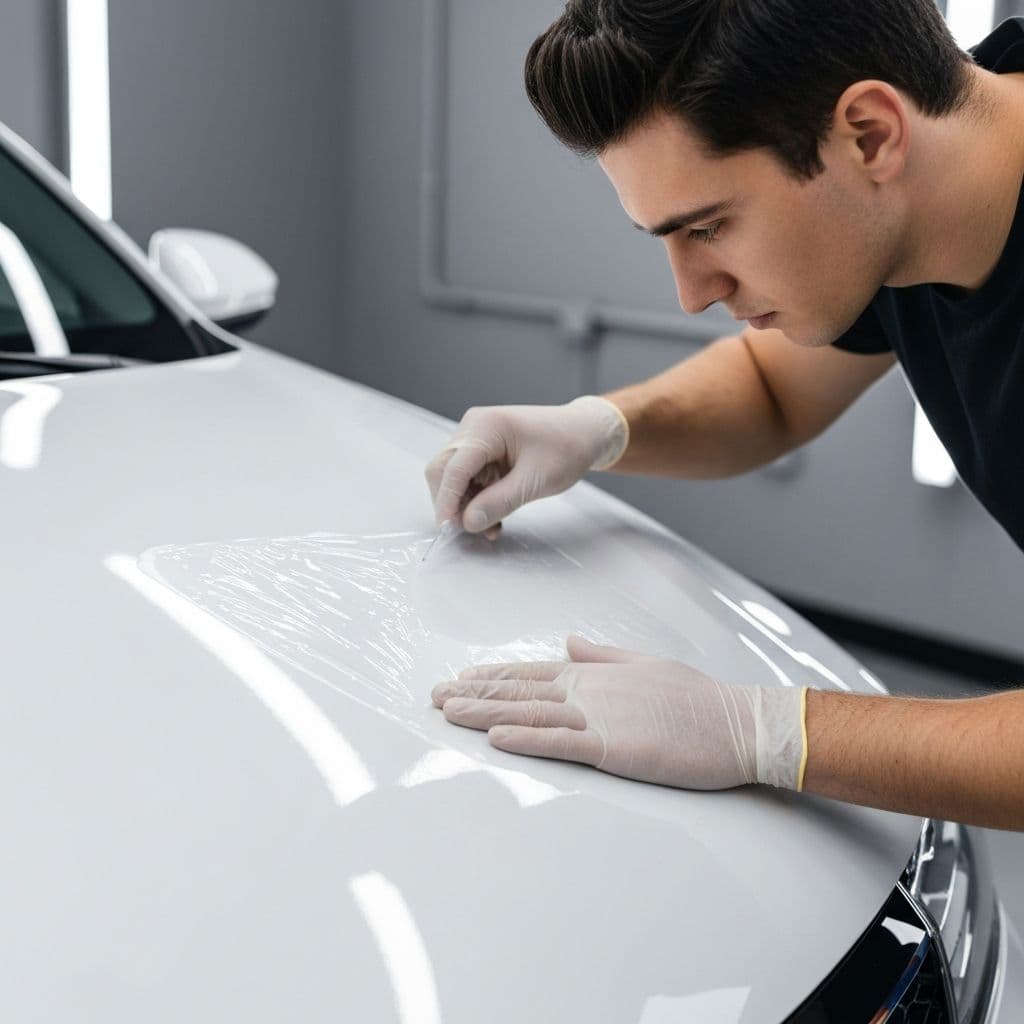
Paint protection film, often called PPF or clear bra, answers this concern directly. It adds a transparent or styled protective layer over selected painted panels, especially the areas most exposed to stone chips, road debris, salt, sand, insects and washing marks. Tesla itself sells a Model Y Paint Protection Film kit for the rear doors and fenders, describing it as protection against snow, salt, sand, small debris, stone chips and driving conditions that accelerate wear and tear [2].
For PPF shops, this creates a strong sales opportunity. The goal is not to tell customers that Tesla paint is bad. The better angle is to educate them on risk areas, driving conditions and protection options, then turn the concern into a clear package: rear door and rocker protection, full front PPF, high-impact Tesla Model Y coverage, matte PPF, color PPF or full-body protection.
Why Tesla paint protection is a common search topic
Tesla owners often search for terms like "tesla paint", "tesla paint protection", "tesla paint chips" and "tesla paint protection film" because small paint damage feels more visible on a new car. Tesla vehicles also have smooth, minimalist body lines, large painted panels and a strong owner community that shares photos, delivery checklists, cleaning methods and protection advice.
There are three practical reasons behind this search demand.
First, many Tesla owners buy the car as a long-term vehicle. They want to preserve the appearance, reduce visible wear and avoid repainting high-impact panels later.
Second, Tesla vehicles are often used as daily drivers. Highway commuting, winter roads, construction zones, gravel, sand and road salt all increase the chance of stone chips and paint wear. Tesla's own Model Y cleaning guidance tells owners to remove corrosive substances such as bird droppings, tree resin, insects, tar, road salt and industrial fallout quickly, which supports the idea that paint care is an ongoing ownership issue rather than a one-time detail [1].
Third, Tesla buyers are already comfortable researching accessories and upgrades. Once an owner searches for mud flaps, ceramic coating, tint or floor mats, paint protection film Tesla Model Y packages become a natural next step.
For installers and distributors, this means Tesla paint protection is not just a technical service. It is a high-intent customer journey. The owner already has a concern. The shop's job is to explain the most vulnerable areas and offer a package that fits the customer's budget.
Paint chips vs scratches vs stains
Before selling Tesla paint protection film, shops should help customers understand the difference between chips, scratches and stains. Many owners describe every mark as a "scratch", but the solution depends on the type of damage.
| Paint issue | What it usually looks like | Common cause | Can PPF help prevent it? | Can PPF fix it after it happens? |
|---|---|---|---|---|
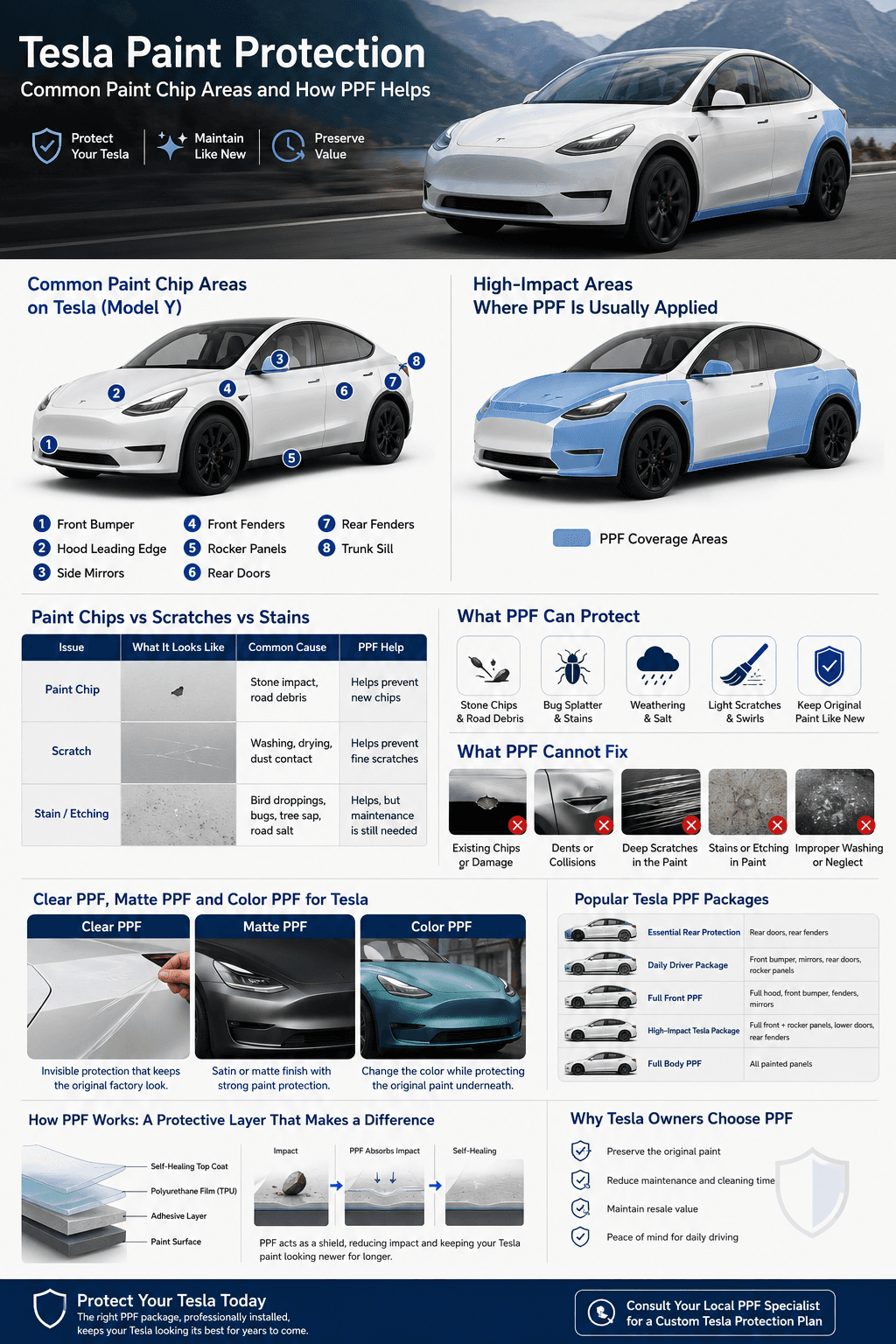
| Paint chip | Small dot or missing paint, often on bumper, hood edge or rocker area | Stone impact, gravel, road debris | Yes, PPF can reduce direct impact damage on covered areas | No, existing chips should be repaired before film installation |
| Fine scratch | Light line or swirl visible under sunlight | Washing, drying, dust contact, brushing against the car | Yes, many PPF films help absorb minor abrasion on covered panels | PPF may hide some light marks, but deep scratches need correction |
| Stain or etching | Cloudy mark, spot, discoloration or chemical trace | Bird droppings, bugs, tree sap, road salt, harsh chemicals | PPF can act as a sacrificial layer, but maintenance is still needed | No, existing stains may remain visible under clear film |
| Dent with paint damage | Deformation plus paint break | Door impact, collision, heavy object | PPF is not designed to stop dents | No, body repair is needed |
| Rocker panel wear | Repeated small chips and rough-looking lower paint | Tires throwing sand, salt and debris | Yes, especially on Model Y rear door and fender areas | No, existing wear should be repaired or accepted before installation |
This distinction helps shops avoid overpromising. PPF is a protection product, not a magic repair film. It works best when installed on clean, corrected, well-prepared paint before major damage occurs.
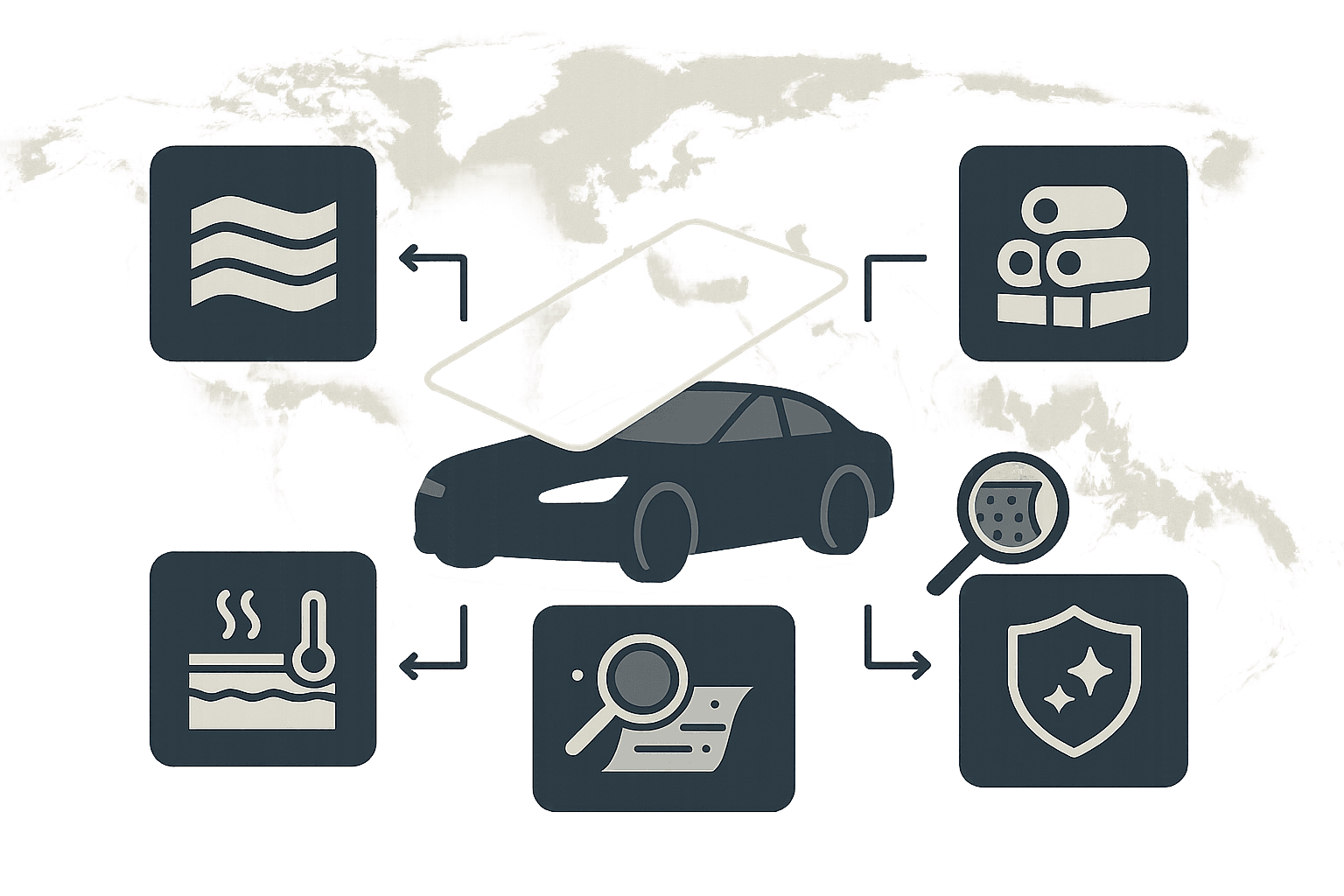
High-impact areas where PPF is usually applied
The most important question for customers is: "Which Tesla paint protection film area should I cover first?"
A full-body wrap gives the most complete coverage, but many Tesla owners want a practical package. Shops should explain risk by area, not only by price.
| Tesla PPF area | Why it matters | Recommended package level |
|---|---|---|
| Front bumper | First impact point for stones, sand, bugs and highway debris | Full front or front bumper package |
| Hood leading edge or full hood | Common area for stone chips at highway speed | Partial front or full front package |
| Front fenders | Exposed to debris from traffic and front wheel turbulence | Full front package |
| Side mirrors | Small but highly exposed impact points | Full front package |
| Rocker panels | Tires can throw debris along the lower side of the car | High-impact side package |
| Lower doors | Especially relevant for daily drivers and winter roads | Side impact package |
| Rear doors and rear fenders | Tesla's own Model Y PPF kit focuses on rear doors and fenders [2] | Model Y high-wear package |
| Door cups and door edges | Fingernail marks, rings and parking-lot contact | Add-on protection package |
| Trunk sill | Loading luggage, boxes or tools | Practical add-on for families and shop vehicles |
For Tesla Model Y, the rear door and fender area deserves special attention. Tesla's official Model Y PPF kit includes two clear protective films for the rear doors and fenders [2]. That is a useful sales proof point for shops: even a basic OEM-style kit focuses on high-wear zones, while professional installers can build more complete coverage around the customer's driving habits.
Common Tesla Model Y PPF package logic
A simple Tesla Model Y package ladder can look like this:
| Package | Coverage | Best for | Sales angle |
|---|---|---|---|
| Essential rear protection | Rear doors, rear fenders, lower high-wear area | New owners with limited budget | Protect the area Tesla itself highlights |
| Daily driver package | Front bumper, mirrors, rear doors, rocker panels | City and highway commuters | Cover the panels most likely to show early wear |
| Full front PPF | Full hood, full front bumper, front fenders, mirrors | Owners who care about front-end chips | Best balance of protection and cost |
| High-impact Tesla package | Full front plus rocker panels, lower doors and rear fenders | Model Y and Model 3 owners in harsh roads | More complete real-world protection |
| Full body PPF | All painted panels | Premium owners, matte/color conversion buyers | Maximum protection and finish consistency |
This makes the buying decision easier. Instead of asking "Do you want PPF?", the shop can ask: "Do you mainly want front-end chip protection, Model Y rear door protection, or full-body peace of mind?"
What PPF can protect
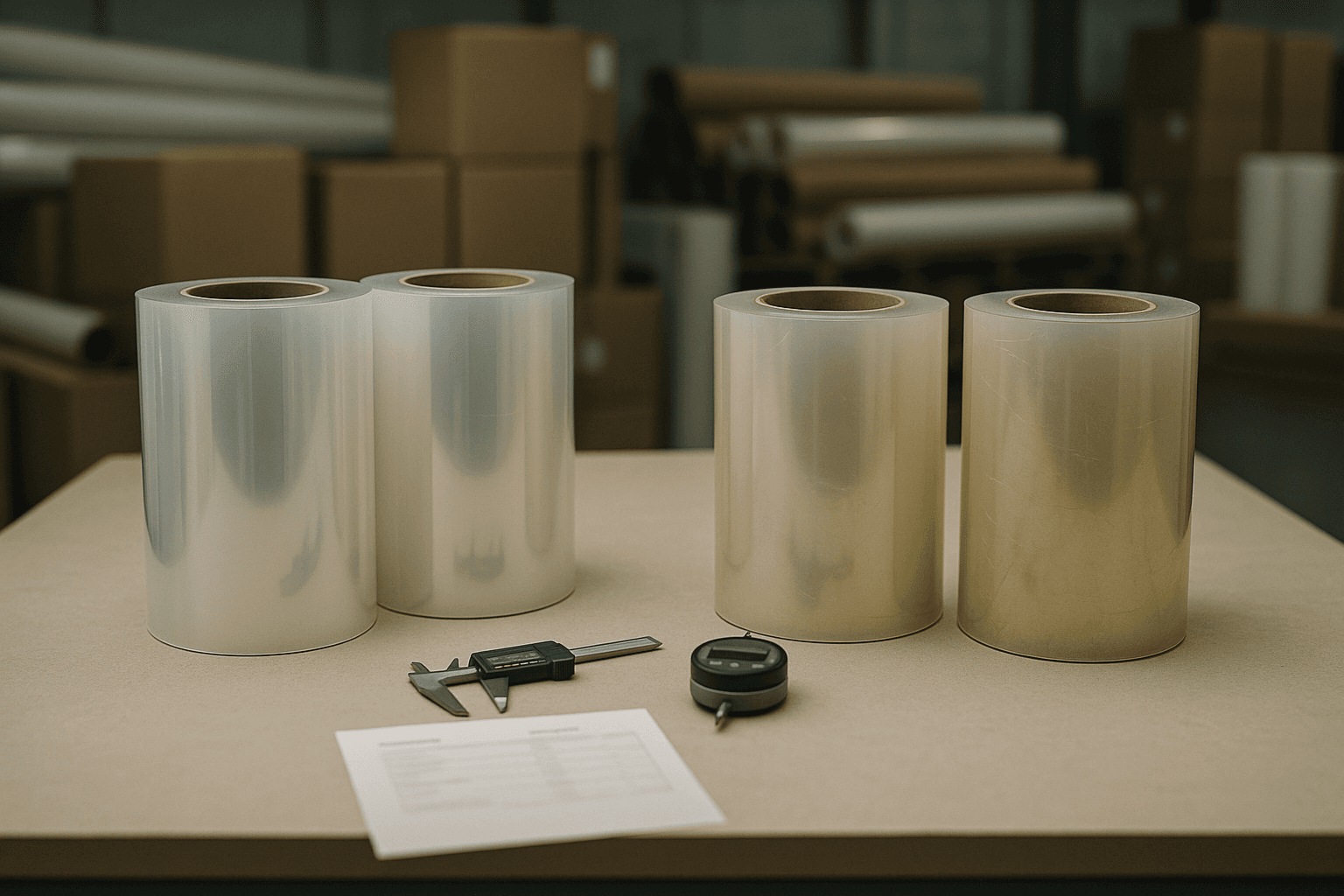
Paint protection film is designed to act as a sacrificial layer over the original paint. Quality PPF is typically a clear or colored polyurethane film with a top coat that helps resist stains, minor scratches and environmental exposure.
Avery Dennison describes its SPF-XI paint protection film as a clear polyurethane film designed to protect paint from stone chips, road debris, insect stains, weathering and minor abrasions. It also notes that a self-healing top coat can absorb impact from scratches and debris without degrading the original paint finish [4].
In practical Tesla use, PPF can help with:
| Risk | How PPF helps |
|---|---|
| Stone chips | Adds a physical barrier between road debris and painted panels |
| Sand and salt | Reduces direct abrasion on covered areas |
| Bug splatter | Makes cleaning easier and reduces direct chemical contact with paint |
| Bird droppings and tree sap | Gives the owner more protection time before contaminants reach the paint |
| Light scratches | Many films can reduce or self-heal fine marks in the film surface |
| Washing marks | Helps protect the original clear coat from repeated minor abrasion |
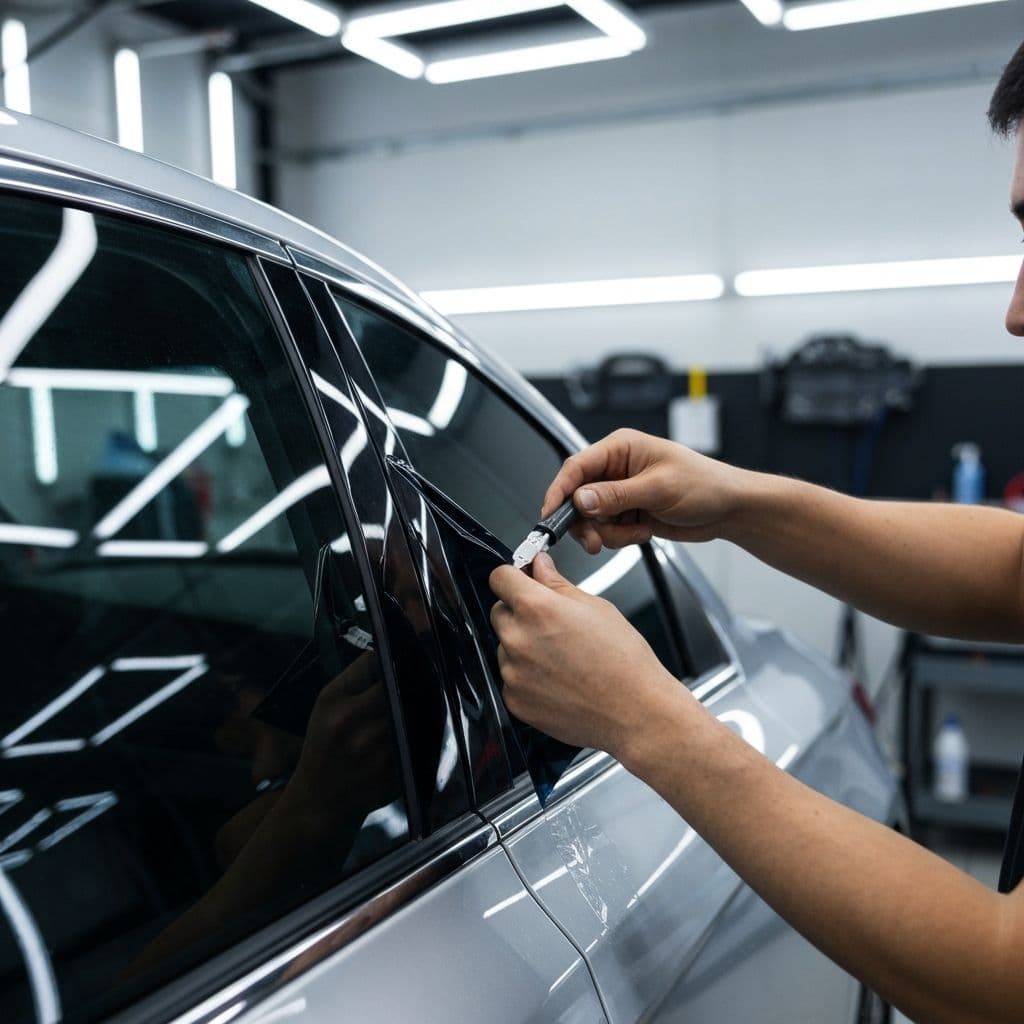
| Matte or color styling | Matte PPF and color PPF can change the look while preserving the original paint underneath |
The key phrase is "covered areas." If only the front bumper is wrapped, the rocker panel is still exposed. If only the rear doors are wrapped, the hood is still exposed. That is why shops should sell by risk zone.
What PPF cannot fix
PPF is often oversold in the market, so a professional shop should be very clear about its limits.
PPF cannot repair existing paint chips. If a Tesla already has missing paint on the bumper or rocker panel, clear film may protect the area from getting worse, but the chip can still be visible under the film. The customer should either repair the chip first or accept that the film is for future protection.
PPF cannot stop dents or collision damage. It can absorb minor road debris impact, but it is not body armor.
PPF cannot replace proper washing and maintenance. Tesla's own cleaning guidance tells owners to remove corrosive substances quickly and avoid cleaning chemicals that may cause damage or discoloration [1]. PPF reduces risk, but owners still need safe washing habits.
PPF also cannot guarantee that no chip will ever happen. A sharp stone at high speed, a hard impact, poor installation, low-quality film, bad paint condition or harsh chemical exposure can still cause problems. This is why the best sales promise is not "zero damage forever." A better promise is: PPF reduces visible wear on high-impact areas and helps preserve the factory finish when properly installed and maintained.
Clear PPF, matte PPF and color PPF for Tesla
Tesla owners do not all want the same finish. Some want invisible protection. Some want a satin look. Some want a new color without repainting the car. This is where shops can offer clear PPF, matte PPF and color PPF as separate choices.
| Film type | Main purpose | Best Tesla use case | Shop selling point |
|---|---|---|---|
| Clear PPF | Invisible paint protection | Owners who want to keep the factory color | Protect the original Tesla paint while keeping the OEM look |
| Matte PPF | Satin or frozen finish plus protection | Owners who like a stealth look | Turn gloss paint into a matte-style finish without repainting |
| Color PPF | Color change plus protection | Owners who want styling and protection together | Alternative to vinyl wrap when the customer also wants impact resistance |
| Gloss black or accent PPF | Styling for mirrors, pillars, trim or contrast panels | Customers who want a customized look | Low-entry add-on service |
Tesla's own warranty support page lists "Clear Protection Film" and "Color Paint Film" as separate warranty categories under Parts, Body and Paint Repair Limited Warranty, which reflects how protection and styling films are treated as real accessory categories in the Tesla ecosystem [3].
For shops, this helps structure the conversation:
Clear PPF is for conservative protection buyers.
Matte PPF is for owners who want a premium visual upgrade.
Color PPF is for customers who want both protection and personalization.
STEK, for example, positions full-front PPF around bumper, hood, fenders and mirrors, and also offers matte and color-related film options, which shows how protection packages and styling packages can be combined in one service menu [5].
How shops can turn Tesla paint concerns into PPF packages
The best Tesla paint protection sales process is not fear-based. It is diagnosis-based.
A customer may start with: "I heard Tesla paint chips easily." The shop should not simply reply: "Yes, you need full PPF." A better response is:
"Most new Tesla owners want to protect high-impact areas early. The most common areas are the front bumper, hood, mirrors, rocker panels and Model Y rear door/fender area. We can build a package based on how you drive, where you park and how much coverage you want."
This changes the discussion from complaint to planning.
Recommended shop package menu
| Customer type | Concern | Recommended package | Why it converts |
|---|---|---|---|
| New Model Y owner | Rear door and lower side chips | Rear door/fender plus rocker panel package | Matches a known Tesla Model Y protection concern |
| Highway commuter | Front-end stone chips | Full front PPF | Clear, easy-to-understand protection value |
| Family car owner | Loading marks, door edges, daily use | Daily driver package | Covers practical wear areas, not just the front |
| Premium Tesla owner | Wants the car to stay new | Full body clear PPF | Maximum peace of mind |
| Styling-focused owner | Wants matte or unique color | Matte PPF or color PPF | Combines personalization with protection |
| Distributor or dealer | Needs repeatable SKUs | Tesla Model Y high-impact kit, full front kit, bulk roll stock | Easy to sell, stock and train installers |
Sales script for Tesla PPF inquiries
"Tesla owners usually care a lot about keeping the car clean and new-looking. The best approach is not to wrap random panels, but to protect the areas that receive the most impact. For Model Y, that usually means the front bumper, hood, mirrors, rocker panels and rear door/fender area. If you want a practical package, we recommend starting with high-impact areas. If you want the cleanest long-term result, full front or full body PPF is better."
This script keeps the tone professional. It avoids attacking Tesla paint and frames PPF as a smart ownership decision.
Distributor angle: what to stock
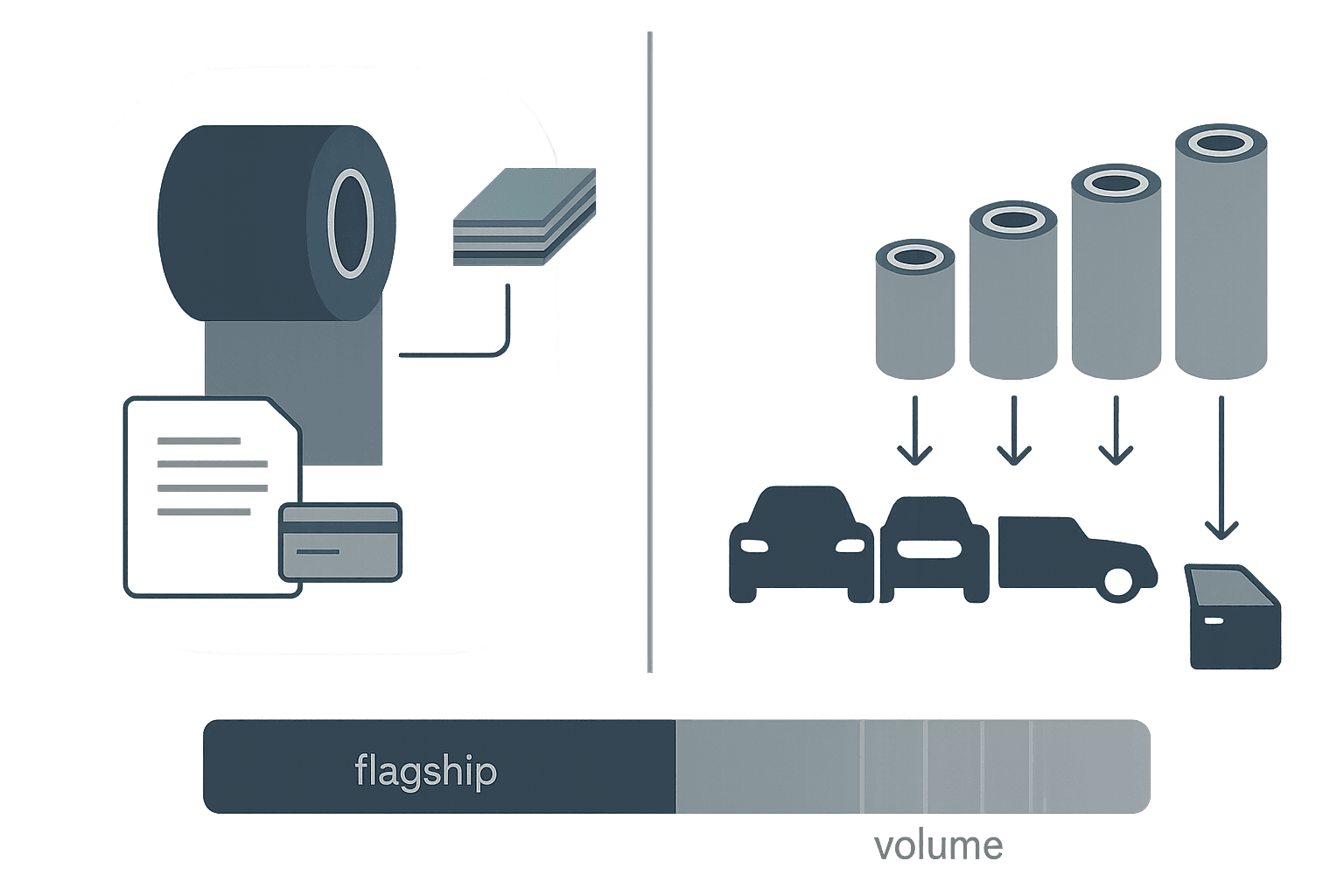
For PPF distributors, Tesla traffic can become a repeatable product category. Instead of only selling generic rolls, distributors can prepare Tesla-focused sales materials and stock around the most common packages.
| Stock item | Why it matters |
|---|---|
| Clear gloss PPF rolls | Core product for full front and high-impact packages |
| Matte PPF rolls | Premium upgrade for stealth-style Tesla builds |
| Color PPF samples | Helps shops upsell styling and protection |
| Pre-cut data or cutting support | Reduces installation friction for popular Tesla models |
| Small sample kits | Helps shops demonstrate clarity, stretch, stain resistance and self-healing |
| Tesla package brochures | Makes it easier for installers to sell to end customers |
Tesla PPF is not only a car-care topic. It can be a repeatable business category for installers, wholesalers and film brands.
FAQ
Is Tesla paint protection film worth it?
Tesla paint protection film can be worth it if the owner wants to reduce visible wear on high-impact areas such as the front bumper, hood, mirrors, rocker panels and Model Y rear door/fender area. It is most valuable when installed early, before stone chips and scratches accumulate.
What are the most common Tesla paint chip areas?
Common Tesla paint chip areas include the front bumper, hood leading edge, front fenders, side mirrors, rocker panels, lower doors, rear doors and rear fenders. For Tesla Model Y, the rear door and fender area is especially important because Tesla sells a specific PPF kit for that zone [2].
Does PPF fix existing Tesla paint chips?
No. PPF does not repair missing paint. Existing chips should be touched up or repaired before installation if the customer wants a cleaner final appearance. Otherwise, the film may protect the area from further wear, but the chip can remain visible.
What is the best paint protection film Tesla Model Y package?
For many Model Y owners, the best starting package is rear door/fender protection plus rocker panels. A stronger package adds full front PPF, including the full hood, front bumper, fenders and mirrors. For maximum protection, full-body PPF is the most complete option.
Is clear PPF better than ceramic coating for paint chips?
For stone chips and road debris impact, PPF is generally the stronger physical barrier. Ceramic coating can help with gloss, cleaning and water behavior, but it does not provide the same impact-absorbing film layer as PPF.
Can matte PPF protect Tesla paint?
Yes. Matte PPF can protect the paint while changing the appearance from gloss to satin or matte. It is popular with Tesla owners who want a stealth-style look without repainting the vehicle.
Can color PPF replace vinyl wrap?
Color PPF can be an alternative to vinyl wrap when the customer wants both color change and impact protection. Vinyl wrap is mainly for styling, while color PPF is positioned as styling plus paint protection.
Should a shop sell full-body PPF to every Tesla owner?
No. Full-body PPF is the premium solution, but not every customer needs it. A better sales process is to offer package levels: essential high-impact coverage, full front PPF, daily driver protection and full-body protection.
References
[1] Tesla Model Y Owner's Manual - Cleaninghttps://www.tesla.com/ownersmanual/modely/en_us/GUID-65384C1F-86F2-44E8-A8BC-8A12E7E00A40.html
[2] Tesla Shop - Model Y Paint Protection Filmhttps://shop.tesla.com/product/model-y-paint-protection-film
[3] Tesla Support - Vehicle Warrantyhttps://www.tesla.com/support/vehicle-warranty
[4] Avery Dennison - Introducing Avery Dennison SPF-XI Supreme Protection Filmhttps://graphics.averydennison.com/en/home/news/newsletter/nov-2018/supreme-protection-film.html
[5] STEK USA - Clear Bra Paint Protection Filmhttps://www.stek-usa.com/paint-protection-film/