Tesla Paint Problems: What PPF Can and Cannot Protect
Tesla paint is a major search topic because Tesla owners are usually highly sensitive to paint condition. A new Model Y or Model 3 has large clean body panels, smooth reflections and a minimalist design. Small scratches, stone chips or stains can feel more visible than they would on an older daily driver.
That does not mean every Tesla has a serious paint problem. A better way to understand this search intent is simple: Tesla owners are protection-conscious. They inspect the car carefully, they worry about rock chips and scratches, and they want to know whether Tesla PPF can protect the vehicle before daily driving causes visible wear.
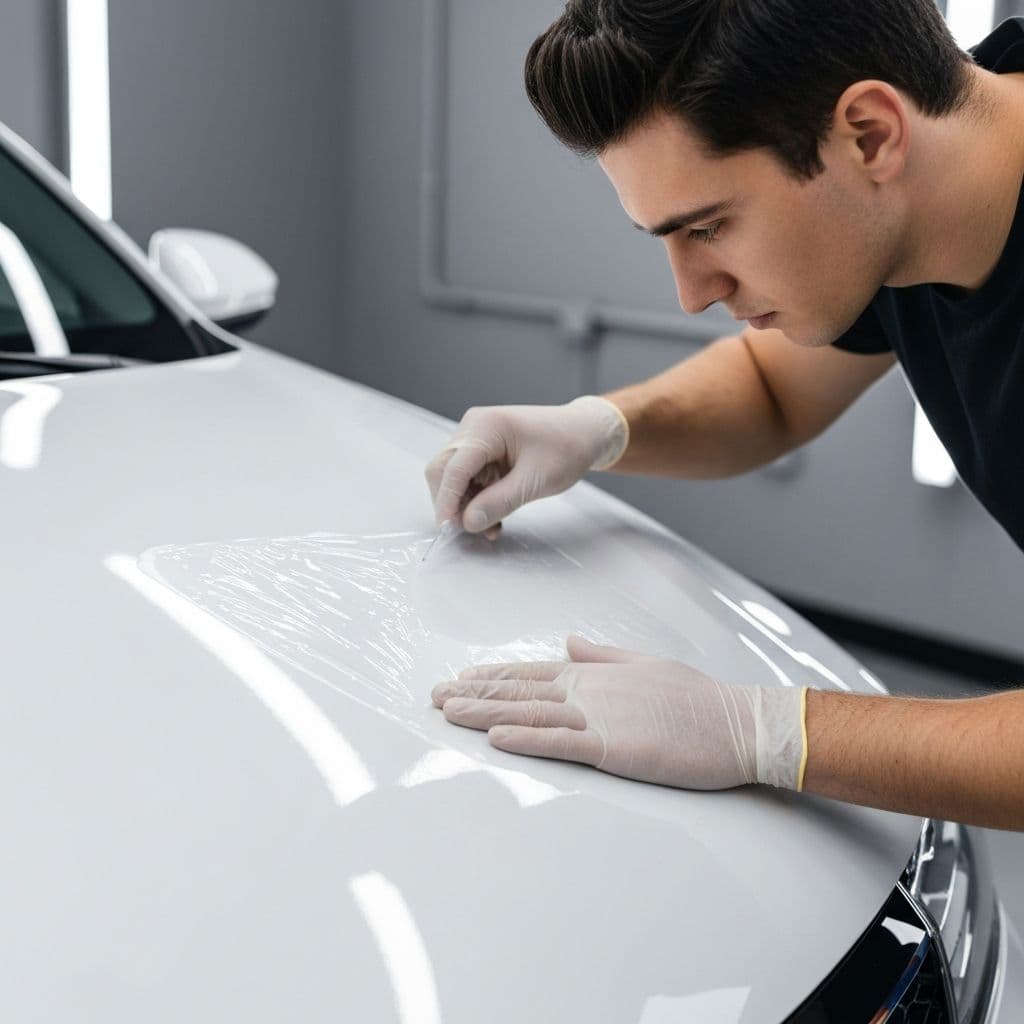
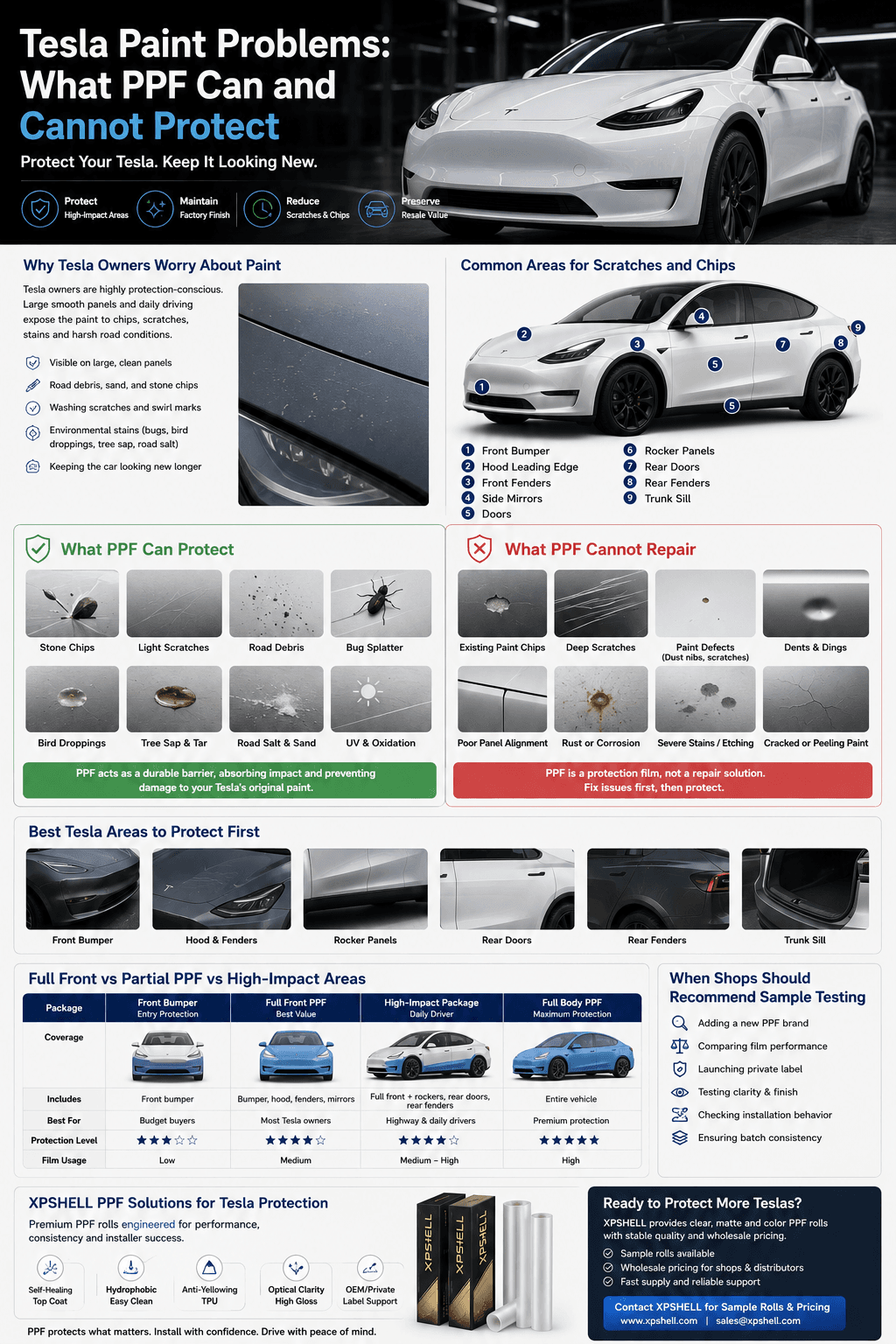
Paint protection film, also called PPF or clear bra, is a practical solution for this concern. It can help protect covered areas from stone chips, light scratches, road debris, insect stains, salt, sand and daily wear. But PPF is not a repair film. It cannot fix existing paint defects, deep scratches, dents or poor panel alignment.
For PPF shops, this page should not be positioned as "Tesla paint is bad." The stronger commercial angle is:
Tesla owners care deeply about keeping the car clean, new-looking and protected. Shops can turn that concern into clear PPF packages, high-impact area protection and sample-tested film recommendations.
Why Tesla owners worry about paint
Tesla owners often search for terms like "tesla paint", "tesla paint defect", "tesla scratch", "tesla scratches", "tesla paint protection" and "tesla ppf" because they are trying to answer several different questions.
| Search intent | What the owner is really asking | Best shop response |
|---|---|---|
| tesla paint | Is Tesla paint easy to damage? | Explain inspection, care and protection planning |
| tesla paint defect | Is this mark a delivery issue? | Recommend documentation before PPF |
| tesla scratch | Can this scratch be protected or repaired? | Separate light surface marks from deep scratches |
| tesla scratches | How can I prevent more scratches? | Explain safe washing and PPF coverage |
| tesla paint protection | Which solution protects paint best? | Compare PPF, ceramic coating and maintenance |
| tesla ppf | What package should I choose? | Guide the owner into full front, partial or high-impact PPF |
Tesla's own Model Y cleaning guidance says corrosive substances such as bird droppings, tree resin, dead insects, tar spots, road salt and industrial fallout should be removed quickly to prevent paint damage [1]. This supports a practical message: paint protection is not only about factory paint quality. It is also about real-world use, cleaning habits and road exposure.
Common areas for scratches and chips
Most Tesla paint concerns are not evenly spread across the whole car. They usually appear in predictable areas.
| Area | Common issue | Why it happens | PPF priority |
|---|---|---|---|
| Front bumper | Stone chips, bug stains, sand impact | First impact zone during driving | Very high |
| Hood leading edge | Chips and small impact marks | Exposed to highway debris | High |
| Front fenders | Chips and road debris marks | Near front wheel and airflow impact | High |
| Side mirrors | Chips, scratches and bug impact | Small exposed surfaces | Medium to high |
| Rocker panels | Sand, salt and lower-side abrasion | Tires throw debris along the lower body | Very high |
| Rear doors | Chips and lower-side wear | Especially relevant on Model Y | Very high |
| Rear fenders | Road debris and small stone impact | Lower rear quarter exposure | High |
| Door cups | Fingernail scratches | Daily opening and closing | Medium |
| Door edges | Parking contact and small chips | Tight parking spaces | Medium |
| Trunk sill | Loading scratches | Luggage, boxes and tools | Medium |
Tesla's own Model Y Paint Protection Film product focuses on rear doors and rear fenders and describes protection from snow, salt, sand, small debris, stone chips and driving conditions that accelerate wear and tear [2]. That is important for shops because it validates the idea of high-impact Tesla PPF areas, especially on Model Y.
Paint chips, scratches and defects are not the same
Before recommending Tesla PPF, shops should explain the difference between paint chips, scratches and defects. This avoids overpromising and makes the shop look more professional.
| Issue type | What it looks like | Common cause | Can PPF help prevent it? | Can PPF repair it? |
|---|---|---|---|---|
| Paint chip | Small dot where paint is missing | Stone impact, gravel, road debris | Yes, on covered panels | No |
| Light scratch | Fine surface line or wash mark | Washing, drying, dust contact | Yes, many films reduce surface marking | Sometimes it can visually reduce light marks, but it is not a repair |
| Deep scratch | Line that cuts into clear coat or paint | Hard contact, keying, sharp object | It may reduce future risk if installed before damage | No |
| Paint defect | Dust nib, thin spot, paint mismatch, delivery mark | Production, transport or delivery issue | No, this should be inspected first | No |
| Stain / etching | Spot, chemical mark or cloudy area | Bird droppings, insects, sap, salt, harsh chemicals | PPF can act as a sacrificial layer | No |
| Dent with paint damage | Deformed panel plus broken paint | Impact or collision | No | No |
This table is useful for both SEO and conversion. It tells the customer: PPF is powerful, but only when used for the right problem.
What PPF can protect
Paint protection film works as a physical layer over the original paint. On covered areas, it can absorb many of the small impacts and surface contacts that would otherwise hit the paint directly.
3M describes its Scotchgard Paint Protection Film Pro Series as protecting vulnerable areas against chips, scratches, stains and the elements, while maintaining vehicle paint color and brilliance [4]. XPSHELL positions its clear PPF around self-healing topcoat behavior, hydrophobic easy-clean performance, anti-yellowing TPU stability, optical clarity and wholesale batch control [6].
| Risk | How PPF helps |
|---|---|
| Stone chips | Creates a barrier between road debris and paint |
| Road sand | Reduces direct abrasion on covered lower panels |
| Salt and winter debris | Helps protect high-wear areas from direct exposure |
| Bug splatter | Gives the owner a sacrificial layer that is easier to clean |
| Bird droppings and tree sap | Reduces direct chemical contact with paint if cleaned quickly |
| Light scratches | Many films help absorb fine surface marks |
| Wash marring | Helps protect the original clear coat from repeated minor contact |
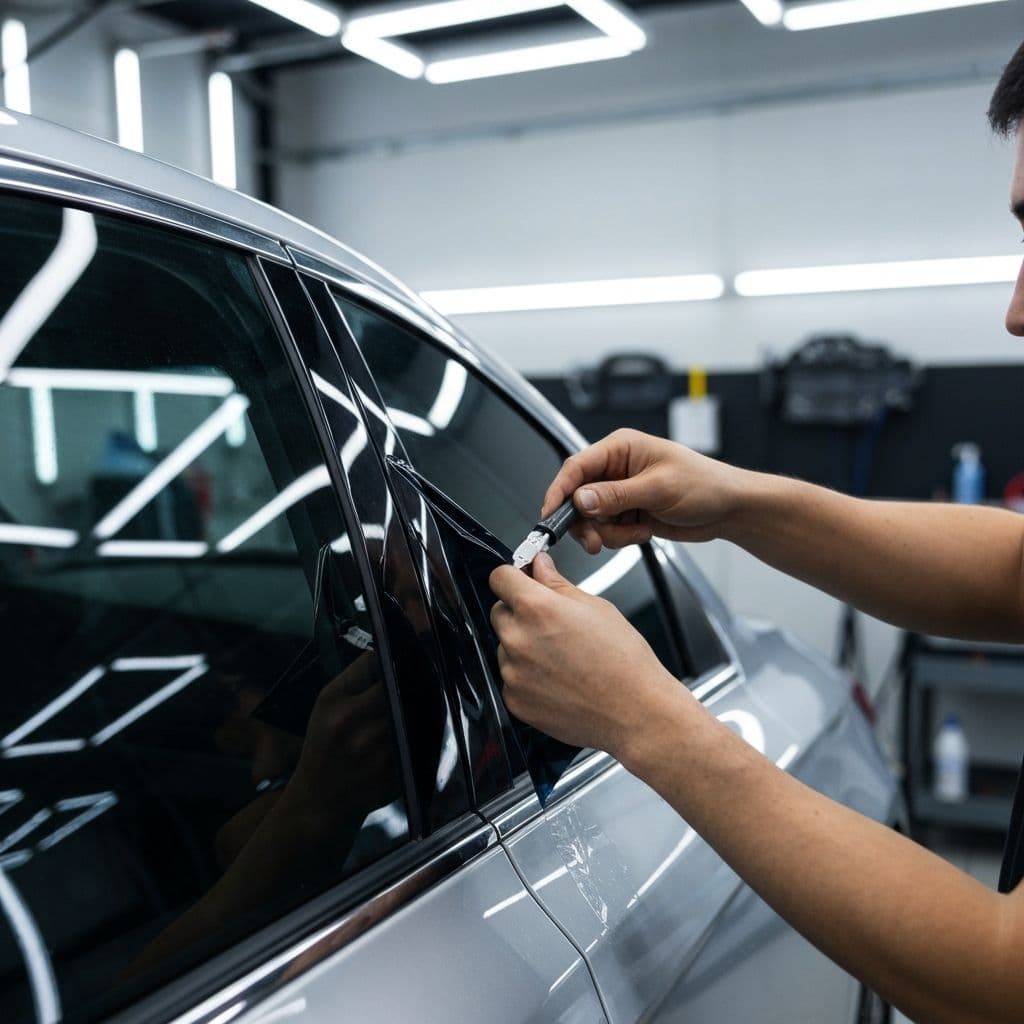
| Matte or color conversion | Changes appearance while preserving original paint underneath |
The important phrase is "covered areas." If a Tesla owner only protects the front bumper, the rocker panels are still exposed. If they only protect rear doors, the hood and bumper are still exposed. That is why shops should sell coverage logic, not just film material.
What PPF cannot repair
PPF cannot solve every paint problem. Shops should say this clearly before installation.
| Problem | Can PPF fix it? | Correct recommendation |
|---|---|---|
| Existing paint chip | No | Touch up or repair before installation |
| Deep scratch | No | Correct or repair before PPF |
| Delivery paint defect | No | Document and resolve before film |
| Dent or collision damage | No | Body repair first |
| Bad panel alignment | No | Adjust panel fit before film |
| Rust or corrosion | No | Repair before film |
| Dirty or contaminated paint | No | Wash, decontaminate and prep first |
| Poor washing habits | No | Educate customer on safe maintenance |
The best shop message is:
PPF protects clean paint from future damage. It does not erase existing damage.
This is also important for customer disputes. If a Tesla arrives with chips, defects or scratches, the shop should document them before installing film. A simple pre-installation inspection form can prevent many misunderstandings.
Best Tesla areas to protect first
Not every customer needs full body PPF. The best first package depends on budget, driving habits and the owner's risk tolerance.
| Priority | Area | Why protect it first? | Best package |
|---|---|---|---|
| 1 | Front bumper | Highest exposure to stone chips and bugs | Front bumper PPF |
| 2 | Hood | Highly visible and exposed at speed | Full front PPF |
| 3 | Front fenders | Common full front coverage area | Full front PPF |
| 4 | Side mirrors | Small but high-impact parts | Full front PPF |
| 5 | Rocker panels | Lower-side sand, salt and road debris | High-impact package |
| 6 | Rear doors | Especially important on Model Y | Rear door / rocker package |
| 7 | Rear fenders | Tesla Model Y high-impact zone | Rear door / rocker package |
| 8 | Door cups and edges | Daily-use scratches | Add-on package |
| 9 | Trunk sill | Loading scratches | Practical add-on |
For Tesla Model Y, a strong practical package is full front PPF plus rocker panels, rear doors and rear fenders. This covers the main front-end chip zones and the lower-side areas that many Model Y owners worry about.
Full front vs partial PPF vs high-impact areas
The package ladder should be simple enough for a new Tesla owner to understand.
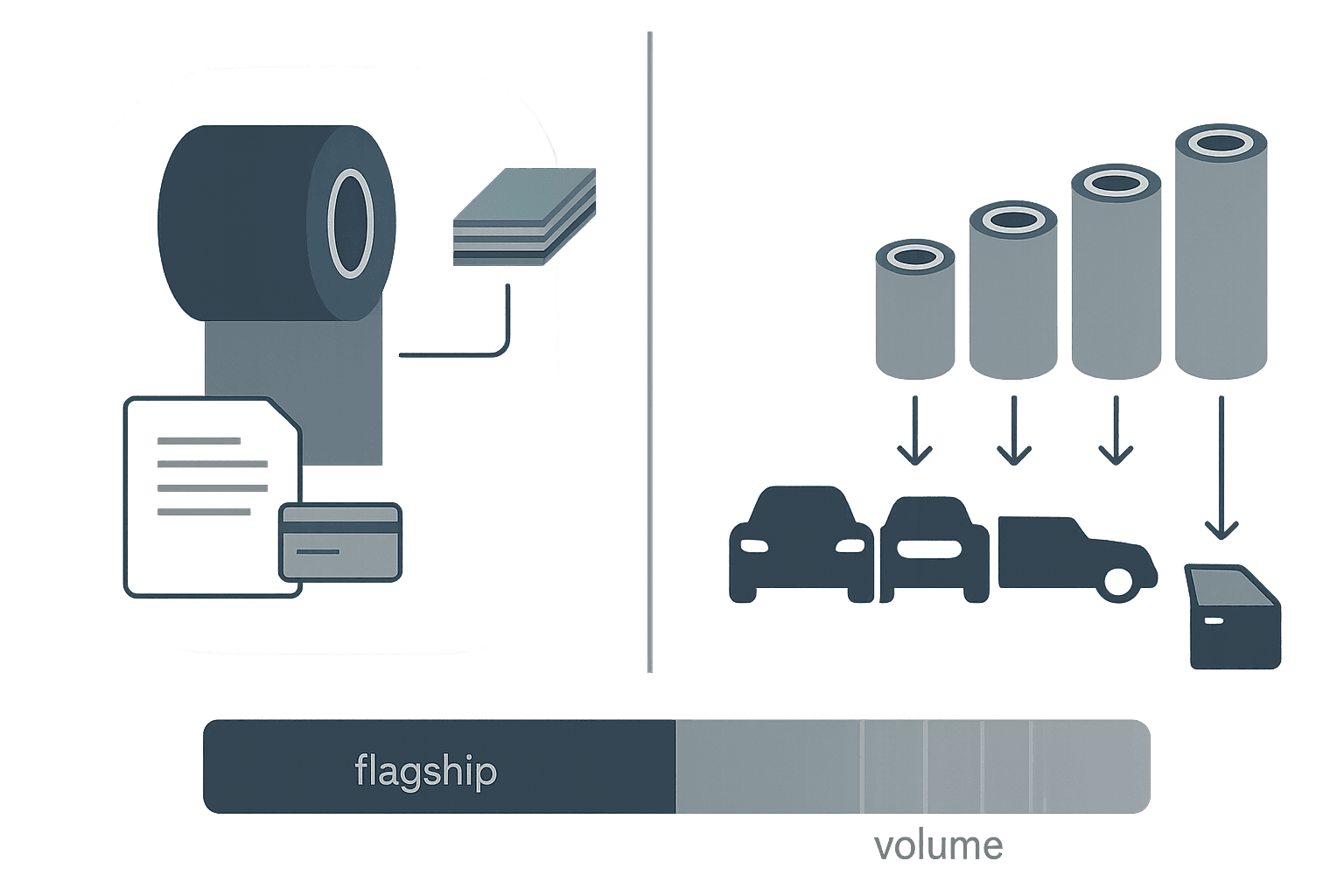
| Package | Coverage | Buyer type | Shop selling point | Film demand |
|---|---|---|---|---|
| Partial rear / rocker | Rear doors, rocker panels, rear fenders | Budget owner | Protect known lower-side impact areas | Low |
| Front bumper | Bumper only | Entry buyer | Protect the most visible chip zone | Low |
| Full front | Bumper, hood, fenders, mirrors | Mainstream buyer | Best value for daily driving | Medium |
| High-impact package | Full front plus rockers, rear doors and rear fenders | Practical daily driver | Covers both front and lower-side risk | Medium to high |
| Full body clear PPF | All painted panels | Premium owner | Maximum original paint preservation | High |
| Matte / color PPF | Usually full body | Style buyer | Visual upgrade plus protection | High |
The high-impact package is especially useful for shops because it sits between full front and full body. It gives customers more coverage than a basic front package without forcing them into the highest price tier.
When shops should recommend sample testing
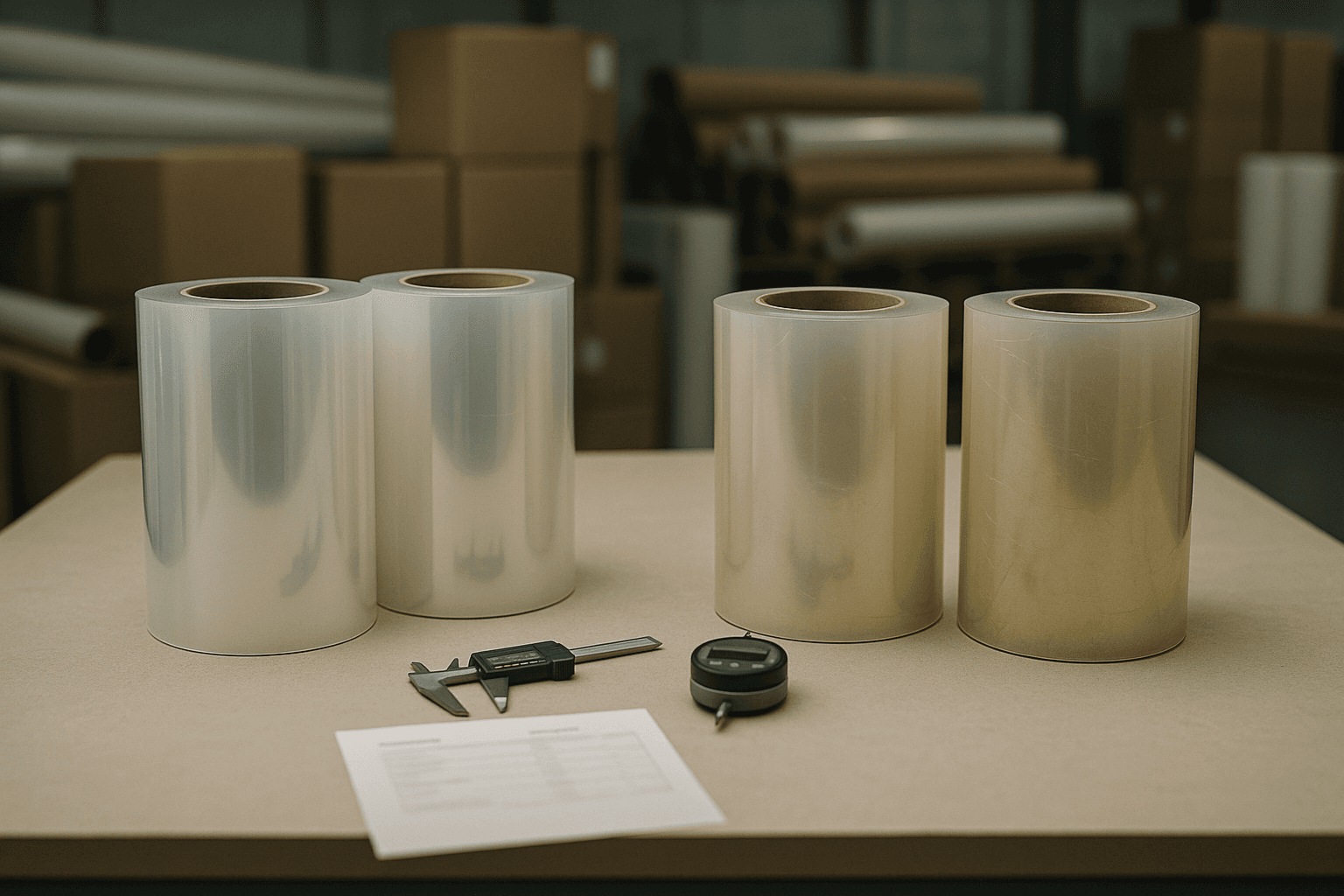
Sample testing is important when a shop is considering a new PPF brand, adding a second film line or building a private-label Tesla PPF program.
A Tesla customer may ask for XPEL, STEK or 3M by name. Shops do not have to attack those brands. Instead, they can explain that professional film selection should be based on real test results: clarity, adhesive behavior, stretch, self-healing, stain resistance, edge stability and installation feel.
XPSHELL's B2B role is strongest here. XPSHELL can support installers, distributors and OEM buyers with clear PPF, matte PPF, color PPF, sample testing, wholesale pricing and private label options. The goal is not to make unsafe equivalence claims against established brands. The goal is to give shops a structured way to verify whether a film can support repeat Tesla jobs.
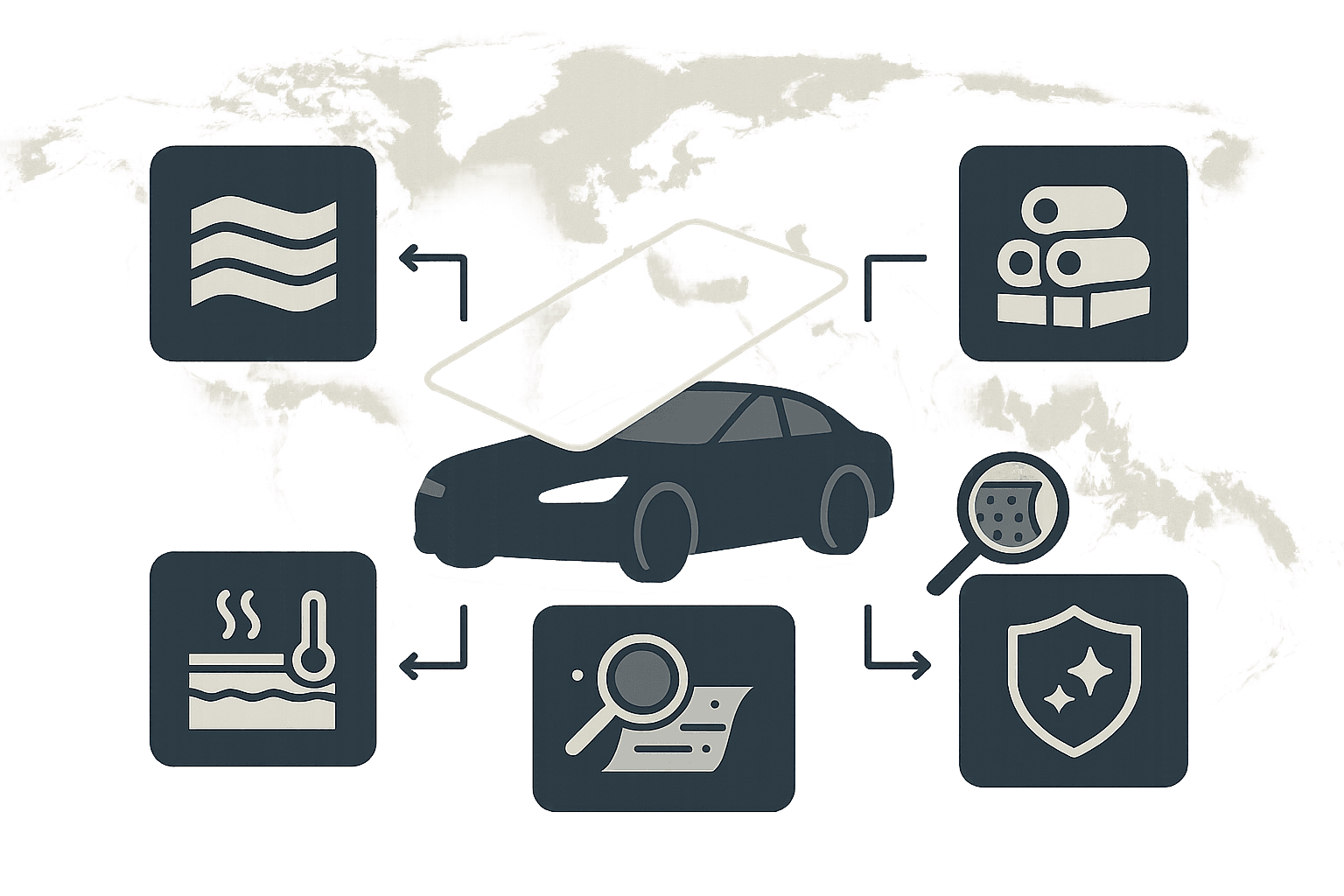
| Test item | Why it matters for Tesla PPF |
|---|---|
| Optical clarity | Tesla panels have clean reflections, so haze and orange peel are easy to notice |
| Gloss level | Helps match the factory paint appearance |
| Adhesive behavior | Curved bumpers and edges require stable tack and repositioning |
| Stretch and recovery | Important for bumper, mirror and fender installation |
| Self-healing | Helps reduce visible light scratches and wash marks |
| Stain resistance | Useful against bugs, road film and environmental exposure |
| Hydrophobic behavior | Helps with easy-clean demonstrations |
| Edge stability | Important for long-term customer satisfaction |
| Batch consistency | Critical for shops and distributors placing repeat orders |
| Warranty communication | Helps shops sell with confidence and avoid unclear promises |
XPSHELL Tesla PPF program angle
XPSHELL should be positioned as a B2B supplier for shops and distributors who want to build repeatable Tesla PPF packages.
| XPSHELL supply option | Best use case | Shop value |
|---|---|---|
| Clear PPF rolls | Full front, bumper, rocker and full body packages | Core Tesla protection inventory |
| Matte PPF | Stealth-style Model Y and Model 3 builds | Premium style upgrade |
| Color PPF | Color change plus protection | Higher-value customization |
| Sample rolls | Film testing before bulk purchase | Lower risk for new shops |
| OEM packaging | Local brand or private label program | Distributor differentiation |
| Wholesale pricing | Repeat shop supply | Better margin control |
| Sales materials | Tesla package education | Easier customer conversion |
For installers, the message is:
Use sample testing before switching film lines or promoting a new Tesla PPF package.
For distributors, the message is:
Tesla paint anxiety can become a repeatable PPF category if the product line, package ladder and sales education are built together.
Suggested internal link path
This page should work as the top of the Tesla paint / scratch protection cluster. It should capture broad informational traffic and guide users toward stronger commercial pages.
| Anchor text | Target page | Placement |
|---|---|---|
| Tesla Paint Protection Guide | Tesla paint chip and PPF area guide | After explaining common chip areas |
| Tesla PPF Packages | Tesla package comparison page | After full front vs partial table |
| Tesla Model Y PPF Cost | Cost guide | After package discussion |
| Clear Bra Tesla Model Y | Model Y clear PPF guide | In high-impact area section |
| Matte PPF Tesla Model Y | Matte / stealth Tesla page | In finish option section |
| Wholesale Tesla PPF Rolls | XPSHELL B2B supply page | In XPSHELL CTA |
| PPF Sample Testing | Sample roll or dealer page | In sample testing section |
This internal linking structure helps the page do its real job: turn broad "tesla paint" traffic into Tesla PPF demand.
FAQ
Are Tesla scratches common?
Tesla owners often notice scratches because the paint surface is highly visible on clean, minimalist panels. Some scratches come from washing, dust, parking contact or road debris. The better question is not whether Tesla scratches are "common", but which areas are most likely to be damaged and how to protect them early.
Can PPF prevent Tesla scratches?
PPF can help protect covered areas from light scratches, wash marring and minor surface abrasion. It can also reduce paint chip risk from stones and road debris. However, it cannot stop every type of damage, especially deep cuts, dents or hard impacts.
Can PPF fix existing Tesla paint defects?
No. PPF does not repair paint defects. Existing chips, deep scratches, stains, dents or delivery defects should be documented and corrected before film installation.
What Tesla areas should be protected first?
The most practical first areas are the front bumper, hood, front fenders, side mirrors, rocker panels, rear doors and rear fenders. For Model Y, rear door and rear fender protection is especially relevant because Tesla's own PPF kit focuses on those areas [2].
Is full front PPF enough for a Tesla?
Full front PPF is a strong mainstream package because it protects the bumper, hood, fenders and mirrors. For daily drivers, shops can improve the package by adding rocker panels, rear doors and rear fenders.
Is partial PPF worth it?
Partial PPF can be worth it when the owner has a limited budget and wants to protect the highest-risk panels first. It is better to protect the most vulnerable areas early than to delay protection until chips appear.
Is ceramic coating enough for Tesla paint protection?
Ceramic coating can help with gloss, cleaning and water behavior, but it does not provide the same physical impact protection as PPF. For stone chips and road debris, PPF is the stronger protection layer.
When should shops recommend XPSHELL sample testing?
Shops should recommend sample testing when they are adding a new PPF line, comparing film suppliers, planning Tesla package sales or evaluating wholesale roll supply. Sample testing helps verify clarity, adhesive behavior, stretch, self-healing, stain resistance and installation feel before bulk orders.
Should shops tell customers Tesla paint is bad?
No. A better and safer message is that Tesla owners are highly protection-conscious, and PPF helps protect high-impact areas from future road wear. This keeps the sales conversation professional and avoids unnecessary negative claims.
CTA: Turn Tesla paint anxiety into a clear PPF package
Tesla paint, scratches and paint defects are powerful information-search topics. The shop's job is to turn that concern into a clear protection decision.
XPSHELL supplies clear PPF, matte PPF and color PPF rolls for installers, restyling shops, distributors and private label buyers. Use sample testing to evaluate film performance, then build Tesla packages around bumper protection, full front PPF, rocker panels, high-impact areas and full body protection.
Contact XPSHELL to get Tesla PPF sample rolls, wholesale roll pricing and support for your local Tesla paint protection program.
References
[1] Tesla Model Y Owner's Manual - Cleaninghttps://www.tesla.com/ownersmanual/modely/en_us/GUID-65384C1F-86F2-44E8-A8BC-8A12E7E00A40.html
[2] Tesla Shop - Model Y Paint Protection Filmhttps://shop.tesla.com/product/model-y-paint-protection-film
[3] Tesla Support - Vehicle Warrantyhttps://www.tesla.com/support/vehicle-warranty
[4] 3M - Scotchgard Paint Protection Film Pro Serieshttps://www.3m.com/3M/en_US/p/d/b40066706/
[5] XPSHELL - Paint Protection Filmhttps://xpshell.com/products/paint-protection-film
[6] XPSHELL - Color Paint Protection Filmhttps://xpshell.com/products/color-paint-protection-film
[7] XPSHELL - Tesla Paint Protection Guide: Paint Chips, PPF Areas and How PPF Helpshttps://xpshell.com/blog/tesla-paint-protection-common-paint-chip-areas-and-how-ppf-helps
[8] XPSHELL - PPF for Tesla: Model Y, Model 3, Model S Protection Guidehttps://xpshell.com/blog/ppf-for-tesla-technical-guide-to-scratches-bumpers-headlights-and-model-specific-planning