LLumar Valor PPF Thickness: Is 7-8 Mil Enough?
When shops compare premium paint protection films, one common question is simple: is LLumar Valor PPF thickness enough?
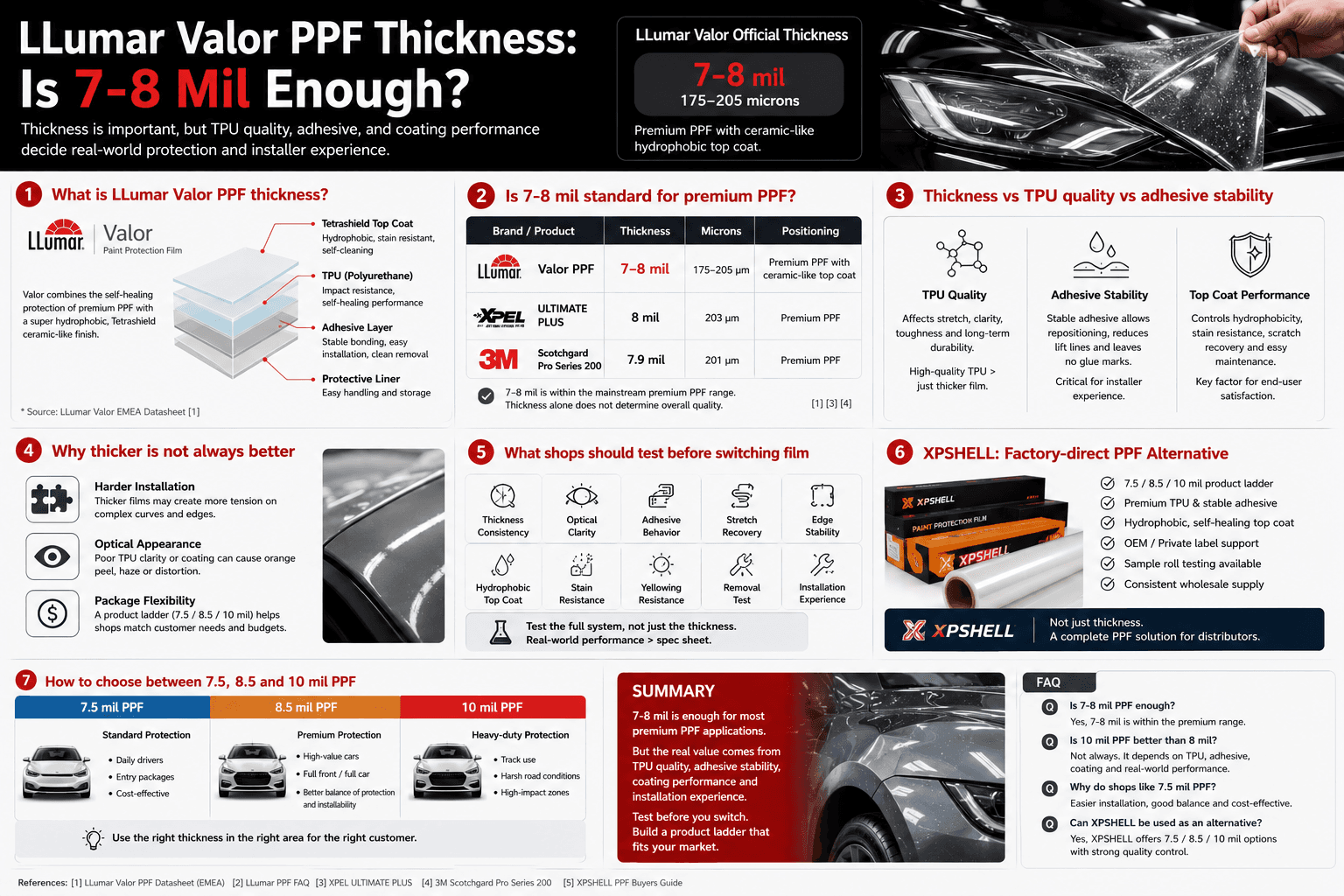
According to the LLumar Valor EMEA datasheet, Valor has a listed thickness range of 7-8 mil, or about 175-205 microns [1]. For many installers, this immediately raises a practical question: if some factory-direct PPF options are available in 7.5 mil, 8.5 mil or 10 mil, should a shop always choose the thicker film?
The answer is no.
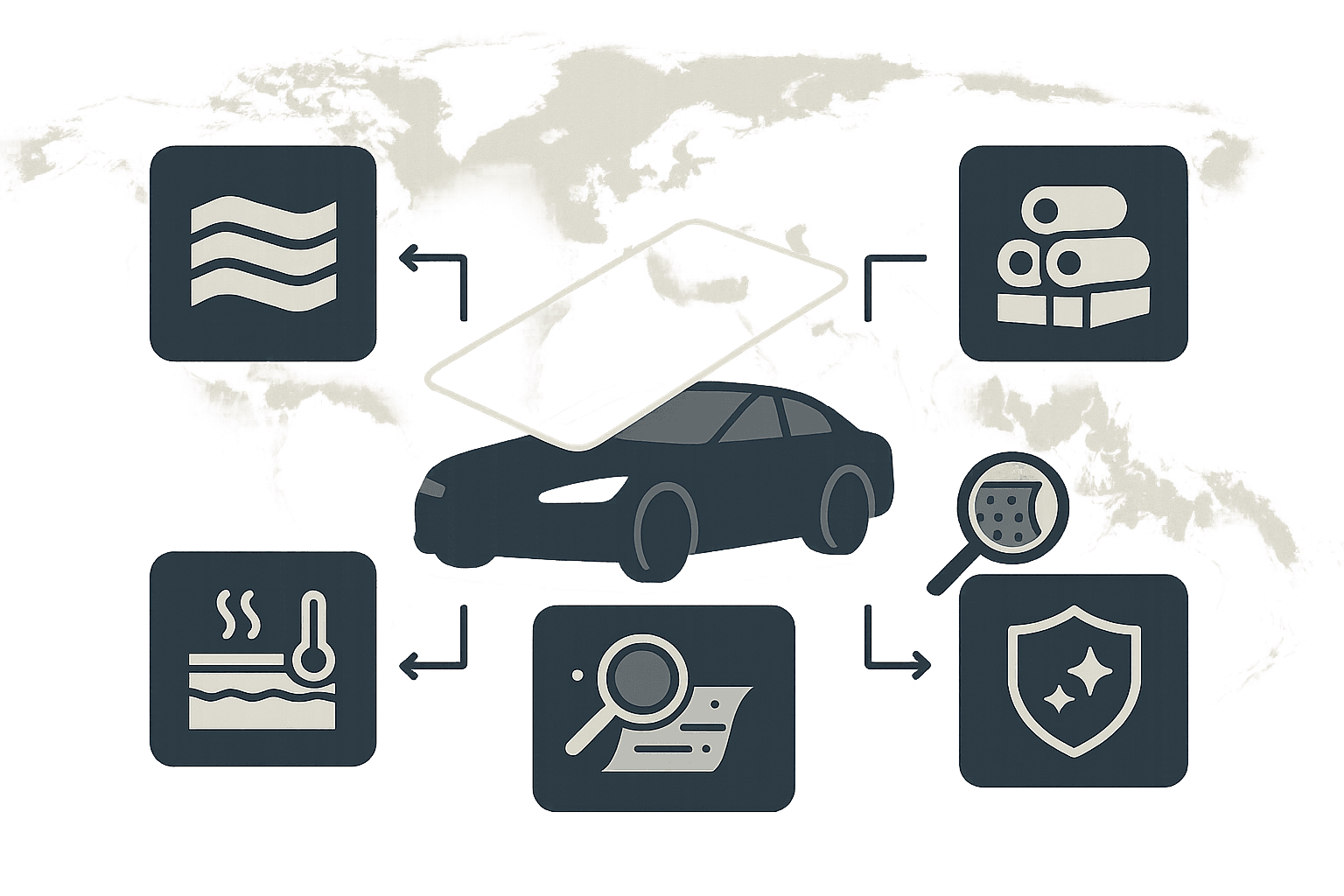
Thickness matters, but it is only one part of the PPF performance equation. A premium PPF roll should be judged by its full construction: TPU base film, adhesive system, top coat, optical clarity, hydrophobic performance, stain resistance, yellowing resistance, stretch stability and installer feedback.
For distributors, this is even more important. A film that looks good on a specification sheet may still fail in the market if it is difficult to install, leaves adhesive marks, yellows at the edge or creates too many after-sales problems.
What is LLumar Valor PPF thickness?
LLumar Valor is positioned as a premium paint protection film with a ceramic-like finish, super hydrophobic top coat and self-healing protection. LLumar’s official FAQ describes Valor as combining the self-healing protection of premium PPF with a super hydrophobic Tetrashield ceramic-like finish [2].
In its EMEA datasheet, LLumar Valor lists:
| Product | Listed thickness | Metric range | Positioning |
|---|---|---|---|
| LLumar Valor PPF | 7-8 mil | 175-205 microns | Premium PPF with ceramic-like hydrophobic finish |
This means Valor is not unusually thin. It sits in the same general thickness zone as many premium PPF products.
For comparison, XPEL states that ULTIMATE PLUS is 8 mil thick [3]. 3M lists Scotchgard Paint Protection Film Pro Series 200 at 7.9 mil, or about 0.2 mm [4]. In other words, a 7-8 mil construction is not a weak specification by itself. It is close to the mainstream premium PPF standard.
Is 7-8 mil standard for premium PPF?
Yes. For most clear gloss premium PPF products, the common market range is around 7.5-8 mil.
The reason is balance. A film needs to be thick enough to absorb normal road debris impact, but still flexible enough for bumper curves, mirror caps, fenders, edges and complex panels. A very thick film may offer stronger impact resistance in certain areas, but it can also create installation challenges.
| Thickness range | Common use | Strength | Possible trade-off |
|---|---|---|---|
| 6.5 mil | Entry-level or price-sensitive packages | Easier stretch, lower cost | Less impact resistance |
| 7.5 mil | Standard clear PPF packages | Good balance of protection and installability | Depends heavily on TPU and coating quality |
| 8-8.5 mil | Premium clear PPF | Stronger protection, still workable | Requires stable adhesive and good stretch recovery |
| 10 mil | High-impact zones or luxury upgrades | Better stone-chip resistance | Harder installation, more edge tension, higher cost |
This is why the question should not be “Is 7-8 mil enough?” only.
The better question is:
Is the complete film construction good enough for the customer, climate, installer skill level and warranty expectation?
Thickness vs TPU quality vs adhesive stability
A PPF roll is not just one block of plastic. It is a layered protection system. Even when two films both claim 8 mil thickness, they may perform very differently.
TPU quality
The TPU base film affects stretch, clarity, toughness, elongation and long-term durability. Poor TPU can look acceptable at first but may show orange peel, haze, weak stretch recovery, cracking or yellowing over time.
For shops, TPU quality is often more important than a small thickness difference. A high-quality 7.5 mil film can be more reliable than a low-grade 10 mil film.
Adhesive stability
Adhesive is one of the most underestimated parts of PPF. A stable adhesive system should allow repositioning, reduce lift lines, avoid glue marks and remain clean during removal.
3M’s Pro Series 200 product page specifically highlights optimized adhesive for repositioning and minimizing lift lines and adhesive marks [4]. That point matters because many shop complaints are not about thickness. They are about installation control, edge lift, glue marks and after-sales cleanup.
For hot, humid or high-UV markets, adhesive stability becomes even more important. A film that protects against chips but creates edge yellowing or adhesive residue can damage a distributor’s reputation.
Top coat performance
The top coat controls hydrophobicity, stain resistance, scratch recovery and surface feel. LLumar Valor’s positioning is built heavily around its hydrophobic and ceramic-like top coat, not only its thickness [2].
This is a key lesson for distributors: premium buyers are not only buying a thicker film. They are buying a smoother surface, easier maintenance, better stain resistance and a more premium ownership experience.
Why thicker is not always better
A 10 mil PPF sounds stronger than a 7.5 mil or 8 mil film. In some situations, it is useful. For example, high-impact front bumper zones, track cars, commercial vehicles or harsh road conditions may benefit from a thicker option.
But thicker film is not automatically better for every shop.
Thicker film can be harder to install
On complex bumpers, deep curves, mirrors and tight edges, thicker film can create more tension. If the film does not stretch and recover well, it may increase installation difficulty or edge lift risk.
Thicker film can affect optical appearance
Premium PPF must look invisible on paint. If a thicker film has poor TPU clarity, weak coating uniformity or orange peel, customers may reject it even if the specification looks strong.
Thicker film can reduce package flexibility
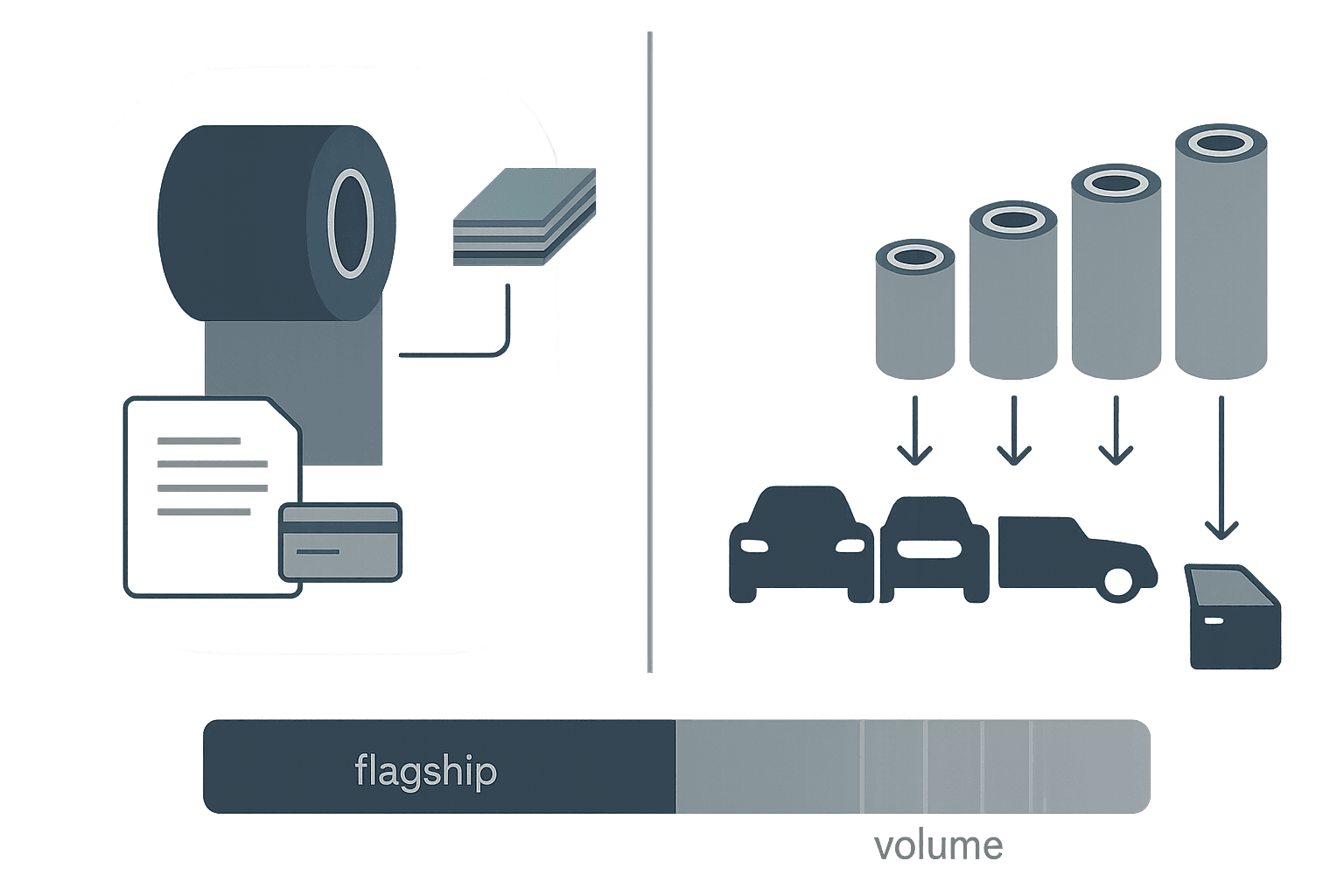
For distributors, stocking only thick film can make pricing harder. Not every shop needs 10 mil for every customer. A strong product ladder usually works better:
| Product level | Recommended thickness | Best customer type | Sales logic |
|---|---|---|---|
| Standard protection | 7.5 mil | Daily drivers, entry packages | Balanced protection and cost |
| Premium protection | 8.5 mil | High-value cars, full-front packages | Better protection with good installability |
| Heavy-duty protection | 10 mil | Track use, harsh roads, high-impact zones | Maximum protection for selected panels |
This is where factory-direct options can be useful. For example, XPSHELL can position 7.5 mil, 8.5 mil and 10 mil films as a structured product ladder instead of forcing every shop into one thickness. XPSHELL’s own PPF buyer guide also notes that representative OEM product ranges often include 6.5, 7.5, 8.5 and 10 mil options, with thinner films helping price-sensitive packages and thicker films supporting high-value front-end or luxury applications [5].
What shops should test before switching film
Before switching from a known film like LLumar Valor to a factory-direct PPF alternative, shops should avoid making a decision based only on thickness and FOB price.
A proper shop test should include:
| Test area | What to check | Why it matters |
|---|---|---|
| Thickness consistency | Measure multiple points across the roll | Confirms production stability |
| Optical clarity | Test on black and dark paint | Reveals haze, distortion and orange peel |
| Adhesive behavior | Reposition, squeegee and remove test pieces | Shows glue mark and lift-line risk |
| Stretch recovery | Test bumpers, mirrors and curves | Determines installer confidence |
| Edge stability | Inspect after 24-72 hours | Finds lift risk before customer delivery |
| Hydrophobic top coat | Water beading and cleaning test | Affects customer experience |
| Stain resistance | Bug, bird dropping, tar simulation where safe | Tests real-world maintenance |
| Yellowing resistance | UV and heat exposure comparison | Critical for white cars and hot climates |
| Removal test | Remove after short aging period | Checks adhesive residue risk |
For distributors, the best approach is not to ask only, “Is your film 8.5 mil or 10 mil?”
A better supplier qualification question is:
“Can this film give my shops stable installation, clean edges, low warranty risk and a clear product ladder?”
Factory-direct PPF alternative for distributors
LLumar Valor is a premium branded PPF option. Shops that rely on brand recognition may continue using it because customers trust the name, the marketing and the warranty structure.
But distributors often need a different business model. They need stable supply, margin control, private label packaging, product ladder design and support for local installers.
That is where a factory-direct PPF alternative can make sense.
XPSHELL can be positioned not as a “cheap replacement,” but as a distributor-friendly alternative for shops that want:
| Distributor need | Why it matters |
|---|---|
| 7.5 / 8.5 / 10 mil product ladder | Allows entry, premium and heavy-duty packages |
| Stable TPU and adhesive system | Reduces installer complaints |
| Hydrophobic and self-healing top coat | Helps compete with premium branded films |
| OEM / private label support | Builds local brand value |
| Sample roll testing | Lets shops verify before switching |
| Consistent wholesale supply | Supports repeat orders and distributor growth |
The correct sales angle is not:
“Thicker than LLumar, so better.”
The stronger sales angle is:
“Thickness is only one specification. Test the full film system: TPU, adhesive, coating, clarity, yellowing resistance and installation stability. Then choose the thickness ladder that fits your market.”
How to choose between 7.5, 8.5 and 10 mil PPF
For most shops, the best answer is not one film for every customer. A simple product ladder is easier to sell.
7.5 mil PPF
Use 7.5 mil for standard clear bra packages, entry-level full-front packages, daily drivers and markets where cost control matters. If TPU quality and adhesive stability are good, 7.5 mil can be a very practical option.
8.5 mil PPF
Use 8.5 mil as the main premium option. It gives shops a stronger story than entry-level film while still staying within a practical installation range.
10 mil PPF
Use 10 mil selectively. It works best for front bumpers, rocker panels, lower doors, track cars, SUVs, high-speed highway driving and customers who specifically want maximum impact protection.
A mature distributor does not need to replace every premium brand with one product. It needs to build a local system: test rolls, installer feedback, package pricing, warranty rules and repeatable after-sales handling.
FAQ
What is LLumar Valor PPF thickness?
LLumar Valor PPF is listed at 7-8 mil, or about 175-205 microns, according to its EMEA datasheet [1].
Is 7-8 mil enough for premium PPF?
Yes, 7-8 mil is within the common premium PPF range. XPEL ULTIMATE PLUS is listed as 8 mil, and 3M Scotchgard Pro Series 200 is listed as 7.9 mil [3][4]. However, thickness alone does not determine quality.
Is 10 mil PPF better than 8 mil PPF?
Not always. 10 mil PPF can offer stronger impact resistance in selected areas, but it may be harder to install on complex curves and edges. TPU quality, adhesive stability and coating performance still matter.
Why do some shops prefer 7.5 mil PPF?
Shops may prefer 7.5 mil PPF because it can be easier to install, more cost-effective and suitable for standard packages. If the material quality is strong, 7.5 mil can be a practical balance between protection and installation efficiency.
What should distributors test before switching from LLumar Valor?
Distributors should test thickness consistency, clarity, adhesive marks, edge lift, stretch recovery, hydrophobicity, stain resistance, yellowing resistance and removal behavior. A sample roll test is more useful than judging by thickness alone.
Can XPSHELL be used as a factory-direct alternative?
Yes. XPSHELL can be positioned as a factory-direct PPF alternative for distributors that want 7.5 mil, 8.5 mil and 10 mil options, private label support, sample testing and a structured wholesale product ladder.
Should a shop sell only one PPF thickness?
Usually no. A better approach is to offer a ladder: 7.5 mil for standard packages, 8.5 mil for premium packages and 10 mil for high-impact zones or heavy-duty customers.
References
[1] LLumar Valor Paint Protection Film Datasheet (https://irp.cdn-website.com/bfd19572/files/uploaded/LL_EMEA_23_PPF_Valor_Datasheet_EN_Screen.pdf)
[2] LLumar Paint Protection Film Frequently Asked Questions (https://llumar.com/en/resources/paint-protection-film-frequently-asked-questions/)
[3] XPEL ULTIMATE PLUS Paint Protection Film (https://www.xpel.com/products/ultimate-plus)
[4] 3M Scotchgard Paint Protection Film Pro Series 200 (https://www.3m.com/3M/en_US/p/d/b5005352002/)
[5] XPSHELL Poland & Germany PPF Buyers Guide to China PPF OEM (https://xpshell.com/blog/choosing-ppf-oem-partners-in-china-and-europe-how-to-avoid-orange-peel-and-get-real-selfhealing-performance)