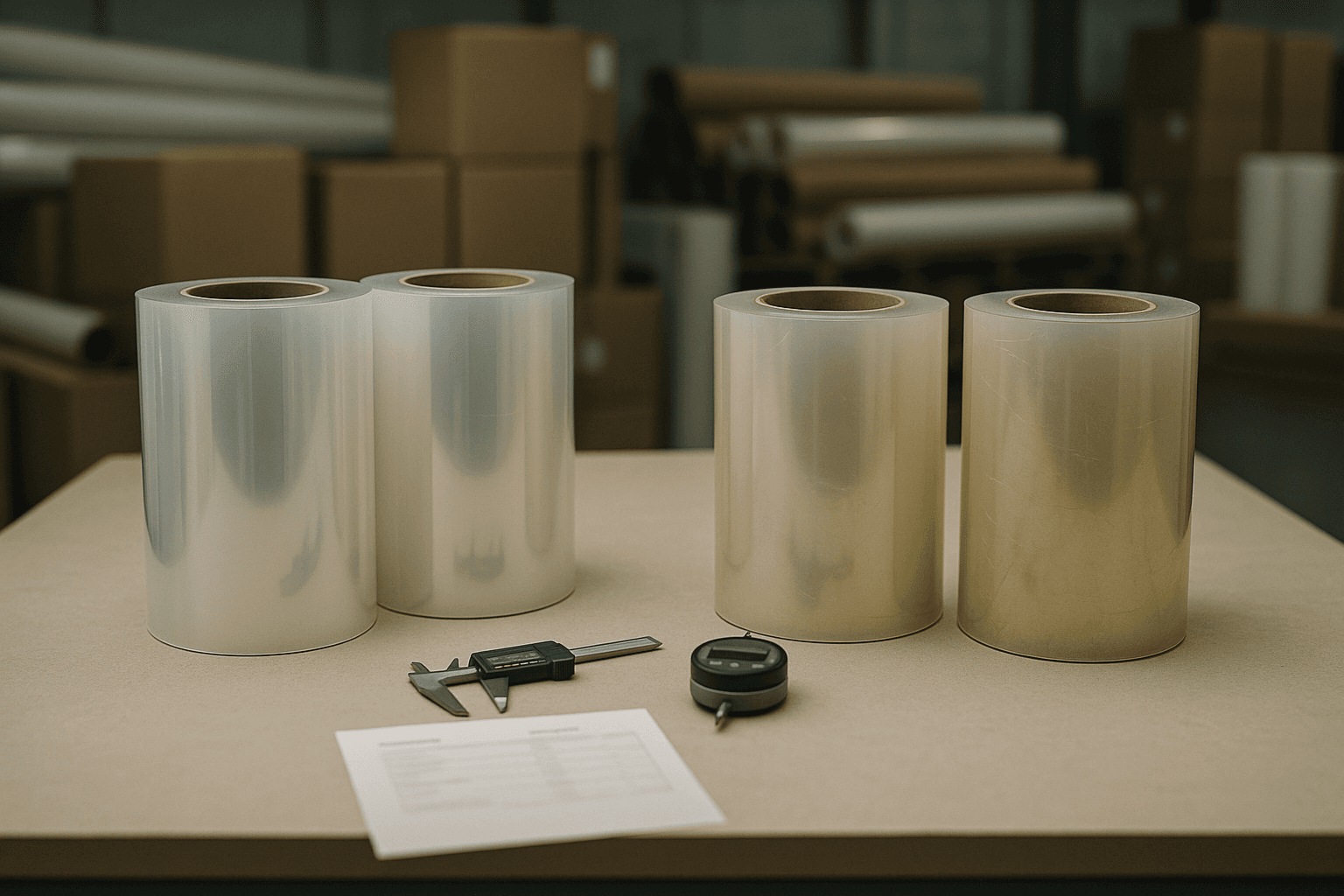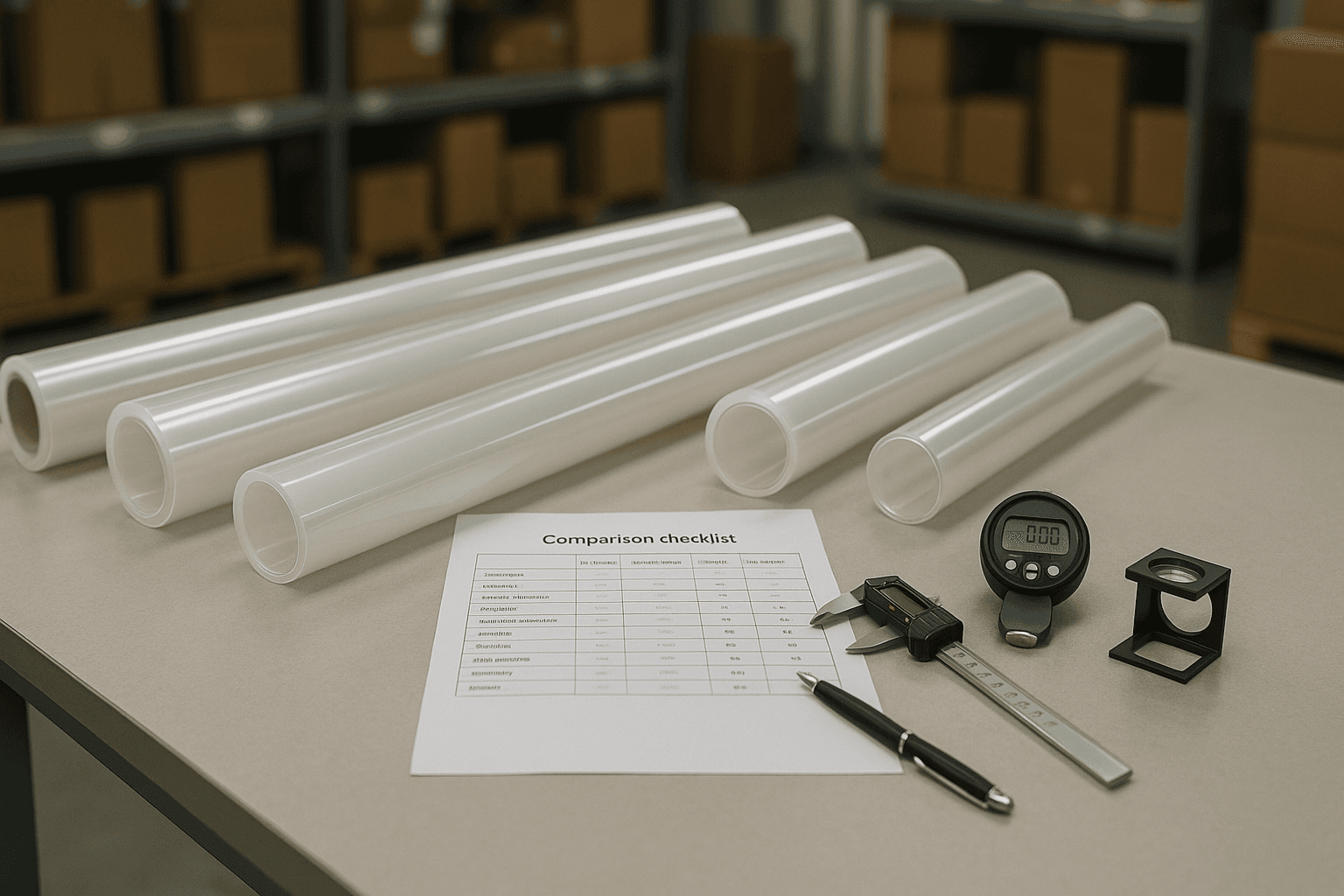
Compare PPF manufacturers on a shared spec sheet, not on the logo printed on the carton. Put named SKUs, mil thickness, healing trigger, series warranty, and lot language in one matrix, then send the same rows to every factory. A brand name is marketing. It is not a receiving check.
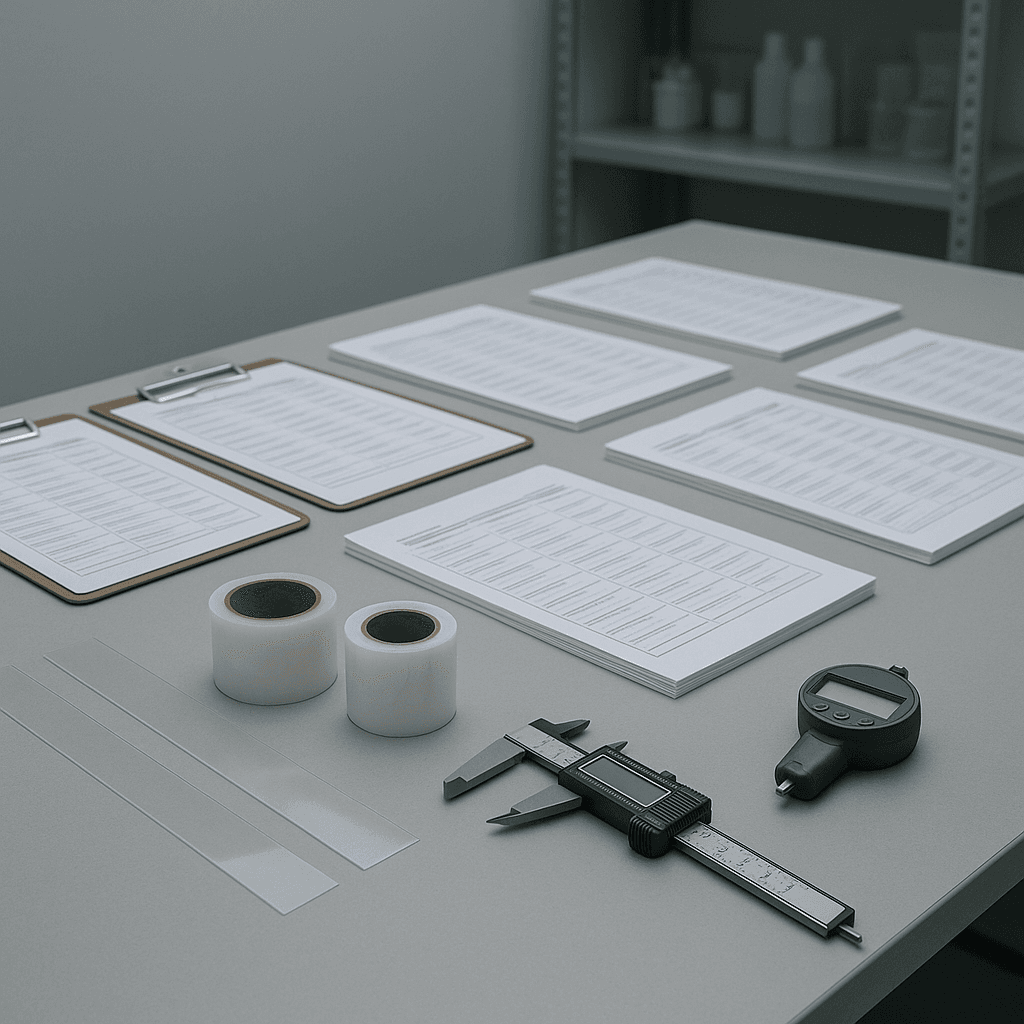
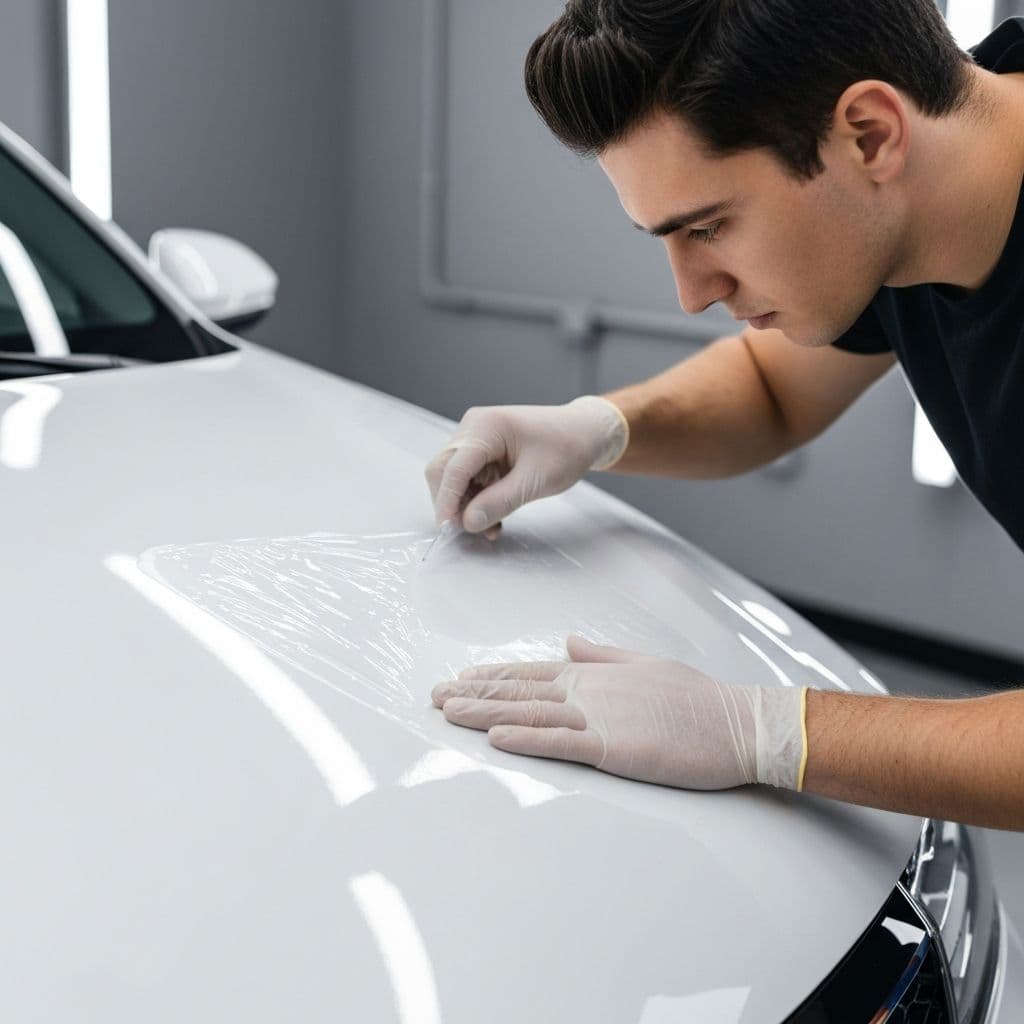
Paint protection film is a thermoplastic urethane layer, often with a self-healing topcoat, applied to painted panels against chips and light abrasion [1]. TPU is a polymer class that becomes pliable when heated and hardens when cooled [2]. That class is not a factory grade. A ppf manufacturer comparison that starts with “who sounds more like a global brand” will mix heat-healing rolls with room-temperature rolls, and a ten-year slogan with a five-year card. Incoming inspection for one factory is a different job — use how to evaluate PPF supplier quality after you have a shortlist. This page is how to compare ppf manufacturers before that PO.
If you are still choosing a China plant, start at how to find a reliable PPF supplier from China. Multi-brand shop talk (XPEL vs STEK vs LLumar) stays on that comparison. Alternative positioning stays on the XPEL alternatives hub. Do not treat those URLs as this checklist.
A manufacturer comparison checklist you can send to every factory
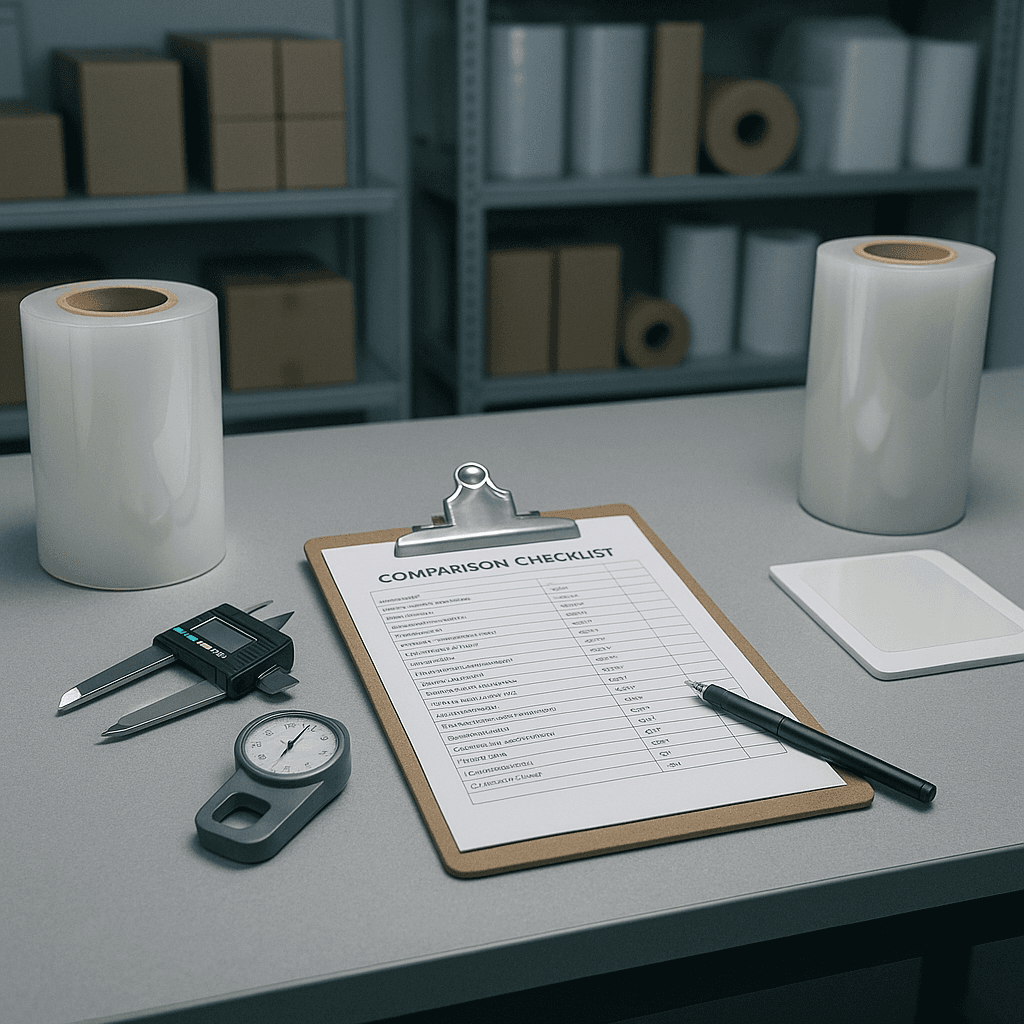
A specification is a set of documented requirements a material or product must satisfy [3]. Write those requirements once. A request for quotation asks suppliers to price the same item; more detail makes the quotes comparable [4]. That is the manufacturer comparison checklist ppf buyers actually use. It is not a logo interview.
Send every factory the same rows:
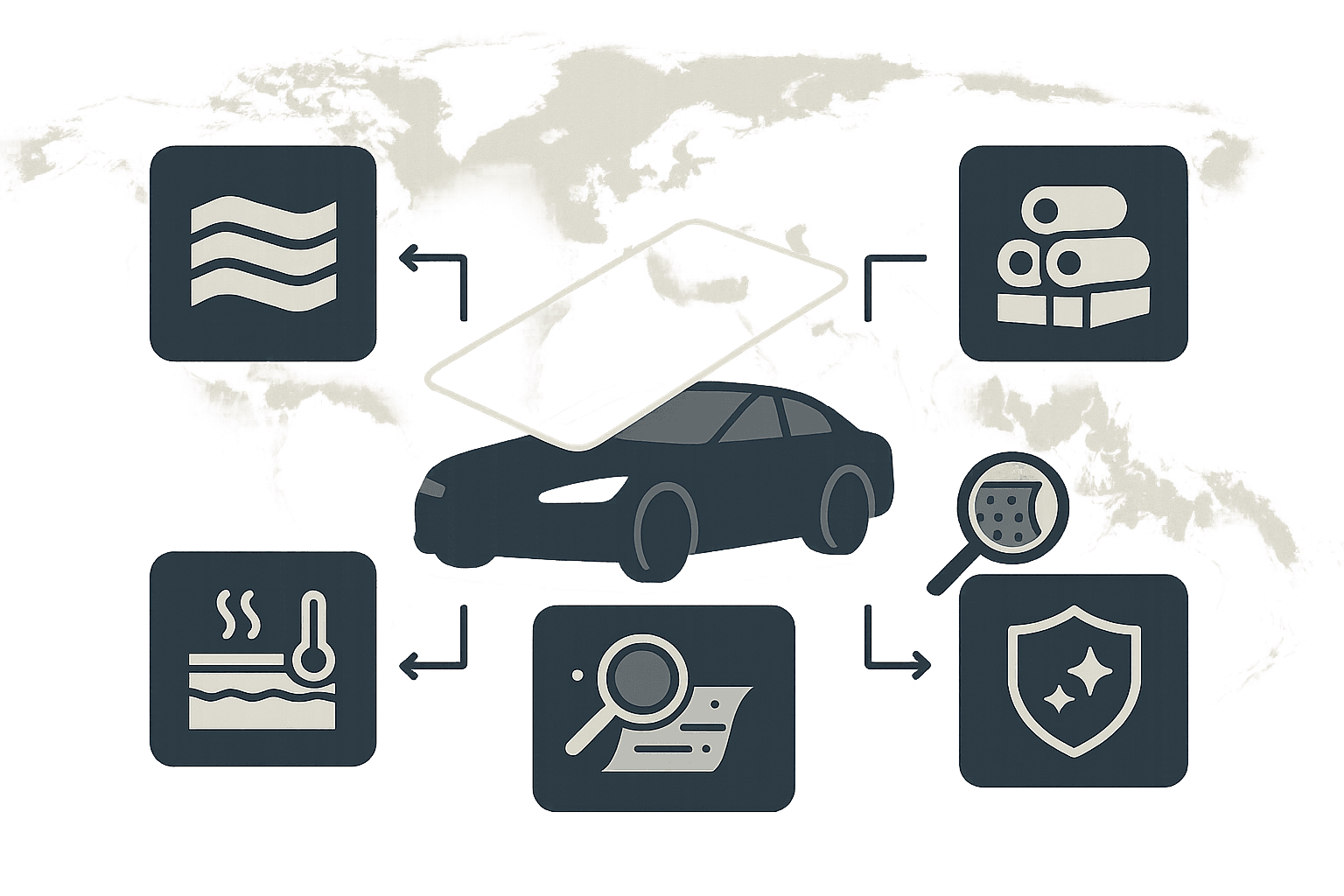
1. Named SKU, not “generic 7.5 mil TPU”. Purchasing and the install bay must share one code. 2. Thickness in mil, printed on the liner and on the sheet. In US industrial language, 1 mil = 0.001 in [5]. 3. Healing trigger: heat-activated or room-temperature. Write which demo you were shown [8]. 4. Series warranty on the card that ships with that SKU. One site-wide year count is not a row you can compare. 5. Lot language: how a roll is tied to a production lot so roll eight can be cited against roll one [7]. 6. Documents that must match: quote line, liner, carton, warranty card. If they disagree, that factory is not comparable yet. 7. Sample of the SKU you will stock, not a mixed leftover pack.
ISO 9001:2015 specifies requirements for a quality management system [6]. Use it as process talk when factories mention certificates. It does not fill the matrix. Do not publish certificate numbers or an AQL from a chat.
Why brand names fail as a comparison method
Brand names collapse four different jobs into one word: shop recognition, dealer rules, film construction, and the factory that extruded the roll. A ppf factories comparison that ranks logos will punish a named TPU line that publishes mil and healing, and reward a slogan with no SKU.
Replica, “same as”, or official-alternative language is a stop, not a score. XPEL alternative is positioning for a local line. It is not a spec.
A published brand data sheet is the paper-trail example to demand from every producer. Scotchgard Paint Protection Film Pro Series 200 states self-healing with heat applied to the film surface [9]. Compare tpu ppf makers on whether they can produce a named sheet of that kind — not on whether the logo is famous.
Side-by-side columns that make factories comparable
Build one table. Each column is a factory. Each row is a requirement [3]. That is side by side ppf manufacturers work. Price is a later column, and only after the spec rows match.
| Row | What you write | Fail if |
|---|---|---|
| SKU code | Model purchasing will reorder | “7.5 mil PPF” with no code |
| Thickness | mil on liner = mil on sheet [5] | Sheet and liner disagree |
| Healing | Heat vs room temperature [8] | Demo does not match the SKU |
| Warranty | Years **up to**, by series, on the card | One number for every line |
| Lot ID | Liner, core, or packing-list code [7] | “We checked one roll” |
| Roll size | Confirm on the PO | Assumed 1.52 m × 15 m with no line |
| Sample | Same SKU you will stock | Hero wrap from a different film |
A data sheet describes technical characteristics a manufacturer publishes so buyers can choose a product [3]. Ask for that sheet per SKU. A ppf producer comparison without it is a chat log.
Do not add resin-brand names to this table unless the order file states them. Do not add MOQ, factory roll price, or margin. Those stay on the signed quote.
Healing, thickness, and warranty as comparable rows
A thermoplastic becomes pliable at elevated temperature and solidifies on cooling [10]. That is why heat-activated healing is a coherent class claim. It is not a stopwatch. Autonomous self-healing needs no human intervention; polymer systems may instead need a stimulus such as temperature [8]. If Factory A demos a heat gun and Factory B demos a cold bay, you are not comparing the same row.
Automotive PPF thickness is commonly specified in mil [1] [5]. A factory that only sells “one 7.5 mil film” is not a thinner competitor. It is a missing ladder. You cannot compare ppf manufacturers on impact jobs if one side has 6.5 / 7.5 / 8.5 / 10 mil codes and the other has a single unlabeled roll.
Warranty is comparable only by series. A single “10-year” cell against a five-year card is not a win. It is a claim you will eat.
Quote the same spec, then sample the shortlist
An RfQ should include the specifications so every supplier bids on the same item [4]. Paste the matrix. Reject quotes that change the SKU, the mil, or the healing trigger in the fine print.
Then sample. Two factories that look equal on paper still diverge on orange peel, edge lift, and batch drift. Run the receiving check on evaluate PPF supplier quality. Do not scale from a hero sample.
Acceptance sampling decides whether to accept or reject a production lot from a sample [7]. You do not need to publish an AQL. You need a lot code and a plan language before the container.
When the shortlist is two named SKUs that passed a bay test, request samples for the models you will actually stock, then a wholesale quote. Use dealers if you need a distributor program conversation, or OEM if the line will carry your brand. Conversion for film stays on paint protection film.
How XPSHELL fills those rows
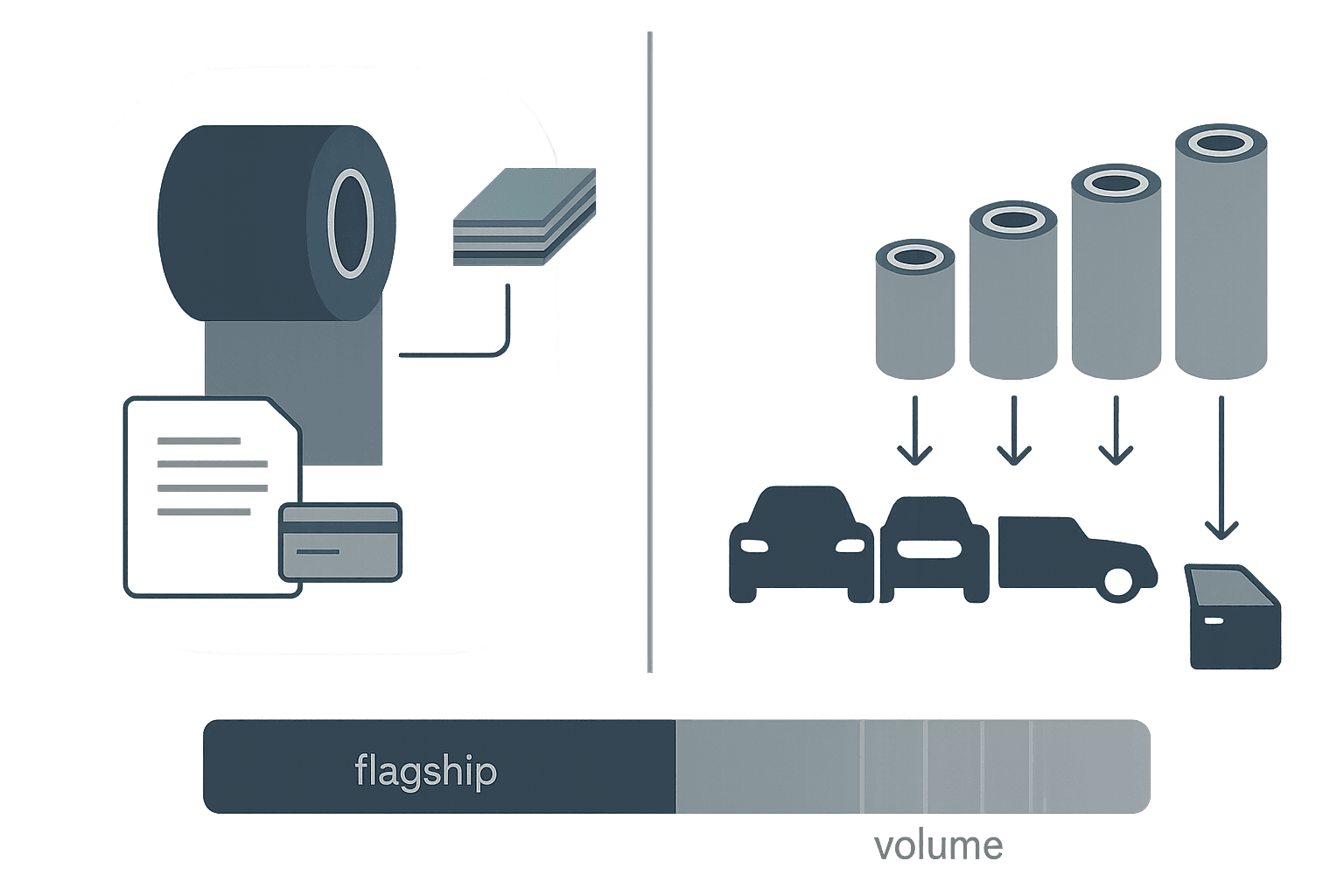
XPSHELL is a China-based automotive film manufacturer. The comparable rows are named clear-PPF SKUs, not a mystery roll and not a consumer “best PPF” ranking.
| Series | Models | Thickness | Healing | Warranty to confirm per order |
|---|---|---|---|---|
| Master | M-65, M-75, M-85, M-100 | 6.5 / 7.5 / 8.5 / 10 mil | Heat-activated | Up to 8 years |
| Apex | A-75 | 7.5 mil | Heat-activated | Up to 10 years |
| Rapid | R-75 | 7.5 mil | Room-temperature | Up to 5 years |
| Finish | Matte, Satin, Gloss Black, Matte Black | 7.5 mil | Do not assume the clear-line healing story | Up to 8 years |
Typical clear roll format is 1.52 m × 15 m, with OEM sizes available. Confirm the size on the PO. Finish is a restyle tier. Do not claim self-healing on Finish in public copy until that SKU is tested. Every warranty term is up to, with supplier conditions.
ISO 9001 is a current site claim without a published certificate number or scope [6]. Use the matrix above, then request samples for the SKUs you intend to compare against other factories.
FAQ
How do I compare different PPF manufacturers?
Write one spec matrix and send the same rows to every factory: named SKU, mil [5], healing trigger [8], series warranty, and lot language [7]. A ppf manufacturer comparison that starts with brand names will mix different films. After the paper matches, sample. Then request samples for the models you will stock.
What belongs on a manufacturer comparison checklist for PPF?
Documented requirements the film must satisfy [3], plus an RfQ that quotes those same items [4]. The manufacturer comparison checklist ppf is SKU, mil, healing, warranty card, lot ID, roll size, and a sample of that SKU. ISO 9001 is process context [6], not a substitute row.
How do I run a side by side PPF manufacturers comparison without brand names?
Put factories in columns and requirements in rows. That is side by side ppf manufacturers work. Fail a column when the liner and the sheet disagree, when the healing demo does not match the SKU [8], or when one warranty number covers every series. Do not score logos. Alternative-brand choice stays on the XPEL alternative hub.
How do I compare TPU PPF makers on the same film class?
TPU is a thermoplastic polyurethane class [2], not a grade. Compare tpu ppf makers only when the SKU, mil [5], and healing trigger [10] [8] are the same class of claim. Heat-activated Master/Apex rows are not comparable to a room-temperature Rapid row until you label that split.
Is a PPF factories comparison the same as XPEL vs STEK vs LLumar?
No. A ppf factories comparison is producer vs producer on a spec. XPEL vs STEK vs LLumar is shop-brand comparison and lives on that article. Do not merge those jobs in one H1.
How should a ppf producer comparison treat Chinese TPU lines?
Country is not a grade. A ppf producer comparison treats a China line like any other: named SKUs, mil, healing, lot codes, and samples. Use the China supplier guide to find plants, then this matrix to compare them. Quality receiving stays on evaluate PPF supplier quality.
How do I test paint protection film before buying wholesale?
Install the SKU you will stock, wait through heat and a wash, and compare two rolls of the same model when you can. Check stretch, haze, edge lift, and whether the healing trigger matches the sheet [8] [9]. Lot thinking from acceptance sampling applies when you scale [7]. Then ask for a wholesale quote through contact.
Where can I buy professional PPF wholesale — and can I create my own PPF brand?
Buy wholesale from a factory that will fill the matrix and send named-SKU samples first. XPSHELL sells that path via contact and dealers. If the line will carry your brand, use OEM after the film passes. Do not skip the comparison rows because the conversation moved to packaging.
References
- [1] Paint protection film
- [2] Thermoplastic polyurethane
- [3] Specification (technical standard)
- [4] Request for quotation
- [5] Thickness (NIST OSAC lexicon / ASTM E1732)
- [6] ISO 9001:2015 Quality management systems — Requirements
- [7] Acceptance sampling
- [8] Self-healing material
- [9] Scotchgard Paint Protection Film Pro Series 200
- [10] Thermoplastic